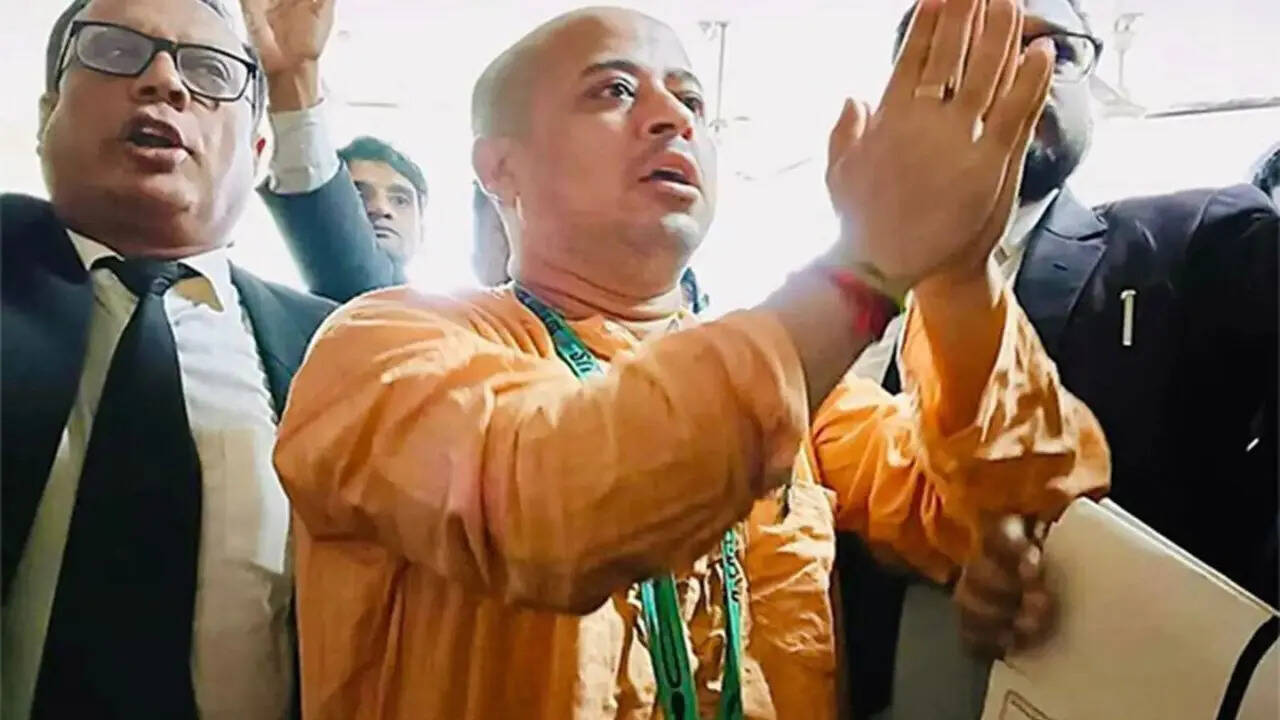
The High Court of Bangladesh has refused to grant bail to Chinmoy Krishna Das Brahmachari, the former International Society for Krishna Consciousness (ISKCON) leader whose arrest has triggered a diplomatic firestorm between Dhaka and New Delhi. This decision does more than just keep a monk behind bars. It signals a hardening of the interim government’s stance toward minority advocates during a period of intense national volatility. Since the fall of the Sheikh Hasina administration in August, the legal system has become a primary battlefield for competing visions of Bangladeshi identity. The rejection of this bail plea isn’t a routine judicial update. It is a flashpoint that exposes the deep structural fractures in a country struggling to define secularism under the shadow of a revolution.
The Charges and the Climate of Suspicion
Chinmoy Krishna Das was detained at Dhaka’s Hazrat Shahjalal International Airport in late November. The official charge involves sedition, specifically tied to an incident in Chattogram where a saffron flag was allegedly placed above the national flag of Bangladesh during a rally. While the state presents this as an affront to national sovereignty, the Hindu community views it as a targeted attempt to silence a vocal critic of post-revolutionary violence. For a different perspective, check out: this related article.
To understand the weight of this bail denial, one must look at the atmosphere in the courtrooms. This isn't law practiced in a vacuum. The interim government, led by Nobel laureate Muhammad Yunus, is under immense pressure from student leaders and conservative factions to cleanse the state of "pro-Hasina" elements. Because the Hindu minority was historically seen as a support base for the ousted Awami League, any prominent community leader now carries an inherent political target. The judiciary, aware of the crowds outside its doors, is operating under a cloud of populist expectation that makes leniency toward "subversive" figures a dangerous gamble for any judge.
A Fracture in the Revolutionary Narrative
The student-led movement that ousted Hasina promised a "Bangladesh 2.0" built on inclusivity. However, the arrest and subsequent legal battles of Chinmoy Das suggest a different reality on the ground. When the High Court refused to intervene in the bail proceedings, it effectively deferred to the lower courts’ pace, a move often used to prolong detention without a formal conviction. Similar reporting regarding this has been provided by The Guardian.
Critics argue that the sedition charge is being used as a blunt instrument. In legal terms, sedition requires an intent to incite violence or overthrow the state. Placing a religious flag near a national one might be considered a protocol violation or a civil offense in many jurisdictions, but elevating it to a capital crime suggests a political motivation. The refusal of bail reinforces the perception that the state is more interested in making an example of Das than in investigating the specific nuances of the protest in Chattogram.
The Geopolitical Fallout
India’s reaction has been swift and unusually pointed. The Ministry of External Affairs in New Delhi has expressed "deep concern," a phrase that in diplomatic circles carries the weight of a formal warning. For India, the safety of Hindus in Bangladesh is a domestic political issue as much as a foreign policy priority. The denial of bail complicates the Yunus administration’s efforts to stabilize relations with its largest neighbor.
Dhaka finds itself in a bind. If the government appears too soft on Das, it risks a backlash from the radical elements that helped topple the previous regime. If it continues to keep him in custody, it risks total diplomatic isolation from India and potential scrutiny from international human rights bodies. This legal stalemate is a microcosm of Bangladesh’s broader struggle to maintain order without resorting to the same authoritarian tactics it supposedly overthrew.
The Missing Police Presence
One of the most disturbing aspects of the proceedings surrounding Das has been the breakdown of security during his court appearances. In earlier hearings, a lawyer was killed during clashes between protesters and law enforcement. This violence has colored the High Court's perspective. There is a palpable fear that releasing Das would ignite a fresh wave of sectarian street fighting.
The state’s inability to guarantee safety around the courthouse has become a self-fulfilling prophecy for denying bail. If the government cannot control the mob, it keeps the prisoner locked away "for his own safety" or to prevent public disorder. This creates a circular logic where the threat of extrajudicial violence becomes a justification for the suspension of due process.
Religious Freedom Versus National Security
The narrative being pushed by state prosecutors frames the Hindu monk’s activities not as religious expression, but as an organized effort to destabilize the new government. They point to the timing of the rallies and the specific iconography used. This framing is designed to strip the defendant of his status as a minority leader and rebrand him as a political operative.
The Role of ISKCON
The involvement of ISKCON has added a global layer to the local dispute. While the organization has officially distanced itself from some of the more overtly political statements made during the protests, the brand remains a powerful symbol. By targeting a leader associated with a global Hindu movement, the Bangladeshi authorities have ensured that this case will remain under the international microscope. This isn't just about one man. It is about whether a religious organization can advocate for the safety of its members without being labeled an enemy of the state.
The Legal Threshold of Sedition
In the Bangladeshi penal code, the remnants of colonial-era law remain potent. Sedition is defined broadly, allowing the executive branch significant leeway in how it applies the law. The High Court’s refusal to grant bail at this stage suggests that the bench is unwilling to challenge the state’s preliminary evidence, no matter how circumstantial it might appear to outside observers.
To secure bail in a sedition case in Bangladesh, the defense usually has to prove that the charges are prima facie groundless. This is an incredibly high bar. The prosecution only needs to show a "likelihood" of guilt to justify continued detention during the investigation phase. By keeping Das in jail, the state buys time to build a more expansive case, potentially linking him to broader conspiracies that justify the initial arrest.
A Systemic Failure of Protection
The broader Hindu community in Bangladesh is watching this case with a sense of dread. If a high-profile figure like Chinmoy Das cannot secure a basic legal remedy like bail, the average citizen feels utterly defenseless. Reports of temple desecration and land grabbing have persisted in the months following the revolution, and the legal system’s perceived bias only deepens the sense of alienation.
The interim government has repeatedly stated its commitment to the rule of law. However, the rule of law is not merely the mechanical application of statutes; it is the protection of the individual against the whims of the majority. When the courts become an extension of the political climate, the concept of justice is the first casualty.
The Risks of Judicial Deference
By rejecting the bail plea, the High Court has effectively opted for a path of least resistance. It has avoided a direct confrontation with the street protesters who demand "maximum punishment" for Das. This judicial deference might provide temporary stability, but it erodes the long-term credibility of the courts. A judiciary that cannot stand as a bulwark against populist anger ceases to be an independent branch of government.
The state’s strategy appears to be one of exhaustion. By denying bail and dragging out the pre-trial phase, they hope to dampen the energy of the protest movement and force a quiet resolution. But this ignores the reality of the digital age, where every court update is broadcast instantly to a global audience, fueling further polarization.
The Path Forward for the Interim Government
The Yunus administration needs to decide if it wants to be defined by its revolutionary origins or by its constitutional obligations. The Chinmoy Das case is the ultimate litmus test. If the legal process continues to look like a political purge, the "new Bangladesh" will look remarkably like the old one, just with a different set of people in the dock.
The international community, including human rights organizations and the United Nations, has begun to take note. The pressure will not dissipate. If the state cannot produce ironclad evidence of a genuine threat to national security, the continued detention of a religious leader will be seen as a violation of fundamental rights.
The High Court has missed an opportunity to demonstrate that the law stands above the fray of the streets. By sending the case back to the lower courts, it has ensured that the tension will continue to simmer. This isn't a victory for the state. It is a delay of a reckoning that is inevitably coming.
Justice in Bangladesh is currently being measured in weeks and months of detention without trial. For a government that rose to power on the promise of ending tyranny, the optics of a jailed monk are increasingly difficult to justify. The burden of proof now rests entirely on the prosecution to show that their case is built on facts, not just the fever of the revolution. If they fail to do so, the rejection of bail will be remembered not as a legal decision, but as a political surrender.
The streets of Dhaka and Chattogram remain quiet for now, but it is a brittle silence. The legal fate of Chinmoy Das is now inextricably tied to the soul of the country. Every day he remains in custody without a clear path to trial, the gap between the revolutionary ideals of August and the legal reality of December grows wider. The interim government must move beyond rhetoric and ensure that the judiciary is empowered to make decisions based on the merits of the law, rather than the volume of the crowd outside. Until that happens, the court’s doors remain closed to more than just a bail plea; they are closed to the very transparency that a democracy requires to survive.