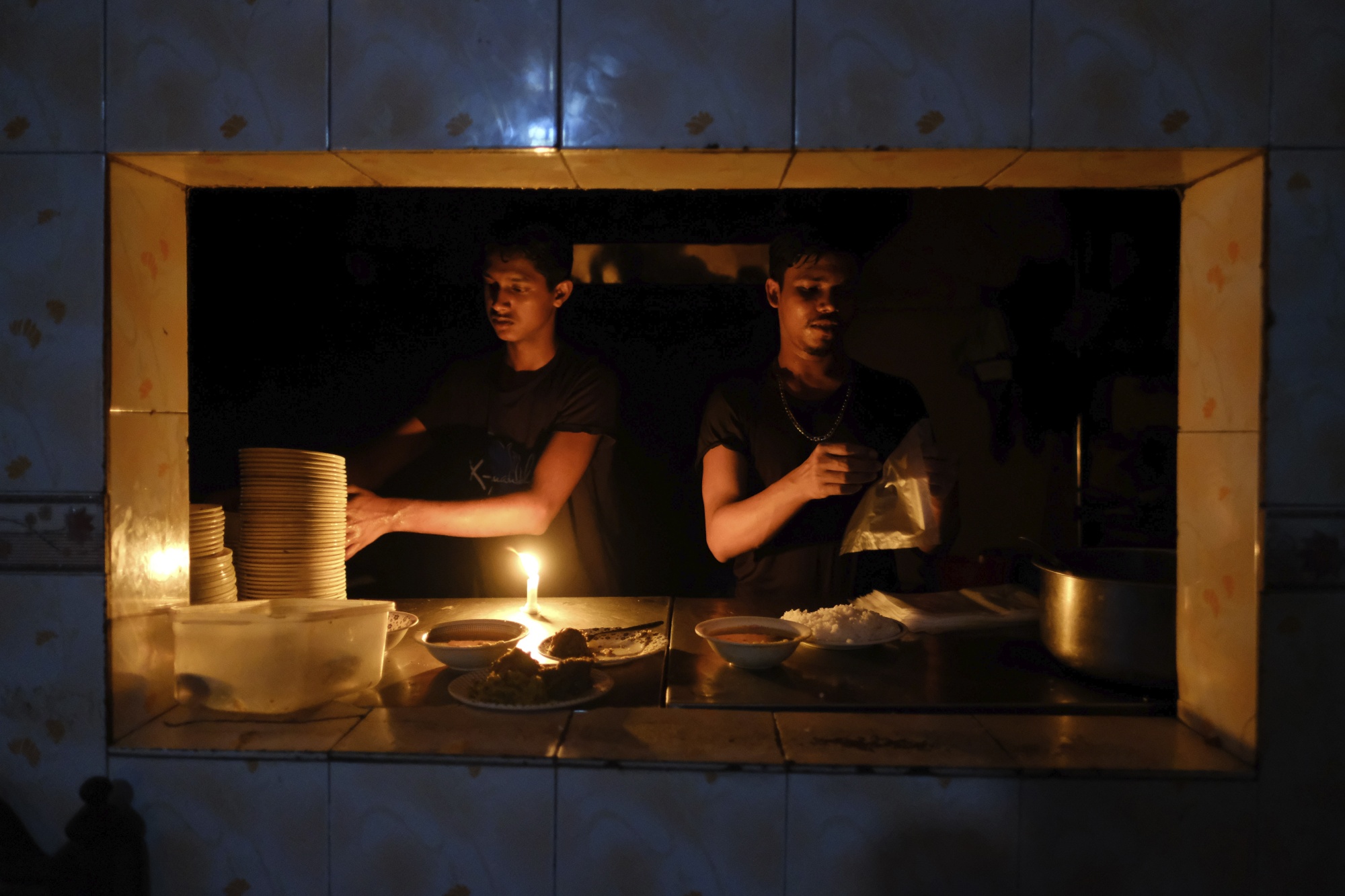
Bangladesh’s current energy instability is not a byproduct of localized mismanagement but a systemic failure to insulate a high-growth economy from the inelasticities of the global liquefied natural gas (LNG) market. The government’s recent decision to mandate early shop closures and restricted work hours serves as a blunt-force metabolic slowing of the national economy to prevent a total grid collapse. This intervention reflects a fundamental imbalance: the nation’s energy demand function has outpaced its fiscal capacity to secure spot-market fuel during periods of geopolitical escalation in West Asia.
The Structural Vulnerability of the Energy Mix
The crisis is rooted in a deliberate but risky pivot toward gas-based power generation. Bangladesh transitioned from domestic gas reliance to an import-heavy model, assuming that global LNG prices would remain within a manageable band. When conflict in West Asia disrupts supply chains or increases the risk premium on shipping through the Strait of Hormuz, the cost of marginal units of electricity becomes unsustainable for the national treasury.
The energy architecture of Bangladesh can be categorized into three critical pressure points:
- The Import Dependency Ratio: Over 20% of the country’s power generation now relies on imported LNG. Unlike coal or domestic gas, LNG is subject to extreme price volatility. When Brent crude prices surge due to West Asian tensions, LNG spot prices often follow a parabolic trajectory, forcing the government to choose between depleting foreign exchange reserves or implementing rolling blackouts.
- The Capacity Charge Trap: Bangladesh has built a surplus of installed power capacity, yet it cannot fuel these plants. Under Power Purchase Agreements (PPAs), the government must pay "capacity charges" to private power producers regardless of whether they generate electricity. This creates a fiscal pincer movement: the government pays for idle plants while lacking the funds to buy the fuel required to make them run.
- The Transmission-Distribution Gap: Even if fuel were abundant, the aging grid infrastructure suffers from significant system losses. The inability to efficiently route power from surplus regions to industrial hubs like Gazipur or Narayanganj exacerbates the perceived shortage.
The Economic Cost Function of Work Hour Restrictions
Mandating that shops close by 8:00 PM and reducing office hours is an attempt to "shave" the peak load. However, this strategy introduces a secondary set of economic externalities that may outweigh the fuel savings. The cost of this policy is not linear; it is a compounding loss of productivity across multiple sectors.
The retail sector operates on a high-velocity cash flow model. Removing the two most productive hours of evening trade—where a significant portion of consumer spending occurs—compresses margins in an already inflationary environment. For the small and medium enterprise (SME) sector, which accounts for approximately 25% of the GDP, these lost hours represent a permanent reduction in output that cannot be recovered by working harder the following morning.
In the industrial sector, the impact is even more severe. The Ready-Made Garment (RMG) industry, which provides over 80% of the nation's export earnings, relies on continuous-process manufacturing. Load shedding and restricted hours disrupt the production cycle, leading to:
- Increased Lead Times: Delays in shipping result in expensive air-freight costs or cancelled orders from global retailers.
- Quality Degradation: Fluctuations in power supply can damage sensitive machinery and result in fabric wastage.
- Labor Inefficiency: Shift rotations become erratic, leading to reduced worker output and increased operational overhead.
The Geopolitical Risk Premium in West Asia
The volatility in West Asia acts as a direct tax on the Bangladeshi consumer. The Strait of Hormuz remains the world’s most important oil transit chokepoint; any threat to its stability immediately inflates the "war risk" insurance for tankers. For a country like Bangladesh, which operates on thin fiscal margins, a $10 increase in the price per barrel of oil, or a comparable spike in MMBtu for gas, necessitates a radical reallocation of the national budget.
This creates a "Budgetary Crowding Out" effect. Funds originally earmarked for infrastructure development or social safety nets are diverted to subsidies for the Bangladesh Power Development Board (BPDB). This is a short-term survival mechanism that stunts long-term capital formation.
Evaluating the Mitigation Framework
The government’s response—rationing—is a demand-side management tool used when supply-side solutions have failed. To evaluate the effectiveness of these measures, one must look at the "Energy Trilemma": the balance between security, equity, and sustainability.
- Security: The current measures improve short-term security by preventing a total blackout, but they signal to foreign investors that the energy supply is unreliable. This discourages Foreign Direct Investment (FDI) in power-intensive industries.
- Equity: High-income households and large corporations often bypass the crisis using diesel generators or captive power plants. The burden of work-hour restrictions and load shedding falls disproportionately on low-income workers and small shopkeepers who cannot afford back-up power.
- Sustainability: The reliance on emergency diesel-based "rental power plants" to fill the gap is both environmentally damaging and economically ruinous, as diesel is significantly more expensive than gas or coal on a per-kilowatt-hour basis.
The Foreign Exchange Bottleneck
The energy crisis is inextricably linked to the country’s shrinking foreign exchange reserves. Bangladesh’s ability to procure energy is limited by the availability of US Dollars. As the Taka depreciates against the Dollar, the cost of importing the same volume of energy increases. This creates a feedback loop: energy shortages lead to reduced exports, which leads to fewer Dollars entering the country, which further limits the ability to buy energy.
The "Critical Reserve Threshold" is a metric that the government must monitor. If reserves fall below a certain point (typically measured in months of import cover), the risk of sovereign default increases, making it even harder to secure credit for fuel shipments.
Strategic Transition to a Decoupled Energy Economy
To break the cycle of West Asian dependency and domestic rationing, the strategy must shift from crisis management to structural decoupling. This requires a three-phased approach that moves beyond the simplistic logic of shop closures.
Immediate: Optimization of Existing Assets
The government must prioritize gas allocation to the most efficient power plants. Currently, older, inefficient plants consume a disproportionate amount of gas for every unit of electricity produced. Retiring these plants and diverting their fuel to modern combined-cycle gas turbine (CCGT) plants would increase the total power output without increasing the total fuel import bill.
Intermediate: Diversification of the Energy Basket
Heavy investment in renewable energy, specifically solar and wind, provides a hedge against fuel price volatility. While renewables currently contribute a negligible percentage to the national grid, Bangladesh possesses significant rooftops and non-arable land that can be utilized for decentralized solar grids. Furthermore, the expansion of nuclear energy via the Rooppur project must be accelerated to provide a stable baseload that is immune to fossil fuel price spikes.
Long-Term: Regional Power Integration
The most viable path to energy stability lies in the "BBIN" (Bangladesh, Bhutan, India, Nepal) regional framework. Bangladesh must transition from being a fuel importer to a power importer. By investing in hydroelectric projects in Nepal and Bhutan and securing long-term power purchase agreements through the Indian grid, Bangladesh can access cheaper, cleaner energy that does not depend on the stability of West Asian shipping lanes.
The current policy of cutting work hours is a temporary tourniquet on a systemic wound. It buys time, but it does not solve the underlying physics of the problem. Without a fundamental shift toward domestic energy efficiency and regional integration, the economy will remain a hostage to global commodity cycles.
The strategic play for the next 24 months is clear: the administration must aggressively renegotiate capacity charge contracts to free up fiscal space, while simultaneously fast-tracking the infrastructure required to import 2,000–3,000 MW of hydroelectric power from the Himalayan region. Failure to execute this transition will result in a permanent state of "managed decline" for the industrial sector, as energy costs become a prohibitive barrier to global competitiveness.