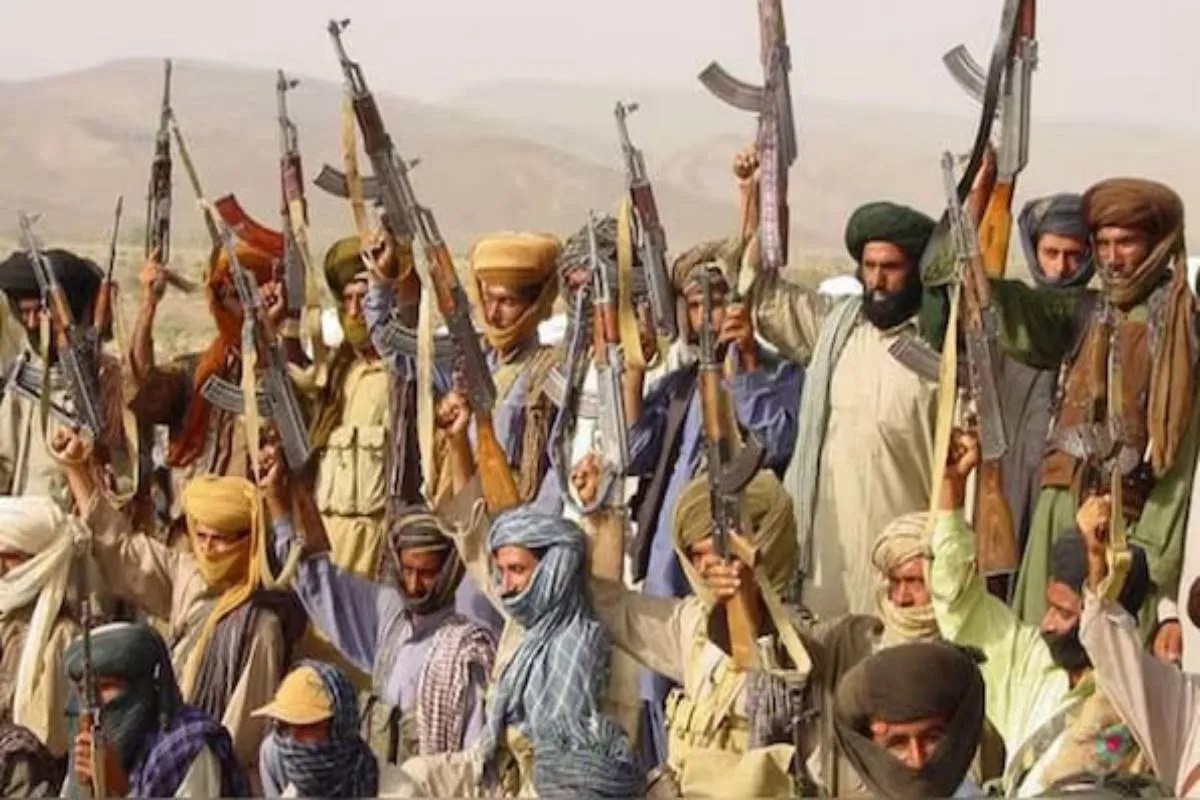
The recent surge of coordinated strikes by the Baloch Liberation Army (BLA) represents a terrifying evolution in unconventional warfare that Islamabad can no longer dismiss as "foreign-funded meddling." In a span of less than 24 hours, at least 11 synchronized attacks ripped through the fabric of Pakistan's security apparatus across Balochistan. These were not the hit-and-run skirmishes of the past. Instead, the BLA launched Operation Herof (Black Storm), a sophisticated offensive that effectively paralyzed the province’s transport infrastructure, targeted elite paramilitary camps, and resulted in a death toll that the military is struggling to admit.
The sheer scale of this offensive proves that the BLA has transitioned from a fragmented group of tribal fighters into a disciplined, modernized insurgent force. By targeting the Frontier Corps (FC) and police stations while simultaneously blocking the inter-provincial highways, the militants demonstrated a level of strategic planning that mirrors conventional military doctrine. This is the brutal truth: the Pakistani state is losing its grip on its largest province, and the heavy-handed military response is only fueling the fire.
The Strategy of Total Blockade
The most significant aspect of the latest violence was the blockade of the national highways. By seizing control of the arteries connecting Balochistan to Punjab and Sindh, the BLA achieved more than just a body count. They achieved a psychological victory.
Insurgents set up checkpoints on the Makran Coastal Highway and the Quetta-Karachi road, checking the identification of passengers and executing those they identified as members of the security forces or outsiders working on state projects. This "search and destroy" tactic is designed to show that the Pakistani state cannot even protect its own soldiers on its primary roads. When the state loses control of its infrastructure, it loses the ability to govern.
The military often claims that these groups have no popular support. However, you cannot pull off 11 simultaneous attacks across hundreds of miles of rugged terrain without a massive intelligence network and local complicity. The BLA is operating in a permissive environment where the local population, embittered by decades of forced disappearances and the perceived theft of their natural resources, is no longer willing to cooperate with the central government.
The Failure of the China Pakistan Economic Corridor
At the heart of this escalation lies the China-Pakistan Economic Corridor (CPEC). For years, Islamabad marketed CPEC as a miracle cure for Pakistan’s failing economy. In reality, for the people of Balochistan, it has become a symbol of exploitation.
Huge sums of money are funneled into the deep-sea port of Gwadar, yet the local fishing communities are pushed out of their waters. Massive mining projects extract copper and gold, yet the villages surrounding these mines lack clean drinking water. The BLA has capitalized on this grievance, framing their struggle as a defense against "Chinese imperialism" and Pakistani "colonialism."
The insurgents are no longer just hitting soft targets. They are going after the economic heart of the state. By blowing up the railway bridge in Bolan, they severed the rail link between Quetta and the rest of the country. This wasn't a random act of vandalism. It was a calculated move to stop the flow of minerals and goods, making the cost of occupation higher than the Pakistani economy can bear.
A New Breed of Militancy
The BLA has changed. The old guard of tribal chieftains leading from London or Geneva has been replaced by a younger, more radical, and better-educated middle class. These are individuals who grew up in the shadow of the "War on Terror" and have seen their friends and family members "disappear" into the custody of the ISI.
The rise of the Majeed Brigade, the BLA’s suicide squad, is the most visible sign of this radicalization. Suicide bombing was historically rare in secular Baloch nationalist movements. Now, it is a staple of their operations. This shift indicates a level of desperation and commitment that cannot be neutralized through standard counter-insurgency tactics. When an insurgent is willing to die, the threat of force loses its power.
The Intelligence Gap
How did 11 attacks happen simultaneously without the premier intelligence agencies of Pakistan catching a whisper? This is the question haunting the halls of power in Rawalpindi.
The failure suggests a massive intelligence breakdown. It is possible that the BLA has successfully infiltrated local law enforcement or that the intelligence agencies are so preoccupied with political engineering in Islamabad that they have taken their eye off the ball in the periphery. Regardless of the reason, the BLA outperformed the state’s multi-billion dollar security umbrella.
The Iron Fist Policy is Backfiring
The Pakistani military’s response to Baloch unrest has remained unchanged for decades: kinetic operations, "pick and dump" tactics, and the support of "death squads" composed of surrendered militants. This policy is failing.
Every time a young Baloch student is abducted from a university in Lahore or Islamabad, ten more recruits join the BLA. The state has created a vacuum of leadership by eliminating moderate Baloch voices who were willing to negotiate within the constitutional framework. By silencing the moderates, the state has left the floor to the gunmen.
The Baloch Yakjehti Committee (BYC), a peaceful protest movement led primarily by women like Mahrang Baloch, has faced intense state repression. When the government treats peaceful protesters as terrorists, it validates the BLA’s argument that the only way to talk to Islamabad is through the barrel of a gun. This is a strategic blunder of historical proportions.
Regional Geopolitics and the Finger Pointing
Islamabad’s default setting is to blame India or the Taliban-led Afghanistan for the chaos. While it is true that regional rivals often exploit internal fissures, the "foreign hand" narrative is a convenient shield used to avoid looking in the mirror.
The security situation has worsened since the Taliban took over Kabul. Despite Pakistan’s historical support for the Taliban, the current regime in Afghanistan is not interested in policing the border to suit Pakistan’s needs. The BLA finds sanctuary in the lawless border regions, and the cross-border movement of arms has become easier. However, external support can only sustain an insurgency; it cannot create one from nothing. The fuel for this fire is entirely domestic.
The Economic Toll of a Perennial War
Pakistan is currently under the thumb of an IMF program, struggling with record inflation and a devaluing currency. It cannot afford a full-scale civil war in its most resource-rich province.
The security budget required to protect CPEC projects is ballooning. Thousands of troops are tied down guarding Chinese engineers and convoy routes. If the BLA can continue to execute coordinated strikes like the ones seen recently, the "risk premium" for foreign investment in Pakistan will become insurmountable. No amount of sovereign guarantees from Islamabad will convince a foreign company to work in a province where the highways are controlled by militants.
The Illusion of Control
The government’s strategy of media blackouts and curated tours of Gwadar creates an illusion of control that is shattered every time a bomb goes off. The state media reports "terrorists neutralized," but the families in Quetta and Panjgur see a different reality.
The military is caught in a cycle of tactical wins and strategic losses. They may clear a road or retake a checkpoint, but they are losing the hearts and minds of the people who live there. In counter-insurgency, if you aren't winning over the population, you are losing the war.
The BLA’s recent actions show they have mastered the art of "propaganda of the deed." They don't need a TV station; they just need to shut down the RCD Highway for six hours to prove who really holds the power in the hinterland.
The Path to Fragmentation
If the current trajectory continues, Balochistan will move from a low-level insurgency to a state of total collapse. The Pakistani state is currently overstretched, dealing with a resurgent TTP (Tehrik-i-Taliban Pakistan) in the north and a simmering Baloch rebellion in the south.
The BLA has shown it can coordinate. It has shown it can strike multiple targets. It has shown it can hold territory, even if only for a few hours. These are the hallmarks of a movement that is preparing for a long-term war of attrition.
The state needs to realize that Balochistan is not a problem that can be solved by the 12th Corps alone. It is a political problem that requires a political solution—one that involves genuine provincial autonomy, a fair share of resources, and an end to the extrajudicial killings that have radicalized a generation.
The smoke from the 11 attacks may have cleared, but the underlying fire is hotter than ever. Islamabad is running out of time, and more importantly, it is running out of people in Balochistan willing to listen.
Stop treating Balochistan as a theater of war and start treating it as a part of the country.