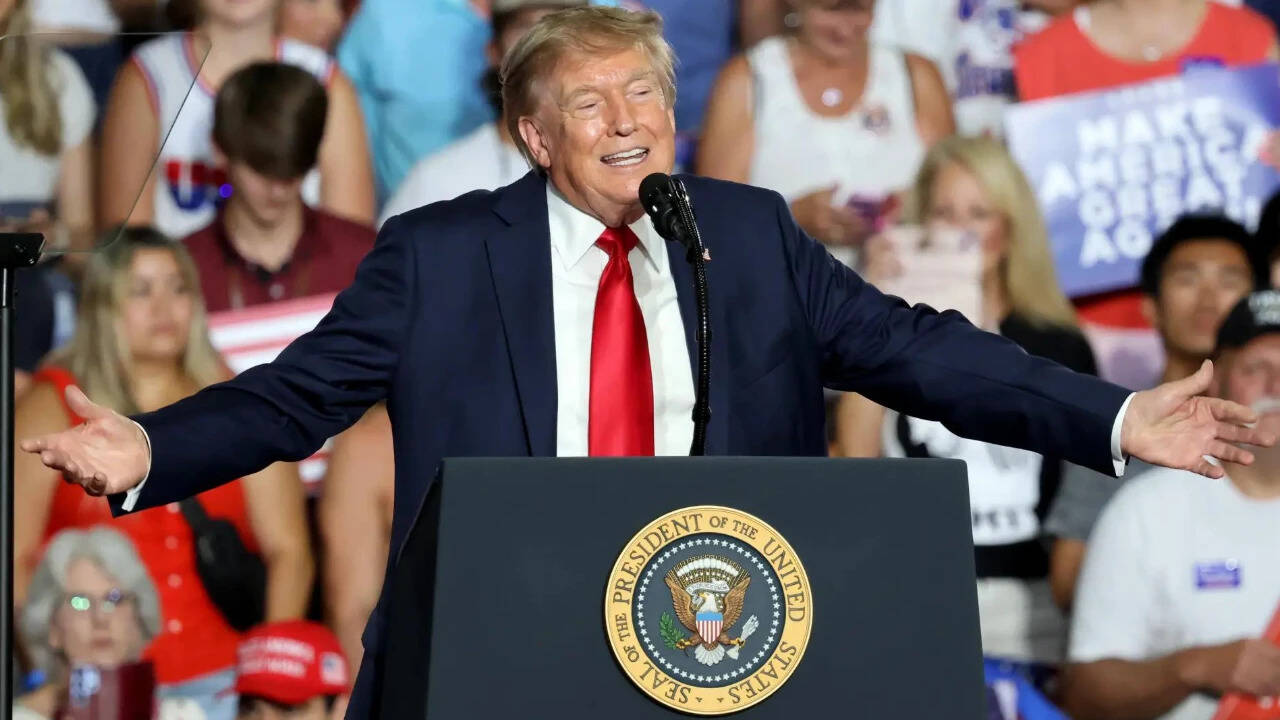
Political strategies evolve through adaptation, rarely through total reinvention. When a dominant figure outside the legislature demands that an upcoming cycle serves as a referendum on their own standing, the mechanics of campaigning shift entirely. Candidates down the ticket find themselves navigating a peculiar reality where their individual records matter less than their proximity to a singular national brand. This phenomenon alters how campaigns are structured, funded, and fought at the local level.
Voters preparing to participate in upcoming legislative cycles can review candidate information and verify local registration details through official state portals or by consulting the USA.gov Voting and Election Information directory. Understanding the broader mechanics of these cycles requires looking past the rhetoric and examining the underlying structural incentives.
The Structural Shift in Down-Ballot Races
Campaign consultants have long understood the gravitational pull of presidential politics, but applying that same weight to an off-cycle election creates distinct logistical hurdles. Traditional local issues—infrastructure funding, zoning disputes, municipal tax rates—frequently get bulldozed by national culture wars. When a national leader explicitly frames a regional contest as a personal referendum, local candidates must decide whether to embrace the turbulence or run counter to it.
History shows that running as a proxy candidate is a high-risk gamble. If national sentiment turns negative, candidates tied tightly to an external figure absorb the collateral damage. Conversely, distancing oneself from a popular national figure can alienate a mobilized primary base. This tightrope walk forces campaigns to run two entirely different races simultaneously: a public campaign dominated by national talking points and a quiet, subterranean operation focused on local grievances.
Funding and Media Saturation
Money follows attention. Traditional local donors who once funded modest direct-mail campaigns now find themselves competing with national super PACs pumping millions into saturation media buys.
- Local television markets experience unprecedented ad density months before election day.
- Grassroots door-knocking operations are increasingly replaced by algorithmic digital targeting.
- Message discipline becomes rigid, leaving little room for candidates to address regional nuances.
The result is a homogenization of local politics. Neighborhood concerns are flattened into national talking points, transforming municipal and legislative races into ideological proxy wars.
Navigating the Contemporary Political Landscape
For citizens attempting to cut through the noise, the sheer volume of partisan messaging can obscure actual policy differences. Effective navigation of these cycles involves separating national performance theater from the tangible powers held by the office being contested. State legislatures and congressional seats wield distinct constitutional authorities that bear little resemblance to executive posturing.
To find official candidate lists, track campaign finance reports, or locate authorized voter resources for your specific jurisdiction, consult the U.S. Election Assistance Commission portal for official guidance.
The strategy of turning a legislative contest into a personal referendum relies entirely on public exhaustion and hyper-polarization. As campaigns increasingly adopt this confrontational posture, the burden falls on the electorate to demand substance over proxy theatrics.