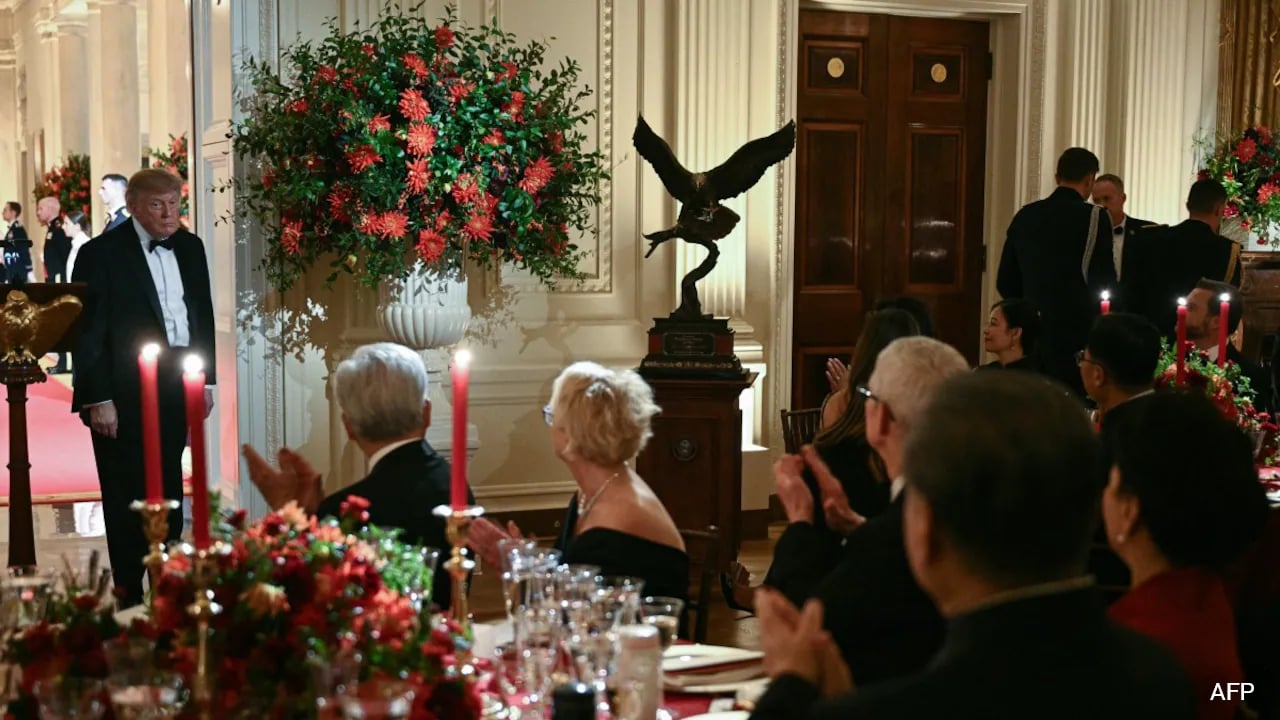
When Donald Trump handed a custom bald eagle sculpture to Chinese President Xi Jinping during a high-profile White House state dinner, internet commentators instantly started decoding the subtext. Was it a heavy-handed display of American nationalism, a subtle power move, or just standard political theater wrapped in bronze and feathers?
State gifts between superpowers are never random. Every material, artist, and presentation method is vetted to send a specific signal. Trump noted that he and First Lady Melania Trump collaborated on designing the piece, describing the bird as an embodiment of the free and soaring spirit of America. Xi accepted the gift with applause, later countering with his own traditional diplomatic tokens, including the announcement of giant pandas for Zoo Atlanta and a massive student exchange program.
Strip away the political spin, and this specific exchange highlights how modern international relations rely heavily on symbolic pageantry to manage deep-seated friction.
The Mechanics of Superpower Gift Diplomacy
Gifts between heads of state serve a very specific psychological and diplomatic function. They bridge the gap between fierce geopolitical competition and necessary face-to-face communication. When Washington and Beijing are constantly sparring over trade tariffs, technological dominance, and regional security boundaries, a tangible artifact breaks the ice.
Trump explicitly stated during the event that both nations operate under entirely different political systems. By choosing the bald eagle—the official national bird of the United States—the White House leaned straight into classic national symbolism. It is a direct assertion of identity. You are visiting our house, the gesture says, and we are presenting you with our most recognizable icon of sovereignty.
Xi’s response followed a well-worn playbook of panda diplomacy. China has used giant pandas as living emissaries of goodwill for decades, dating back to Richard Nixon's historic visit in 1972. Sending pandas like Ping Ping and Fu Shuang to Zoo Atlanta alongside an initiative to bring 100,000 American students to China over five years shifts the narrative from trade wars back to cultural endurance.
Why Optics Matter More Than the Objects Themselves
Critics often dismiss these exchanges as expensive photo ops that change nothing about actual policy. They are right, sort of. An eagle statue isn't going to rewrite trade agreements or resolve tech restrictions overnight.
However, ignoring the optics misses how political leaders signal intentions to domestic and global audiences. Trump needed to project strength and unyielding American pride on home turf. Presenting a custom-designed American symbol to his chief geopolitical counterpart fits that blueprint precisely. Meanwhile, Xi’s counter-offer of pandas and educational outreach projects an image of long-term patience, openness, and cultural continuity.
These gestures buy room for negotiators behind closed doors. When leaders share a stage, break bread, and exchange calculated gifts, it lowers the immediate temperature. It creates a brief window where managing disagreements over artificial intelligence or regional security feels slightly more manageable.
Ultimately, the bald eagle statue wasn't meant to be a peace treaty. It was a physical manifestation of high-stakes theater—a reminder of two colliding systems testing each other's boundaries while trying to keep the peace.
Why Trump gifted Xi Jinping a bald eagle sculpture at White House state dinner
This video provides additional context and visual footage of the high-profile White House state dinner where the bald eagle sculpture exchange took place.