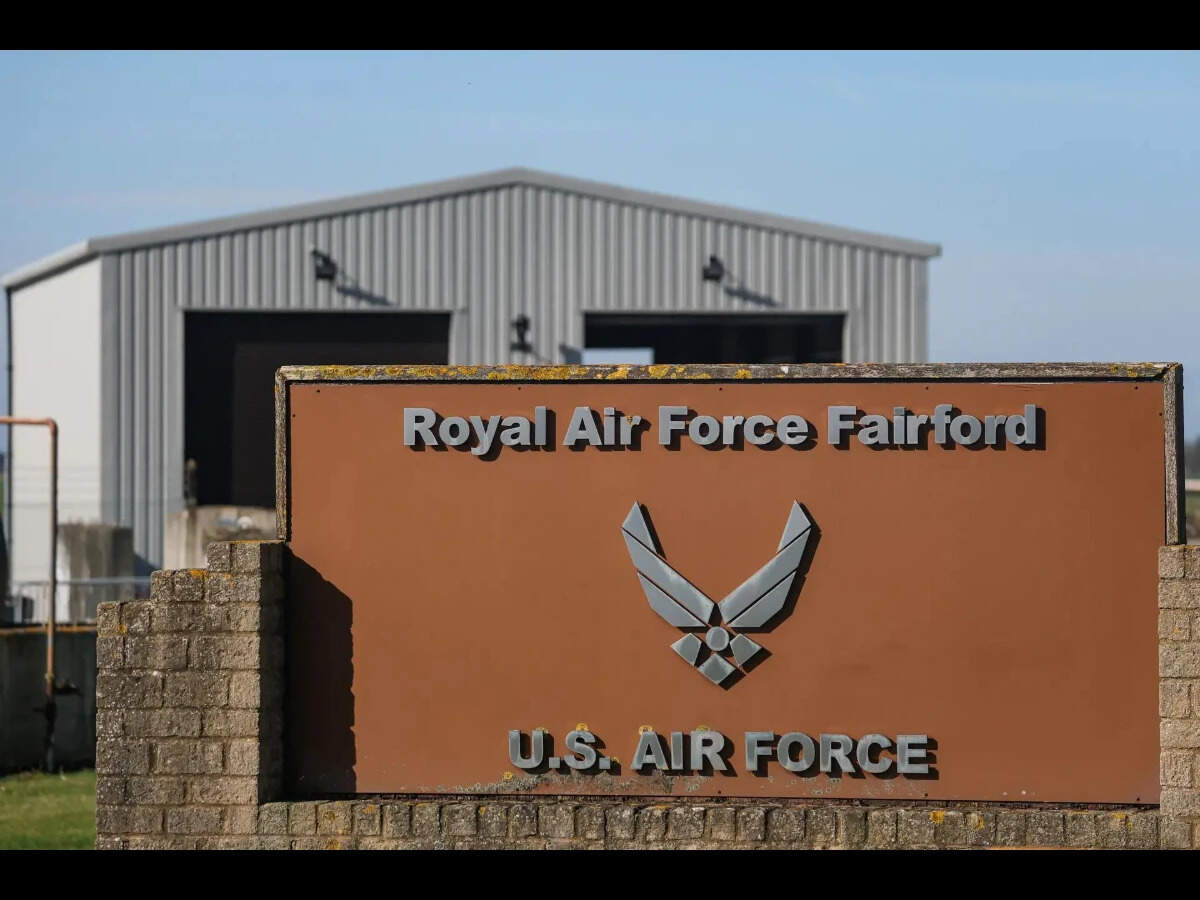
The headlines rolled in with predictable panic. A UK-Iranian man arrested over a suspected terror plot targeting Royal Air Force Fairford walked out of a police station on bail. The usual chorus of commentators immediately took to the airwaves, clutching their pearls and screaming about systemic failure, lax border controls, and a judicial system asleep at the wheel.
They are asking the entirely wrong question.
The outrage focuses on why a suspected threat was released back onto the streets, as if keeping every person detained indefinitely in a holding cell is the hallmark of a secure society. That is amateur hour logic. The real story here is not about a soft-touch justice system letting a dangerous actor slip through the cracks. It is about how counter-terrorism operations actually function in the digital age, and why the statutory clock forces law enforcement into high-stakes gambles that public-facing commentators fundamentally misunderstand.
Let us look at how modern counter-terrorism investigations operate behind closed doors. I have spent years tracking national security frameworks and watching agencies grapple with the shift from organized hierarchical terror cells to decentralized, digitally radicalized lone actors. When an arrest happens near a sensitive military asset like RAF Fairford, it rarely occurs because an operative is moments away from executing a coordinated strike. It happens because intelligence thresholds have been met, or worse, because digital chatter or surveillance triggers a mandatory intervention before a plot has fully crystallized.
Under UK law, terror suspects can be held without charge for a maximum of fourteen days under specific extension provisions, up from the standard forty-eight hours. But fourteen days is a microscopic window when you are trying to decrypt end-to-end encrypted messaging apps, analyze terabytes of seized hard drives, map out international financial transfers, and verify whether a suspect is an isolated actor or part of a dormant cell.
If the Crown Prosecution Service lacks sufficient evidence to charge within that strict statutory limit, releasing the suspect on bail is not a choice born of leniency. It is a legal mandate. Keeping someone locked up without charge violates the fundamental tenets of common law. Yet, every time a suspect is bailed, the public assumes the investigation has hit a dead end.
That assumption ignores the operational reality of continued surveillance.
Imagine a scenario where an individual is scooped up prematurely based on ambiguous online chatter. Holding them without charge past the legal limit requires concrete evidence of preparation for acts of terrorism under Section 5 of the Terrorism Act 2006. If the digital forensics team is still knee-deep in unencrypted cloud backups, the charging threshold simply has not been met. Releasing that individual on strict bail conditions—tagging, curfew, travel bans—does not mean the state has lost interest. It often means the suspect has been placed under intense, multi-layered electronic and physical surveillance, effectively turning them into an unwitting beacon leading investigators to their handlers, financiers, or co-conspirators.
Critics call this a gamble. They are right. But counter-terrorism is an exercise in managing probability, not eliminating risk entirely.
The lazy consensus in mainstream reporting treats arrest as the finish line. It is not. Arrest is frequently an administrative interruption designed to freeze a situation, seize devices, and disrupt momentum. When a suspect is subsequently bailed, the media narrative treats it as a reversal of fortune. This creates a toxic feedback loop where the public expects an immediate, cinematic conviction, failing to grasp the grinding, forensic reality of modern national security investigations.
Consider the specific geography of this case. RAF Fairford is not just any airstrip. It is a strategically vital base utilized by the United States Air Force and the Royal Ministry of Defence, housing critical assets and logistical capabilities. Any perceived vulnerability in its perimeter security triggers an immediate, disproportionate political and public reaction. That political sensitivity is precisely why agencies are forced to move early. They cannot afford to wait and watch a potential threat mature when a high-value military installation is even remotely mentioned in a suspect's digital footprint.
Early intervention, however, comes with a severe cost. It tips the hand of intelligence services. It burns informants, exposes surveillance vectors, and forces suspects into operational silence. When those early arrests fail to yield an immediate, airtight case that survives the rigorous thresholds of the CPS, the suspect must be released on bail. The system is functioning exactly as designed to prevent arbitrary state detention, even if it creates an uncomfortable public relations headache for the Home Office.
We need to talk about the deeper structural flaw in how we measure security success. Success is currently defined by the optics of a dramatic raid and a swift, permanent remand in custody. That is a theatrical metric, not a security one. True security is achieved when plots are disrupted through intelligence dominance long before they reach the execution phase, even if that means suspects occasionally cycle through police custody while investigators piece together fragmented digital breadcrumbs.
The alternative—lowering the legal threshold for detention or allowing indefinite holding periods without charge—leads straight down the path of authoritarian overreach. If you want a state where the secret police can lock away anyone indefinitely based on vague suspicions, just say so. But do not pretend to defend democratic values while simultaneously demanding the suspension of habeas corpus every time a terrorism suspect makes bail.
The next time a headline screams about a terror suspect walking free on bail, look past the visceral outrage. Ask whether the investigators ran out of evidence or whether they simply ran out of statutory time while building an ironclad case. The difference between those two realities dictates the safety of the public far more than any sensationalist news broadcast cares to admit.