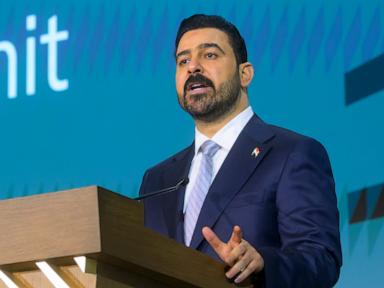
Every mainstream foreign desk is treating the latest diplomatic summit between Baghdad and Ankara like a geopolitical fairytale. The lazy consensus goes something like this: Iraq and Turkey are finally burying the hatchet, the Kirkuk Ceyhan pipeline is about to roar back to life, millions of barrels of crude will flow smoothly to the Mediterranean, and regional security will lock into place thanks to a shared handshake over counter-terrorism.
It is a neat, comforting narrative for lazy analysts sitting thousands of miles away from the ground reality. It is also entirely detached from economic gravity and operational fact. For another look, see: this related article.
I have watched companies and sovereign states burn billions of dollars chasing diplomatic pipe dreams in the Middle East. Treaties signed in marble halls mean nothing when the physical mechanics on the ground are broken, unfunded, and politically radioactive. The conventional take assumes that because two governments want a pipeline open, the oil will just start pumping. That is not how energy economics works.
The Dead Pipe Fallacy
Let us look at the asset itself. The Kirkuk Ceyhan pipeline has been dormant for over a decade for a reason. It is not just a valve you turn; it is a decaying, battered infrastructure network that has suffered years of sabotage, neglect, and lack of maintenance. Similar coverage on the subject has been shared by The Guardian.
When international courts ruled on the Kurdistan Regional Government oil export dispute, the legal architecture governing who gets paid for what shattered. Baghdad wants complete control over export revenues. Erbil wants to survive financially. Ankara wants to extract maximum geopolitical leverage while avoiding a direct confrontation with domestic Kurdish factions and international creditors who hold billions in arbitration awards against Turkey.
The idea that a quick state visit fixes a multi-billion-dollar legal and physical quagmire is laughable. The pipeline requires massive capital expenditure to even test its integrity. Who is paying for that overhaul? Iraq federal finances are perpetually strained by public sector payroll bloat. Turkey's central bank is in no position to bankroll an Iraqi infrastructure project without deep, exploitative concessions. International oil companies operating in Kurdistan have already made it clear they will not pump a single barrel until their past arrears are paid and their production-sharing contracts are honored.
None of those problems are solved by a photo op in Ankara.
Security Cooperation Is A Convenient Smoke Screen
The second pillar of the mainstream coverage is the security agreement. We are told that Turkey and Iraq are coordinating tightly against militant groups, creating a zone of stability that will protect trade corridors like the Development Road project.
This is upside-down thinking.
Security does not enable economic projects in this region; economic projects stall because security is a permanent variable of instability. Ankara views cross-border military operations as an existential necessity. Baghdad views those same operations as a violation of sovereignty, yet lacks the military muscle or political capital to stop them.
When Turkey establishes forward operating bases in northern Iraq, it creates friction with local populations and regional proxies backed by Tehran. Iran watches any Turkish-Iraqi security alignment with acute suspicion. To think that Baghdad can simply sign a memorandum of understanding with Ankara and magically neutralize Iranian influence or PKK resistance is geopolitical illiteracy.
Imagine a scenario where the pipeline actually starts leaking test volumes while Turkish jets are active thirty miles away in the mountains. The entire commercial operation shuts down within forty-eight hours. You cannot run a commercial crude artery through an active combat zone without astronomical insurance premiums that kill the profit margin dead on arrival.
The Development Road Pipe Dream
Then there is the grand vision of the Development Road, that fifty-mile-long fantasy of railways and highways connecting the Grand Faw Port in southern Iraq straight through to the Turkish border.
Politicians love drawing lines on maps. It costs nothing to announce a twenty-billion-dollar trade corridor. Funding it is an entirely different universe. Global logistics giants are not lining up to invest in a route plagued by systemic bureaucratic corruption, militia checkpoints, and an arbitrary customs regime that defies rational commerce.
Iraq's logistics sector is a black hole. Containers rot at ports because of clearance gridlock orchestrated by powerful political factions who profit from inefficiency. Until Iraq dismantles the internal rent-seeking machinery of its own state apparatus, no amount of Turkish concrete or steel will turn the country into a regional transit hub.
The obsession with bilateral summits misses the structural rot eating away at both economies. Turkey is battling structural inflation and desperate for foreign currency, which is why Ankara is playing friendly with Baghdad in the first place—hoping to secure cheap energy supplies and construction contracts. Iraq is a single-commodity state trapped in a demographic time bomb, where ninety percent of state revenue depends on an oil price it does not control.
The Real Power Play
Strip away the diplomatic communiques and you see the cold, hard mechanics of survival.
Turkey needs to bypass Western capital markets by securing direct state-to-state energy deals. Iraq needs a safety valve for its exports while its southern terminals face physical capacity ceilings. They are talking because they have no better options, not because they trust each other.
The pipeline will not reopen at scale this year, or next year, until the fundamental ownership question of Kurdish oil is settled by force of economic exhaustion, not arbitration.
Stop reading the press releases. Watch the wire transfers. When international oil companies actually wire capital back into Erbil, then you can talk about a renaissance. Until then, the summit was just theater for domestic consumption.
The oil stays in the ground, the disputes stay on the table, and the politicians fly home to cash their checks.


