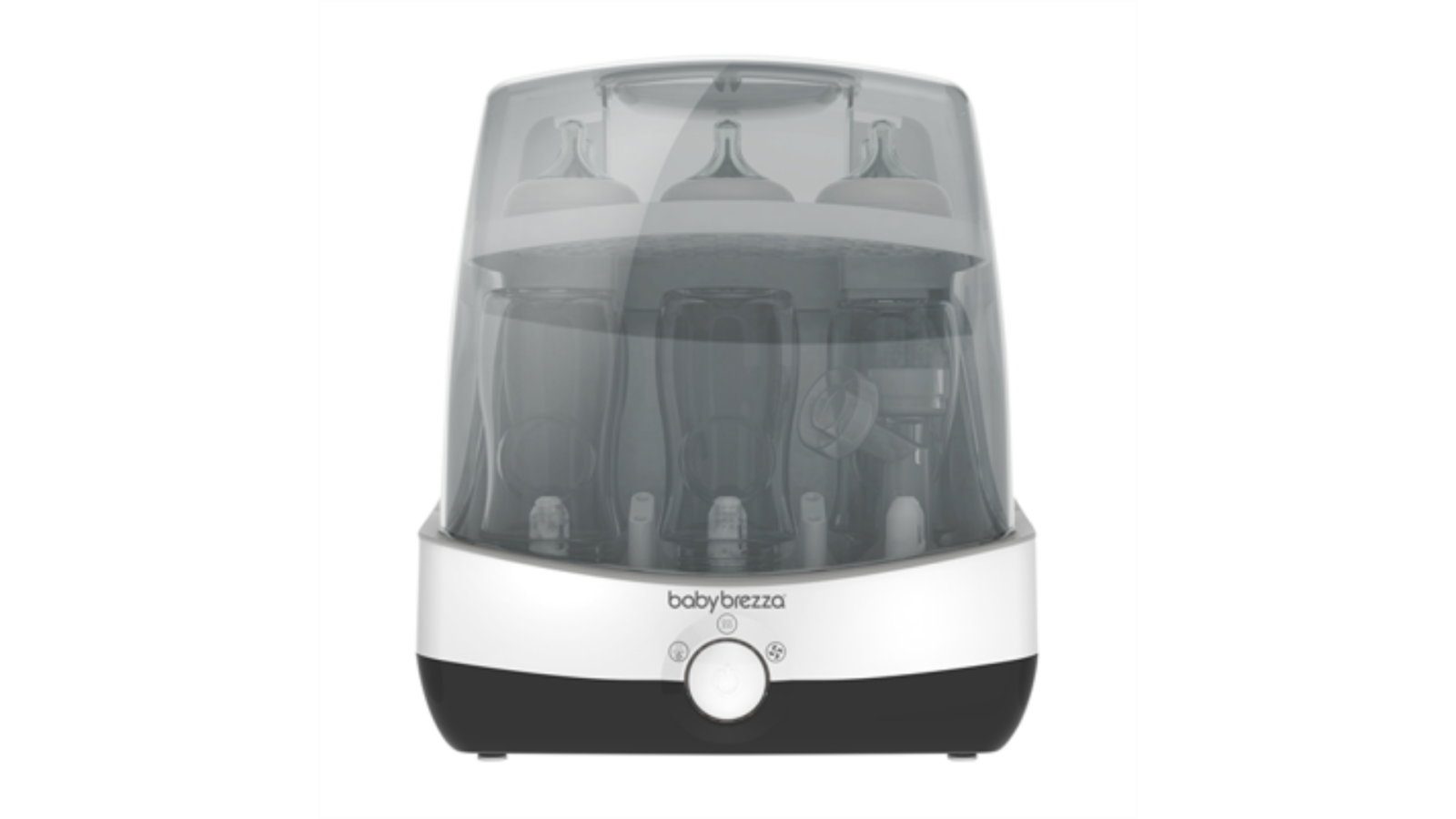
Every major parenting outlet ran the exact same copy-pasted press release when the Baby Brezza bottle sterilizer recall hit the U.S. and Canada. They told you to check your model numbers. They told you to unplug the heating plate. They told you to fill out a form for a free replacement.
They completely missed the point. Meanwhile, you can explore similar developments here: What Nobody Tells You About Living on a Remote Island as a Job.
If your takeaway from a melted plastic heating element is merely "I need a safer countertop sterilizer," you have been played by one of the most profitable fear-mongering campaigns in consumer appliance history. The real scandal isn't that a specific batch of Baby Brezza units overheated and posed a fire hazard. The real scandal is why millions of sleep-deprived parents are dropping hundreds of dollars on high-wattage plastic boxes to solve a biological problem that stopped existing in the developed world fifty years ago.
I have spent over a decade consulting on consumer product compliance, thermal engineering failures, and juvenile product manufacturing. I have sat in windowless conference rooms watching product managers try to cram commercial-grade heating coils into cheap polypropylene housings just to hit a $120 retail price point. When you combine high heat, standing water, mineral buildup, and thin-walled plastics, a recall isn't an anomaly. It is basic thermodynamics catching up to aggressive marketing. To explore the full picture, we recommend the excellent analysis by Apartment Therapy.
The Anatomy of a Countertop Fire Hazard
Let’s look at the actual mechanics of what happened with the Baby Brezza recall, because the surface-level reporting treats it like a freak accident.
Electric steam sterilizers operate on a brutally simple principle. You pour a precise amount of distilled water onto a metal heating plate. An electrical current heats that plate past 212 degrees Fahrenheit, turning the water into steam. That steam rises through a plastic chamber, theoretically enveloping your bottles and pacifiers before an automatic shut-off switch kills the power once the water evaporates.
Here is where the engineering breaks down in the real world.
- Thermal Runaway and Scale Buildup: Nobody uses distilled water every single time at 3:00 AM. Parents use tap water. Tap water contains calcium and magnesium. Over dozens of cycles, those minerals bake onto the heating plate, creating an insulating layer of limescale. Because limescale traps heat, the heating element has to work harder and reach much higher temperatures to boil the water above it.
- The Thermostat Blind Spot: Most budget and mid-tier appliances rely on a simple bimetallic thermostat positioned beneath the heating plate to detect when the water has boiled dry. When mineral buildup insulates the plate, the temperature sensor misreads the thermal load. The element stays energized longer than the surrounding plastic housing was ever rated to withstand.
- Polymer Degradation: Baby products are overwhelmingly made from polypropylene or polycarbonate derivatives because they are cheap to injection-mold and light to ship. Repeatedly subjecting these polymers to extreme heat cycles degrades their structural integrity. Eventually, the housing warps, melts, or ignites.
When Health Canada and the U.S. Consumer Product Safety Commission (CPSC) issue a recall for a heating appliance, they are reacting to documented property damage and burn risks. Yet the media covers it as a simple quality-control hiccup. You are told to blame a defective batch rather than questioning the flawed architecture of cramming a miniature steam boiler onto a wooden kitchen counter surrounded by paper towels and toddler hands.
Why You Are Sterilizing Things That Do Not Need Sterilizing
Before you rush to order a competitor's steam sterilizer or a UV-C light box, stop and ask yourself a fundamental question. What exactly are you trying to kill?
If you live in a municipality with treated, potable tap water and you are feeding a healthy, full-term infant, daily sterilization of baby bottles is largely medical theater.
The American Academy of Pediatrics (AAP) and the Centers for Disease Control and Prevention (CDC) have been remarkably clear on this, though their actual guidelines get buried beneath affiliate-link buying guides. According to the CDC, sanitizing feeding items is strictly necessary only when your baby is younger than two months old, was born prematurely, or has a weakened immune system. Even in those high-risk scenarios, sanitizing once a day is the ceiling—not after every single feeding.
Once a healthy baby crosses that two-month threshold, washing bottles thoroughly with hot water and dish soap—or running them through a standard dishwasher cycle—is completely sufficient.
Think about the absurdity of the modern feeding routine. Parents obsessively steam-sterilize a silicone nipple to eliminate 99.9% of microbes, set it down on a kitchen counter wiped with a damp sponge, pick up a phone covered in fecal coliform bacteria, and then hand the baby a plush toy that has been dragged across the living room floor. You cannot create a sterile bubble in a residential home. Nor should you want to.
The Hygiene Hypothesis and the $400 Countertop Trap
The juvenile products industry relies heavily on new-parent anxiety. If a brand can convince you that a microscopic trace of Cronobacter or standard household bacteria on a clean bottle is a mortal threat, you will happily surrender 18 inches of prime kitchen counter space and $150 to $300 for a dedicated machine that does one job.
We know from decades of immunological research—most notably the foundational work on the Hygiene Hypothesis pioneered by epidemiologist David Strachan and expanded by modern microbiome researchers—that early, low-level exposure to everyday environmental microbes is how an infant's immune system calibrates itself. Over-sanitizing an infant's immediate environment does not build a stronger baby. It deprives their developing gut and immune architecture of the benign training data it needs to distinguish between harmless dust and actual pathogens.
I will admit the downside to my own stance here. If you are dealing with well water that hasn't been tested, if you live in an area under a boil-water advisory, or if your infant is in the NICU or immunocompromised, aggressive sterilization is non-negotiable. In those specific edge cases, thermal disinfection saves lives.
Furthermore, there is a psychological comfort factor. For many anxious first-time parents, pushing a button on a sleek machine provides a sense of control during a chaotic life transition. If pressing that button lowers your cortisol levels, that has real value. Just do not confuse your emotional comfort with clinical necessity.
Dismantling the Top Myths Around Bottle Sanitization
Whenever a major recall like the Baby Brezza incident hits the news cycle, search engines flood with panicked questions. Almost all of them are built on false premises. Let’s tear through the most common ones.
"Are UV-C bottle sterilizers safer than steam sterilizers?"
Because steam sterilizers have a well-documented history of overheating, melting, and triggering recalls across multiple brands, manufacturers have pivoted hard toward UV-C light boxes. They pitch them as the cool, dry, modern alternative.
Here is what they leave out of the brochure. Ultraviolet-C radiation only kills pathogens on surfaces directly exposed to the light. It operates strictly on line-of-sight. If a bottle has a narrow neck, complex internal venting tubes (like anti-colic systems), or opaque areas, UV light casts shadows. Anything sitting in those shadows remains completely unsterilized. Worse, UV-C radiation aggressively degrades plastics and medical-grade silicone over time, causing bottle nipples to yellow, turn brittle, and shed microplastics directly into your infant's milk. You traded a thermal fire hazard for chemical polymer degradation and incomplete sanitation.
"Doesn't the dishwasher leave toxic soap residue on baby bottles?"
This is a classic talking point pushed by companies selling single-purpose countertop appliances. In reality, a modern residential dishwasher heats water to roughly 130 to 140 degrees Fahrenheit during the main wash, and up to 150 degrees or higher during the sanitize rinse cycle. Combined with alkaline detergents and high-pressure mechanical spray arms, a dishwasher removes lipids (the stubborn fats in breast milk and formula) far better than passive steam ever could.
Remember this critical rule of microbiology: you cannot sterilize dirt. If a microscopic film of milk fat remains inside a bottle nipple because you did a rushed hand-wash before tossing it into a steam sterilizer, the steam simply bakes that protein and fat onto the silicone. A dishwasher actually cleans the surface. If you are worried about fragrance or detergent film, switch to a dye-free, fragrance-free powder or pod and use the extra-rinse setting.
"How long do I actually need to boil bottles before first use?"
Every bottle manufacturer prints instructions telling you to boil new bottles and nipples for five minutes before the first feeding. Do that once. Take a heavy stainless-steel pot you already own, fill it with tap water, bring it to a rolling boil, drop the disassembled parts in for five minutes, and fish them out with tongs.
It costs zero dollars. It takes up zero permanent counter space. It has no cheap bimetallic thermostat waiting to fail and burn down your kitchen. Once that initial manufacturing dust and residue are gone, your obligation to run a miniature steam factory on your counter is officially over.
What You Should Actually Do With a Recalled Unit
If you own one of the affected Baby Brezza sterilizers—or frankly, any aging electric steam sterilizer showing signs of discoloration, warping, or burnt-smelling steam—stop using it immediately. Do not try to descale it and hope for the best. Once a heating element's thermal regulation has been compromised or the surrounding housing has warped, the unit is a liability.
Follow these exact steps instead of falling back into the appliance trap:
- Claim your remedy, then pivot: Go through the official CPSC or Health Canada recall portal to get your refund or replacement. If you receive a brand-new replacement unit, leave it sealed in the box and sell it on a local marketplace to recoup your cash.
- Audit your drying setup: Most bacterial growth on baby bottles happens after washing, not during. Traps like enclosed plastic drying domes or damp dish towels create warm, humid incubators for mold and bacteria. Invest $15 in an open-air vertical drying rack with plenty of airflow, and wash the rack itself once a week.
- Master the 60-second bottle scrub: Buy a dedicated silicone bottle brush (nylon bristles trap bacteria and grease) and a tiny nipple brush. Scrub bottles immediately after a feeding with hot water and a drop of grease-cutting dish soap before milk fats have a chance to polymerize onto the plastic.
- Use a microwave steam bag for emergencies: If your baby gets sick, or you are traveling and forced to wash bottles in a sketchy hotel sink, buy a pack of reusable silicone microwave steam bags. They cost under $10, fold flat into a diaper bag, and use the magnetron you already own without adding another corded fire hazard to your kitchen.
The Bigger Lesson for the Juvenile Products Industry
The Baby Brezza recall is a symptom of an industry that prioritizes feature bloat over fundamental safety engineering. Every year, baby gear companies add digital touchscreens, Wi-Fi connectivity, automated drying fans, and ultra-fast heating coils to devices that used to be nothing more than a pot of boiling water.
Every added component is another failure point. Every watt of power crammed into a cheap plastic shell increases thermal stress.
Parents do not need smarter, faster, more connected countertop appliances to raise healthy children. They need fewer plugged-in fire hazards cluttering their homes, fewer manufactured anxieties draining their bank accounts, and the confidence to trust basic soap, hot water, and common sense.
Unplug the recalled machine, throw out the replacement brochure, and clear off your kitchen counter.