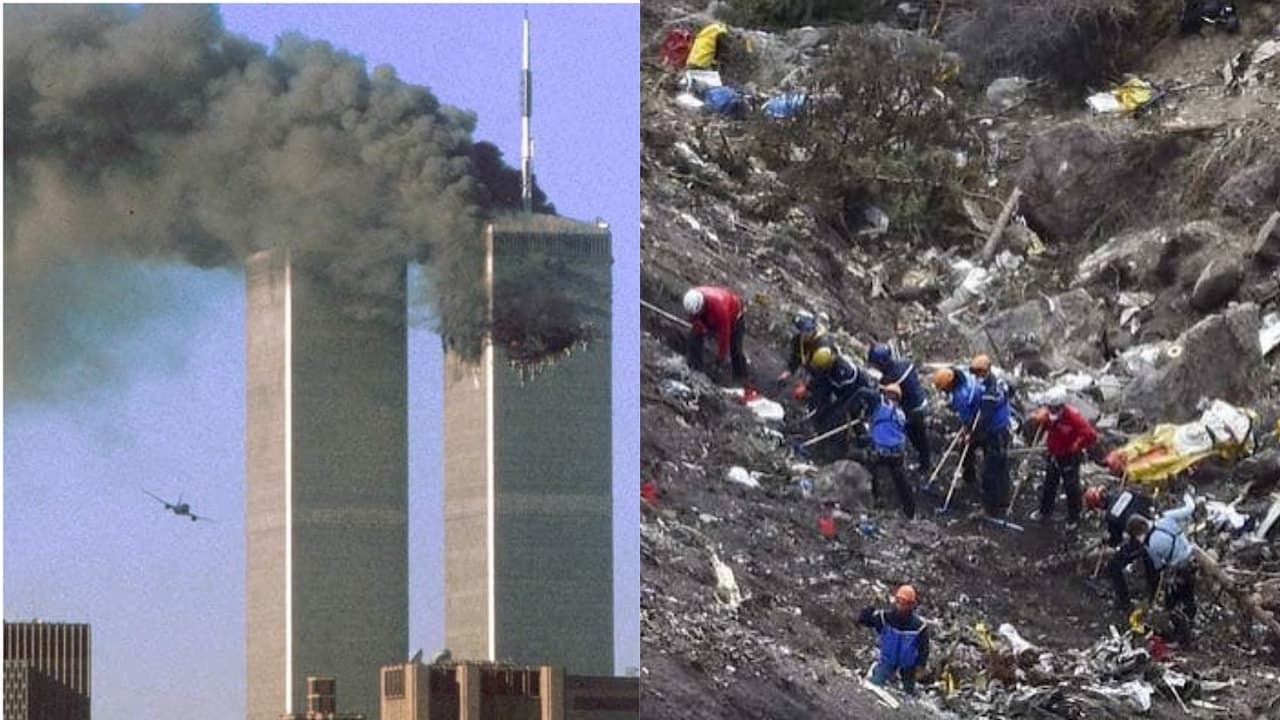
The architecture of global commercial aviation security is not a product of proactive engineering. It is an iterative, reactive patch layer built on top of historical failure points. Every major policy shift in passenger and cargo screening represents a catastrophic failure of intelligence or technological foresight, followed by an immediate regulatory overcorrection. To understand why modern airport security functions the way it does requires examining the economic trade-offs, operational bottlenecks, and systemic vulnerabilities exposed by landmark security breaches from the September 11 attacks to the 2001 shoe bombing and subsequent evolutions.
The security apparatus operates within a strict trilemma: passenger throughput velocity, operational cost, and absolute threat mitigation. Optimizing for any two variables inherently degrades the third. When an incident breaches the perimeter, regulatory bodies systematically sacrifice throughput velocity and inflate operational costs in pursuit of zero-failure security. This dynamic transforms airports from high-efficiency transit nodes into heavily regulated checkpoints governed by diminishing marginal returns on security expenditure.
The Structural Anatomy of the 2001 Paradigm Shift
The events of September 11, 2001, exposed a foundational flaw in pre-modern aviation security: the assumption that domestic hijacking followed a predictable game theory model. Historically, hijackings were politically or economically motivated extortion attempts where passengers and crew were utilized as leverage. The standard operating procedure for flight crews under hijacking protocols prior to 2001 prioritized compliance and containment, predicated on the hypothesis that the aircraft would eventually land and negotiations would ensue.
The 2001 attacks subverted this model by weaponizing the aircraft itself as a kinetic projectile. This transformation invalidated existing risk assessments overnight. The systemic vulnerabilities exposed included:
- Asymmetric Armament Access: Prohibited item lists permitted small cutting implements under specific dimensions, assuming they posed no threat to the structural integrity of the aircraft or the control of the flight deck.
- Vulnerable Flight Deck Architecture: Cockpit doors were lightweight, outward-opening, and easily compromised by physical force, allowing unauthorized access to flight controls.
- Decentralized Regulatory Oversight: Security screening was largely contracted out to private security firms operating under low-bid competitive bidding models, prioritizing minimum wage labor and minimal compliance over operational rigor.
The immediate legislative response in the United States was the Aviation and Transportation Security Act of 2001, which federalized airport screening operations and established the Transportation Security Administration. Economically, this centralized security mandate shifted the financial burden from individual airlines and airports onto federal budgets and passenger facility charges, internalizing security as a public infrastructure cost rather than a private corporate expense.
The 2001 Shoe Bombing and the Mechanics of Novel Threat Vectors
Three months after the 2001 attacks, Richard Reid attempted to detonate an explosive device concealed within his footwear aboard American Airlines Flight 63. This incident bypassed the newly heightened checkpoints because screening technology and operational protocols were laser-focused on metallic weapons and traditional firearms.
The shoe bombing incident forced a critical evolution in threat vector analysis. It demonstrated that adversaries adapt faster to static regulatory checklists than centralized bureaucracies can update them. The operational mechanics of this vulnerability exposed two distinct failures in security design:
- Dimensional Fixation: Checkpoint architecture relied predominantly on walk-through metal detectors and basic X-ray systems designed for high-density metallic objects, rendering organic explosives invisible to standard screening operators.
- Behavioral Blind Spots: Pre-board screening lacked standardized behavioral detection metrics, relying entirely on physical pat-downs and bag searches driven by machine alerts rather than anomaly detection.
The systemic response to the shoe bombing was the eventual introduction of Advanced Imaging Technology, commonly known as millimeter-wave body scanners, along with the ubiquitous mandate to remove footwear during screening. However, this introduced a persistent operational trade-off: every new screening step increases lane processing time, compounding passenger queues and creating secondary security vulnerabilities in overcrowded public terminal lobbies—areas that represent soft targets lacking sterile checkpoint protections.
The Cost Function of Regulatory Overcorrection
Aviation security operates on a risk-mitigation curve characterized by exponential cost increases for linear gains in safety. The introduction of each successive security layer—from reinforced cockpit doors and federal air marshals to liquid restrictions and biometric boarding—imposes systemic economic drag.
- Throughput Bottlenecks: Enhanced physical screening reduces the volume of passengers a single checkpoint lane can process per hour. Airports must either expand physical terminal footprints, which carries massive capital expenditure costs, or accept longer passenger wait times that increase economic friction for business travel.
- Capital and Maintenance Expenditure: Modern security hardware, including computed tomography X-ray scanners and biometric identity verification systems, requires multi-billion-dollar capital allocation cycles, long-term maintenance contracts, and continuous software patching against evolving cyber-physical threats.
- Displacement Risk: Hardening the sterile airside environment does not eliminate risk; it displaces it. Concentrating security resources exclusively at the aircraft boarding gate pushes vulnerabilities outward into terminal ticketing halls, baggage drop zones, and cargo facilities.
Cargo security provides a clear example of this displacement challenge. While passenger baggage underwent rigorous screening enhancements, air cargo—which accounts for a significant percentage of international widebody transport capacity—historically relied on trusted shipper programs. Mandating 100% physical screening for all inbound belly-cargo required the development of massive industrial-scale explosive trace detection and large-scale cargo scanning infrastructure, fundamentally altering the economics of airfreight logistics.
Strategic Operational Forecasting
The evolution of aviation security from reactive physical barrier reinforcement toward predictive, data-driven risk management is reshaping the industry. The primary limitation of the historical checkpoint model is its reliance on uniform screening: treating every passenger with identical suspicion regardless of risk profile.
Future resilience depends on the deployment of risk-tiered architectures. Programs such as expedited screening protocols demonstrate that throughput can be maintained or improved by shifting resources toward unvetted or high-risk populations while clearing pre-screened, verified travelers through automated, biometric checkpoints.
Simultaneously, the threat landscape has shifted from physical board-room style incursions toward cyber-physical attacks on air traffic management networks, ground-handling automation, and aircraft flight management systems. The next phase of aviation security engineering requires moving beyond the physical checkpoint to secure the digital infrastructure underpinning global flight operations. The strategic imperative is no longer simply stopping contraband at the gate, but building systemic redundancy across the entire operational supply chain to ensure continuity under attack.


