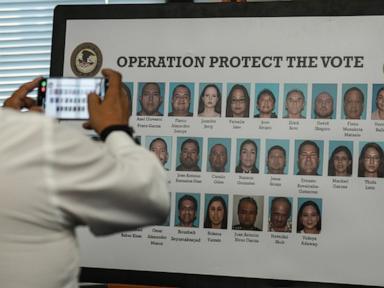
When a government agency compiles a list of alleged noncitizens and seeks judicial sanctions against researchers who audit that list, the dispute stops being a simple policy disagreement and becomes a test of data governance, evidentiary standards, and procedural leverage. In late October and early November 2026, federal filings in California brought that collision into sharp focus: attorneys for an immigrant rights group—the Coalition for Humane Immigrant Rights—filed court papers reporting that more than 40% of roughly 20,000 names provided by the Justice Department did not appear on California's voter rolls, while also flagging 22 individuals who appeared to be naturalized U.S. citizens and suggesting thousands more U.S. citizens were swept into the dataset. The Justice Department responded by urging sanctions and suggesting potential contempt or referral for criminal contempt over how the analysis was handled and presented in court.
Standard news reporting captures the surface conflict—dueling filings, headlines about sanctions, and warnings to election officials—but it leaves the underlying mechanics unexamined. A rigorous analysis separates what is actually established in the public record from what remains contested or unverified, maps the structural incentives driving each side, and traces the operational bottlenecks created when large administrative lists meet live election administration.
Mapping the Competing Arguments and Evidentiary Gaps
Every dispute over voter eligibility databases rests on two distinct questions that are routinely conflated in public debate: list accuracy (whether an individual on a dataset is actually a noncitizen and registered or active on a voter roll) and legal or procedural posture (whether a party violated court access restrictions, established legal standing, or proved unlawful voting).
In the California litigation surrounding the 2026 midterm cycle, the competing positions rely on different claims and face different evidentiary hurdles:
- The Justice Department's enforcement and sanctions posture: Federal authorities pushed to require California to set aside ballots linked to roughly 20,000 individuals alleged to be potential noncitizens, issued subpoenas to election offices, warned officials regarding criminal exposure if noncitizens knowingly voted, and argued that the outside report's broad comparisons against the state voter file lacked relevance to plaintiff standing while warranting sanctions or contempt scrutiny over access rules. Separately, the Justice Department announced targeted criminal charges in late October and early November 2026 involving dozens of foreign nationals across multiple states—including California, Pennsylvania, Florida, New York, and Nevada—alleging unlawful voting, fraudulent registration, or false statements in connection with citizenship or election processes.
- The database audit's findings: Attorneys for the immigrant rights group reported that over 40% of the roughly 20,000 names on the government's list were absent from California's voter rolls, identified 22 individuals who appeared to be naturalized citizens, and contended that thousands more U.S. citizens were misclassified.
- The judicial response: Federal courts rejected requests to segregate or halt processing of the disputed California ballots during the midterm window, with a federal judge warning that such segregation would "wreak havoc" on voting administration.
What cannot be asserted as established fact from public reporting alone is the exact ground-truth error rate of the entire 20,000-name dataset, the precise citizenship status of every unverified individual, or whether a court has found contempt or sanctionable conduct. Distinguishing a known fact (a court filing was submitted, a percentage was reported in court papers, a federal judge denied a ballot-segregation request) from an educated hypothesis (that unverified or stale immigration records frequently misclassify naturalized citizens or non-registrants when matched against state voter files) is essential before drawing conclusions about systemic fraud or systemic error.
The Four Pillars of Database Matching Disputes
When analysts, agencies, and election administrators evaluate a flagged list of alleged noncitizen registrants or voters, outcomes are governed by four structural pillars rather than a single metric.
1. Record Matching and Schema Asymmetry
Administrative databases rarely share a clean, universal primary key. Immigration and federal records, motor vehicle records, and state voter registration files are built for different statutory purposes, updated on different schedules, and structured with different fields.
When two datasets are cross-referenced without strict deterministic matching—such as verified Social Security numbers, exact birthdates, middle names, and residential history—false positives and false negatives emerge predictably. A name collision among common surnames, a hyphenated or transposed name, or an address change can link a record to the wrong person or fail to match a person who is actually on a roll. Conversely, if a dataset pulls individuals who once held noncitizen status without capturing subsequent naturalization in real time, a U.S. citizen can be flagged even if they legally registered after taking the oath of citizenship.
2. Temporal Lag and Roll Volatility
Voter registration rolls and immigration status files are moving targets, not static snapshots. A person may register or appear in an administrative extract at one point, move out of state, have their registration canceled, die, or never complete registration at all.
That temporal lag explains why a claim that "20,000 people may not be U.S. citizens" does not automatically equal "20,000 noncitizens are actively casting ballots." If more than 40% of the names do not even appear on the state's voter file, the operational gap between list generation and active voting risk widens immediately. Even where a name does appear, eligibility depends on citizenship status at the time of registration and voting, which requires verifying naturalization dates against registration dates rather than relying on an outdated status flag.
3. Procedural Standing vs. Systemic Auditing
A critical tension in courtroom battles over data audits is the mismatch between litigation rules and statistical auditing. Courts police narrow questions: whether specific plaintiffs have legal standing, whether discovery or protective orders were respected, and whether a requested remedy is lawful and workable before an election.
Data analysts, by contrast, care about population-level precision and recall: what share of flagged records are true positives, how many are false positives, and what happens if a flawed list is used to trigger ballot challenges or criminal warnings. When an agency argues that a broad comparison against the full voter file is irrelevant to plaintiff standing—while simultaneously using list-based claims to pressure election administration—the clash becomes procedural as much as technical.
4. Sanction Threat as an Information Friction Mechanism
Seeking sanctions or contempt referrals over an adverse analysis introduces a distinct strategic dynamic: cost asymmetry. Independent researchers, legal aid organizations, and local election clerks rarely possess federal litigation budgets or sovereign immunity. Even where a sanctions motion is contested or ungranted, the mere threat of contempt or investigation raises compliance costs, forces defensive legal filings, and creates hesitation around publishing audit findings.
From a systems perspective, threatening sanctions against data scrutiny acts as an information choke point. If audits carry severe legal risk whenever protective boundaries are arguably crossed—or even disputed—external error detection slows down, reducing the likelihood that database defects are caught before ballots are processed or officials are threatened with prosecution.
Cause-and-Effect Chains Most Commentators Miss
Surface coverage often treats ballot-segregation disputes and sanctions motions as isolated tactical moves. Tracing the cause-and-effect chains reveals why those moves collide in practice.
First, broad list assertions create high-friction administrative demands. If an agency presents a large list of suspected noncitizens shortly before an election and demands that local officials set ballots aside, election administrators face an immediate operational dilemma: either segregate thousands of ballots on the basis of a contested match—risking wrongful disenfranchisement of eligible citizens and administrative chaos—or refuse and face threats of legal action or criminal scrutiny. That operational friction is precisely why federal courts weigh administrative disruption heavily when asked to alter ballot processing mid-stream.
Second, unverified false positives erode enforcement credibility. Prosecuting or charging specific individuals where evidence supports unlawful voting or false statements is a standard prosecutorial function. Yet when a broad database list is shown to contain large numbers of non-registrants or naturalized citizens, every unverified error weakens public and judicial confidence in the broader list's reliability. High false-positive rates turn a targeted integrity argument into a credibility liability.
Third, sanctions battles shift attention from data quality to courtroom conduct. When the spotlight moves to whether lawyers or advocates violated access rules or whether a report was "political grandstanding," the substantive audit of false positives and matching rules risks getting sidelined behind procedural motions. Both sides end up spending bandwidth on collateral litigation rather than verifiable record-by-record reconciliation.
How to Audit Voter Roll and Citizenship Claims Rigorously
Anyone—whether an election official, legal analyst, investigative reporter, or policy researcher—evaluating a contested eligibility dataset can apply a disciplined, step-by-step verification protocol before treating any headline number as settled.
- Audit the denominator and the join first. Before analyzing who is "on the list," check how many records actually match an active or historical voter registration record in the target jurisdiction. If a large fraction is not on the voter roll at all, separate non-matching records from registered voters immediately so the two groups are never conflated.
- Test citizenship chronology, not just static flags. For records that do match a voter file, check whether citizenship was acquired before registration or voting. A naturalization date prior to the registration date resolves a large share of apparent mismatches without guesswork.
- Separate systemic list error from individual criminal cases. Treat bulk database matches as hypotheses or leads, not proof of unlawful voting. Evaluate individual criminal indictments or complaints on their own case-specific facts and evidence rather than extrapolating a bulk list's accuracy—or inaccuracy—to every individual case.
- Inspect protective orders and data-handling boundaries. Before publishing or filing analyses derived from litigation or government-produced datasets, verify every confidentiality, dissemination, and redaction rule in the governing court order. Procedural missteps give opponents an easy opening to demand sanctions instead of defending their underlying data.
- Quantify uncertainty ranges explicitly. Report exact counts where verified, state clearly where records remain unverified or ambiguous, and avoid presenting rough extrapolations as exact headcounts.
Practical Limitations and Blind Spots
Even a disciplined audit has hard boundaries. Independent analysts rarely have direct, unrestricted access to complete federal immigration files, full state motor vehicle histories, or confidential election-system logs. Privacy laws and court protective orders rightly restrict bulk disclosure of personal identifying information, meaning outside auditors often work with partial samples, public voter extracts, or limited subsets.
At the same time, election officials face real statutory constraints and tight operational calendars. A method that is statistically sound in a post-election retrospective audit may be unworkable days before an election if it requires manual document review for tens of thousands of voters. Recognizing those trade-offs prevents overclaiming on either side: no database audit is omniscient, and no bulk automated match is self-authenticating.
Strategic Action: Standardize Pre-Action Verification and Transparent Audit Protocols
The most effective strategic play for election administrators, oversight bodies, and legal teams dealing with contested eligibility lists is to insist on a documented pre-action verification threshold before taking disruptive administrative or punitive steps. Rather than fighting last-minute battles over emergency ballot segregation or retaliatory sanctions motions, stakeholders should push for standardized reconciliation protocols that require verified record matching—confirming active voter registration, checking naturalization chronology, and isolating non-matching entries—before any list is used to threaten officials, challenge ballots, or anchor public claims of mass noncompliance. In high-stakes election disputes, the side that controls verifiable data hygiene and procedural discipline holds the durable strategic advantage long after the initial court filings fade.