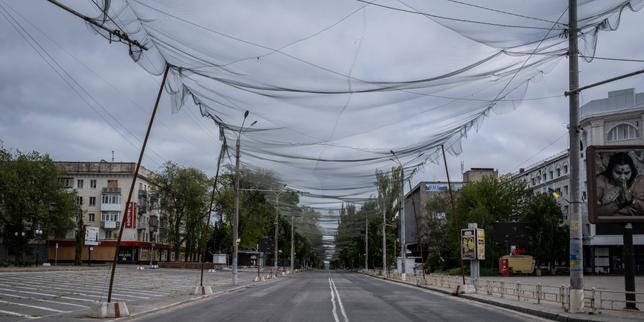
The introduction of ubiquitous first-person view aerial munitions into modern contested environments has fundamentally altered the attrition calculus of ground combat. Beyond the direct kinetic losses inflicted by precision loitering munitions, the secondary psychological and operational degradation—colloquially termed dronophobia—has emerged as a primary constraint on tactical mobility and endurance. This phenomenon is not merely a manifestation of fear; it is a measurable structural tax on cognitive bandwidth, logistical throughput, and force distribution.
To understand why prolonged exposure to persistent uncrewed surveillance and strike assets leads to systemic operational failure, one must deconstruct the mechanics of aerial dominance into its constituent economic, cognitive, and spatial components. You might also find this related coverage useful: When State Power Collides With the Fuel Pump.
The Cognitive Economics of Persistent Aerial Surveillance
In a traditional conflict environment, exposure to indirect fire or aerial threat was episodic, governed by sortie rates, weather conditions, or scheduled bombardments. The introduction of inexpensive battery-powered aerial platforms creates a state of continuous operational exposure. This constant presence shatters the psychological recovery cycle required to maintain high-functioning combat units.
The human nervous system is not optimized for persistent vigilance against small, silent, or low-signature threats. When soldiers operate under an open sky populated by reconnaissance and strike platforms, they enter a perpetual state of hyper-arousal. This state consumes finite cognitive reserves, leading to decision fatigue, degraded situational awareness, and diminished reaction speeds over time. As extensively documented in detailed coverage by Reuters, the effects are notable.
Three distinct cognitive vectors drive this erosion:
- Acoustic Parasitism: The high-pitched whine of small electric rotors acts as an auditory stressor, disrupting sleep patterns and destroying the restorative downtime necessary for unit cohesion and psychological resilience.
- Ambiguity of Target Acquisition: Because commercial and modified systems can loiter silently or drop payloads from overhead without warning, individuals cannot reliably differentiate between a passive observation drone and an active attack vector. This uncertainty paralyzes initiative.
- Loss of Sanctuary: The rear echelon ceases to exist as a zone of physical safety. Logistics nodes, medical stabilization points, and command posts face the same overhead surveillance as front-line trenches, compressing the battlespace and intensifying cumulative stress.
Spatial Compression and the Destruction of Operational Mobility
Tactical mobility relies on the ability to concentrate forces, mass logistics, and execute rapid maneuver. Persistent aerial oversight reverses these principles by imposing a heavy penalty on movement. When every signature larger than a single individual can be detected, tracked, and targeted within minutes, forces are forced to disperse and adopt static postures.
This spatial compression creates a severe operational paradox. To survive aerial targeting, units must scatter into micro-elements, minimizing their thermal, electronic, and physical footprint. However, extreme dispersion degrades command and control, slows down supply chains, and isolates units from mutual fire support.
Persistent Surveillance
       │
       ▼
Forced Dispersion of Forces ──► Degraded Command & Control
       │
       ▼
Compromised Logistics      ──► Attrition of Operational Tempo
The mathematical relationship between aerial density and maneuverability is inverse and non-linear. As the cost of aerial reconnaissance drops toward parity with infantry equipment, the economic threshold for denying movement approaches zero. A defender no longer needs to achieve air superiority in the traditional sense; they merely need to achieve local, continuous sensor saturation to freeze an opposing force in place.
The Attrition Feedback Loop and Logistical Paralysis
The ultimate objective of persistent aerial threat is not simply the elimination of personnel through kinetic strikes, but the systematic disruption of the logistical life-support system that enables an army to function.
Logistics is fundamentally a function of predictable movement, heavy vehicle transit, and centralized staging. When overhead threats render daylight movement of vehicles nearly impossible, supply chains degrade. Water, ammunition, rations, and medical evacuations must be shifted to manual transport or restricted to high-risk nocturnal windows. This compression of logistical throughput introduces severe friction:
- Evacuation Deficits: Wounded personnel cannot be moved rapidly from forward positions, leading to lower survival rates for preventable injuries and accelerating the psychological deterioration of remaining troops.
- Resource Depletion: Static units consume resources locally without replenishment, forcing commanders into high-risk resupply missions that expose personnel to the very threats they are trying to avoid.
- Equipment Abandonment: Vehicles disabled by minor strikes are frequently abandoned rather than recovered, because the act of towing or repairing them exposes recovery crews to subsequent loitering munition attacks.
Counter-Asymmetry and Structural Adaptation
Mitigating the systemic degradation caused by widespread aerial threats requires a structural re-engineering of tactical doctrine, moving away from centralized reliance on vehicles and visible infrastructure toward decentralized, hardened, and electronically managed formations.
Armies facing pervasive aerial observation must transition from passive concealment to active mitigation. This involves the integration of low-cost, distributed electronic warfare at the squad level, the hardening of fortifications against vertical descent angles, and the redesign of tactical communications to operate without heavy electromagnetic signatures.
The long-term viability of a force under continuous aerial observation depends entirely on its ability to decouple visibility from vulnerability. Until tactical formations can reliably blind local airspace without expending prohibitively expensive interceptor missiles, the psychological and operational tax of aerial persistence will remain the dominant bottleneck on military endurance.