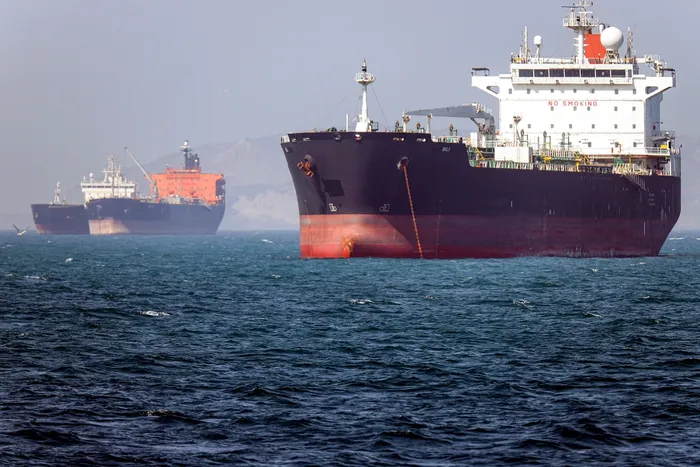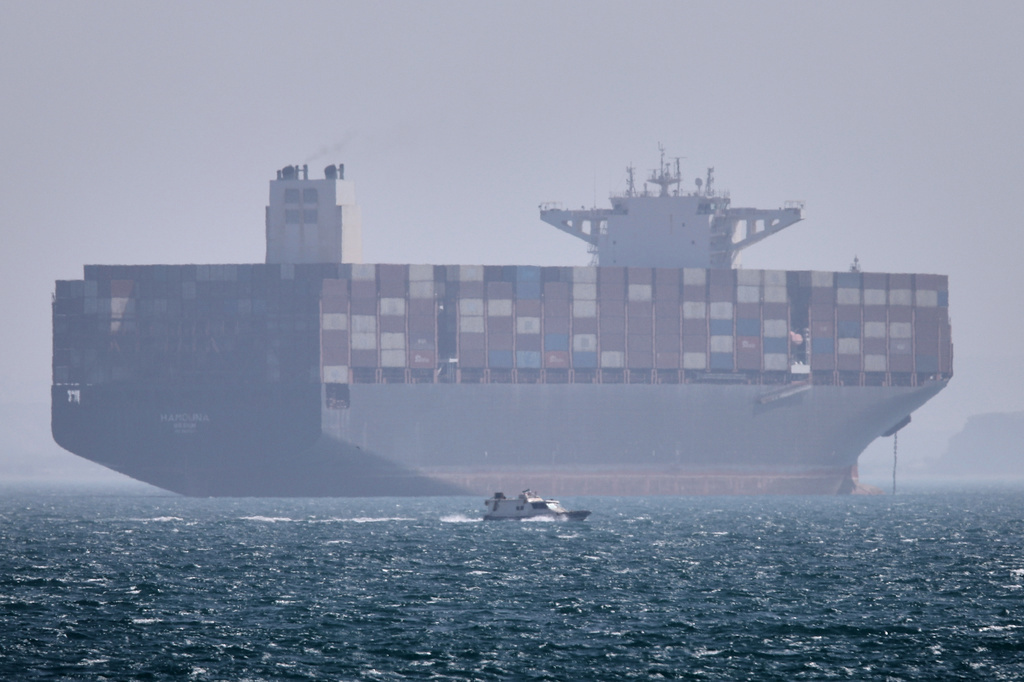
The recent escalation in Iranian diplomatic and military rhetoric regarding its maritime assets represents a shift from reactive posturing to a structured doctrine of "Calculated Proportionality." When Tehran issues warnings against interference with its oil tankers or commercial vessels, it is not merely engaging in political theater; it is asserting a specific cost-function designed to neutralize the conventional naval superiority of the United States and its allies. The objective is to establish a credible threat of kinetic friction that exceeds the economic or strategic utility of any potential Western interdiction.
The Triad of Iranian Maritime Strategy
To understand the mechanics of these warnings, one must analyze the three distinct layers of Iran’s operational framework:
- Legalistic Sovereignty Claims: Iran utilizes the United Nations Convention on the Law of the Sea (UNCLOS) selectively to frame its naval movements as "freedom of navigation," mirroring the exact language used by the U.S. Navy. By adopting this terminology, Tehran attempts to create a legal stalemate where any interference is characterized as an act of piracy or a violation of international norms.
- Asymmetric Escalation Dominance: The Iranian Navy (IRIN) and the Islamic Revolutionary Guard Corps Navy (IRGCN) operate under a bifurcated command structure. While the IRIN provides a veneer of traditional blue-water presence, the IRGCN utilizes a swarm-based littoral strategy. The threat is not a ship-to-ship engagement in the traditional sense but rather the saturation of target defenses using low-cost assets—drones, fast attack craft, and limpet mines.
- Economic Chokepoint Leveraging: The primary variable in Iran’s deterrent equation is the global sensitivity to energy prices. By signaling a threat to vessels in the Strait of Hormuz or the Bab el-Mandeb, Iran initiates a "risk premium" in global insurance markets (Lloyd’s of London Market Association), effectively outsourcing its deterrence to the global financial sector.
The Mechanics of Kinetic Friction
The efficacy of a threat against the U.S. Navy depends on the "Detection-to-Engagement" cycle. Iran’s warnings serve as a precursor to specific tactical deployments meant to complicate this cycle. The Iranian military establishment recognizes that it cannot win a sustained naval conflict. Instead, its strategy focuses on the "First Strike Paradox"—where the damage inflicted in the opening minutes of a skirmish provides enough political leverage to force a ceasefire before the U.S. can bring its full carrier strike group (CSG) capabilities to bear.
Technical indicators of this posture include:
- Anti-Access/Area Denial (A2/AD) Density: The deployment of Noor and Qader anti-ship cruise missiles along the coastline provides a persistent threat envelope that extends up to 300 kilometers from the shore. This forces enemy vessels to operate further out at sea, increasing the flight time for carrier-based aircraft and reducing the accuracy of short-range intelligence gathering.
- Subsurface Obfuscation: The use of Ghadir-class midget submarines in the shallow, acoustically noisy waters of the Persian Gulf creates a high-uncertainty environment for sonar operators. These vessels are difficult to track and can lay bottom-moored mines that remain dormant until triggered by specific acoustic signatures.
The Logic of the Tanker War 2.0
The specific focus on oil tankers is a response to the "Maximum Pressure" legacy. Iran views its oil exports as a matter of national survival; therefore, the security of its tankers is equated with the security of the state itself. The deterrence logic follows a binary path: if Iranian oil cannot flow, the regional transit of petroleum products must face equivalent risk.
This "Tit-for-Tat" framework is managed through a sophisticated signaling process. When a warning is issued, it is often accompanied by the shadowing of Western vessels or the conduct of "Zolfaqar" style naval exercises. These actions serve as a physical validation of the verbal threat, ensuring that the U.S. Fifth Fleet must increase its Force Protection Conditions (FPCON), which incurs significant operational and personnel costs.
The Cost-Benefit Imbalance
A critical failure in most analyses is the neglect of the "Expenditure Ratio." A single U.S. SM-2 interceptor missile costs approximately $2 million. The Iranian Shahed-series loitering munitions or small explosive-laden boats used to threaten tankers cost a fraction of that, often in the low tens of thousands. In a prolonged engagement, Iran can achieve "Economic Attrition" without ever sinking a major warship. By simply forcing the U.S. to expend high-value munitions against low-value targets, Iran degrades the long-term readiness of the regional naval presence.
Counter-Deterrence and Its Limitations
The United States responds to these warnings through the International Maritime Security Construct (IMSC) and Operation Sentinel. However, these multilateral efforts face several structural bottlenecks:
- Jurisdictional Complexity: Tankers are often flagged in nations like Panama or Liberia, owned by entities in Greece, and crewed by international sailors. Defining an attack on such a vessel as an "attack on the U.S." is a legal stretch that complicates the Rules of Engagement (ROE).
- Escalation Management: The primary constraint on U.S. action is the fear of a "miscalculation cascade." If a U.S. destroyer sinks an IRGCN craft in response to a perceived threat, the proximity of Iranian land-based batteries could lead to a rapid escalation into a full-scale regional war—an outcome the U.S. strategic command currently views as net-negative for global stability.
Tactical Realities of Naval Escorts
Providing continuous escort for commercial shipping is an unsustainable logistical burden. The Persian Gulf sees thousands of transits monthly. The U.S. Navy lacks the hull count to provide 1-to-1 protection. This "Security Gap" is precisely what Iranian warnings exploit. By naming specific threats, Tehran forces the U.S. to prioritize certain vessels, leaving others vulnerable and highlighting the limits of Western maritime hegemony.
The Shift Toward Autonomous Interdiction
A significant development in this theater is the increasing reliance on Unmanned Surface Vessels (USVs). Task Force 59, the U.S. Navy’s dedicated robotics unit in the region, represents an attempt to close the security gap through persistent surveillance. Iran has already attempted to "capture" these USVs, signaling that its warnings extend to autonomous systems. This indicates that the future of maritime friction will not be defined by sailors on decks, but by the electronic warfare (EW) capabilities required to maintain control over remote sensors.
Intelligence as a Deterrent
The Iranian "warning" serves a dual purpose of internal propaganda and external psychological warfare. Internally, it reinforces the narrative of the Islamic Republic as a defiant power capable of challenging the "Global Arrogance" (the U.S.). Externally, it creates a "wait-and-see" hesitation in the minds of commercial shipping companies, which may opt for more expensive but "safer" routes or demand higher premiums, further straining the economic links between Western powers and regional allies.
Operational Recommendations for Regional Stability
The current trajectory suggests that verbal warnings will soon give way to "gray zone" kinetic events—incidents that fall below the threshold of war but provide clear evidence of capability. The most probable flashpoint is the interception of an Iranian vessel in international waters under the suspicion of violating sanctions or transporting prohibited materials.
To mitigate the risk of a systemic maritime failure, stakeholders must transition from reactive patrolling to a decentralized defense model. This involves:
- Hardening Commercial Assets: Implementing non-kinetic defense systems (e.g., long-range acoustic devices, high-intensity lasers, and improved hull monitoring) on tankers to reduce their reliance on military escorts for low-level threats.
- Automated Verification: Utilizing blockchain-based cargo tracking to eliminate the "ambiguity" Iran uses to justify its legal claims, making it harder for Tehran to frame interdictions as arbitrary.
- Regional Security Integration: Shifting the burden of maritime security toward local powers—specifically the Gulf Cooperation Council (GCC) states. A regionalized naval response reduces the "foreign invader" narrative that Iran uses to justify its aggressive posture.
The strategic play here is not to meet every Iranian warning with an equal naval deployment. Doing so validates the Iranian strategy of cost-imposition. Instead, the focus must shift to neutralizing the utility of the threat by making commercial shipping a "hard target" and exposing the IRGCN’s tactics through high-fidelity, real-time public intelligence releases. The goal is to strip away the shadow of the "gray zone," forcing Iranian naval actors to choose between a visible, high-risk escalation or a retreat into standard maritime conduct.