Standard reporting on a flight diverted over a bomb threat treats the event as an isolated security scare: a warning arrives, an airframe lands or is isolated, authorities sweep the cabin, and operations resume. That framing misses the real mechanism. A hoax bomb threat against a commercial flight to or from Tel Aviv is an asymmetric cost-transfer attack that weaponizes an airline's own life-safety protocols to extract operational, financial, and psychological friction at negligible cost to the sender.
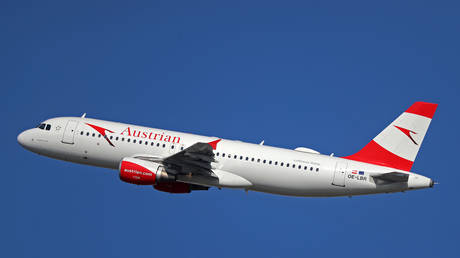
In late 2026, aviation security saw clusters of bomb threats hit flights connected to Tel Aviv alongside broader waves of hoax warnings across European flights and institutions. Reported incidents include a Delta Air Lines service on the New York to Tel Aviv route isolated after arrival at Ben Gurion Airport and a separate departure under the same flight number held at JFK on October 13; Austrian Airlines flight OS82 from Tel Aviv to Vienna diverted to Sofia under fighter jet escort on October 18; and KLM flight KL461 bound for Tel Aviv via Bucharest diverted or held for inspection on November 5. When a competitor article merely recounts these diversions chronologically, it leaves the reader with a list of disruptions rather than an operational model of why those disruptions happen, how they propagate through a network, and where system defenses face genuine limits.
The Asymmetric Cost Function of Hoax Threats
To understand why hoax threats persist even when almost every single one proves unfounded, start with the cost asymmetry between attacker and defender. Sending a threat—whether via phone, email, or a compromised account—requires minimal effort, near-zero capital, and low immediate physical risk if routed through anonymous channels or hijacked credentials. Triggering a response requires deploying high-cost physical and human capital: military quick-reaction alert aircraft, air traffic control rerouting, emergency ground crews, explosive ordnance disposal teams, passenger screening and re-screening, and out-of-position flight crews.
Because a commercial airline cannot price a credible bomb threat as a routine delay, the rational baseline rule in aviation safety is zero tolerance for unverified lethality. Any threat that passes an initial credibility threshold forces an immediate shift from normal schedule execution to containment. That shift converts a cheap digital or telephonic signal into hard operational expense.
What most coverage overlooks is that the attacker's primary payoff does not require an explosive device. In game-theoretic terms, the sender imposes a tax on network reliability. Even when security teams declare an aircraft clear within hours, the event consumes scarce slack in aircraft rotations, crew duty limits, and terminal stands.
- Sender inputs: Anonymized messaging, spoofed or compromised accounts, timing aligned with peak schedule density, and knowledge of public reporting cycles.
- Defender outputs: Fighter escorts where national airspace rules mandate them, unscheduled diversions to secondary or hub airfields, remote-stand isolation, full cabin and baggage sweeps, and passenger care obligations.
- Asymmetric ratio: A single low-effort warning can tie up dozens of specialists and disrupt hundreds of travelers across multiple legs.
Known Facts vs. Educated Hypotheses
Rigorous analysis requires separating verified operational events from attribution theories. Publicly reported cases in October and November 2026 confirm that threats disrupted flights on carriers including Delta, Austrian Airlines, and KLM involving Tel Aviv routes, with authorities conducting sweeps and finding no confirmed explosives in those reported checks. Security analysts and investigators have also noted broader waves of hoax threats hitting flights and institutions across Europe during the same period.
What remains a hypothesis rather than a settled fact is unified attribution. Some observers and security specialists have raised questions about whether coordinated hybrid actors or state-linked operations could exploit high-friction corridors, while others point to copycats, grievance-driven actors, or opportunistic harassment. Without verified forensic proof linking every threat to a single command structure, treating unconfirmed attribution as proven fact weakens the analysis. Treating the mechanism as proven—while keeping attribution hypotheses clearly labeled—gives decision-makers an accurate picture of the risk environment.
Why Tel Aviv Corridors Carry Heightened Sensitivity
Flights to and from Tel Aviv do not operate in a vacuum. Long-haul and medium-haul routes linking Ben Gurion Airport with hubs in North America and Europe already sit inside a high-alert geopolitical and security environment. When a threat targets a Tel Aviv flight, three structural factors amplify its operational weight compared to a routine domestic delay.
First, long-haul itineraries have longer recovery cycles. An aircraft diverted mid-route or held prior to departure on a transatlantic or pan-European rotation affects subsequent legs scheduled for that same tail number and crew pairing. A two-hour security sweep on a short hop can sometimes be absorbed before the next turn; a diversion or extended ground hold on a long-haul service cascades across return sectors and connecting banks.
Second, airspace and regional risk perceptions magnify psychological salience. Travelers on routes tied to active regional flashpoints already monitor security advisories closely. Even when crews execute standard procedures calmly and authorities clear the aircraft, the combination of a diversion, emergency vehicles, or fighter escort creates acute passenger stress that lingers long after the flight resumes.
Third, multi-jurisdictional handoffs slow down resolution. A flight departing one country, receiving a threat while over a second country's airspace, diverting to a third country, and flying onward to a fourth requires seamless coordination among civil aviation authorities, air navigation service providers, defense ministries, and airline operations centers. Every handoff introduces latency while information is verified and clearance is granted.
The Four Stages of a Diversion Cascade
Superficial accounts treat a diversion as a single event: plane lands, plane gets checked. In reality, a bomb threat triggers a four-stage operational cascade that compounds across time and space.
Stage 1: Threat Intake and Credibility Triage
The cascade begins when a threat reaches an airline, airport, air traffic control unit, or security agency. Teams must assess routing, wording, delivery channel, and context under intense time pressure. Because the cost of a false negative is catastrophic, triage errs heavily toward caution whenever an aircraft is airborne or approaching departure.
Stage 2: Containment and Trajectory Alteration
Once a threat requires action, control shifts from schedule efficiency to physical containment. If the aircraft is in flight, crews and controllers coordinate a diversion to an appropriate airfield or an expedited landing with remote parking away from dense terminal infrastructure. Where national defense protocols apply, fighter aircraft may intercept or escort the airliner to enforce airspace discipline and deter hostile follow-on acts. If the aircraft is on the ground prior to pushback, departure is halted for inspection.
Stage 3: Sweeps, Re-Screening, and Clearance
Landing or isolating the aircraft is the midpoint, not the end. Passengers and crew typically disembark so specialists can inspect the cabin, cargo holds, and baggage. If passengers are separated from carry-on items or moved through secondary security checks, re-boarding cannot occur until both physical clearance and aviation security sign-off are complete. A mechanical issue discovered during taxi or turnarounds—as seen when a technical problem cancelled an onward leg after a security clearance in one reported case—can compound an already strained timeline.
Stage 4: Network Recovery and Passenger Friction
The final stage is schedule and passenger recovery. Crew duty-time limits may expire before the aircraft is cleared, forcing an overnight layover or a swap to a reserve crew. Missed connections ripple across partner airlines, while passenger care rules govern meals, hotels, rebooking, and compensation eligibility—where extraordinary security circumstances often limit cash compensation even as care and re-accommodation duties remain relevant.
Answering the Questions Behind Every Diversion
When travelers and managers read about a diverted Tel Aviv flight, they usually want practical clarity on four operational questions rather than headline drama.
- Why divert instead of flying straight to the destination? An airfield along or near the route with rapid response assets, suitable runway length, and remote parking lets authorities isolate and inspect the aircraft sooner rather than flying hundreds of additional miles with an unverified threat aboard.
- Why do fighter jets sometimes scramble for a hoax? Military scramble decisions are governed by national defense rules and threat-evaluation protocols, not hindsight knowledge that a threat is fake. Authorities act on the information available in real time to protect civilians and sovereign airspace.
- How do airlines absorb the financial hit? Airlines face direct irregular-operations costs—extra fuel, diversion airport fees, ground handling, security delays, crew hoteling, and passenger care—alongside indirect revenue pressure if repeated headlines soften near-term booking demand.
- What can passengers realistically expect during and after? Expect strict compliance with crew and security instructions, potential separation from bags during sweeps, multi-hour delays even after an all-clear, and a focus on rebooking or care rather than automatic disruption payouts when security threats trigger the delay.
Operational Playbook for Airlines, Airports, and Travelers
Reducing the damage from hoax bomb threats requires treating them as a repeatable resilience problem rather than a series of one-off surprises. No single measure eliminates hoaxes entirely, and every defense carries trade-offs.
For Airline Operations and Network Planners
- Pre-stage diversion playbooks by corridor. Map approved diversion airports, remote-stand protocols, and local ground-handling contacts along major Tel Aviv flight corridors before an incident occurs.
- Build realistic slack into high-sensitivity rotations. Avoid back-to-back tight turnarounds on long-haul sectors where a two-to-four-hour security hold automatically breaks the next day's schedule.
- Standardize cross-border communication templates. Pre-align information sharing between airline dispatch, station security, and host-nation authorities so clearance decisions do not stall on ambiguous status updates.
- Automate passenger re-accommodation triggers. Pre-authorize rebooking rules for affected passengers as soon as an aircraft is diverted or held, cutting call-center bottlenecks and terminal congestion.
For Travelers on Affected Routes
- Carry essentials in personal items you can keep in view or access quickly. If an aircraft is isolated or evacuated for inspection, checked bags and overhead items may be delayed or handled separately during sweeps.
- Enable real-time airline notifications before heading to the airport. Pre-departure holds and rolling delays often surface in app alerts before gate boards update.
- Document all delay notices and out-of-pocket receipts. Keep written or digital confirmation of the security delay, boarding passes, and necessary meal or hotel receipts for rebooking support and travel insurance claims.
- Plan flexible buffer time on connecting itineraries. Avoid tight non-protected separate-ticket connections on routes exposed to geopolitical or security friction.
Limitations and Trade-Offs
Operational countermeasures face hard constraints. Adding excessive schedule buffer raises unit costs in a competitive aviation market, while aggressive dismissal of threats risks catastrophic failure if a genuine attack is ever masked inside a hoax wave. Likewise, fighter escorts and full evacuations maximize safety margin at the cost of severe disruption and public anxiety. Resilience is therefore an optimization problem under uncertainty, not a quest for zero friction.
Strategic Recommendation
Airlines and aviation authorities operating Tel Aviv routes should treat hoax bomb threats as an ongoing irregular-operations stress test and standardize pre-cleared diversion and re-accommodation corridors across partner hubs before the next wave hits. Rather than measuring success solely by how fast an aircraft is declared safe after a diversion, operators should track end-to-end recovery time—from initial threat intake to passenger re-stabilization across the wider network—and pre-allocate reserve crew and rebooking capacity to those corridors so a low-cost hoax buys minimal operational leverage.


