The charcoal ash is always the last thing to cool down.
Long after the stadium lights have flared to life, casting giant, mechanical shadows across millions of dollars of manicured turf, the parking lot remains. It smells of lighter fluid, seared animal fat, and cheap beer spilled on baking tarmac. If you stand outside a stadium in October, just as the autumn wind begins to bite through a cotton jersey, you can hear a distinct American sound. It is not the roar of sixty thousand people inside the gates. It is the rhythmic, metallic thunk of cornhole bags hitting plywood. It is the hiss of a newly opened aluminum can.
We are a nation that has spent two hundred and fifty years trying to figure out how to live with one another. We fought wars over it. We drew lines in the dirt, argued over borders, and built massive, sprawling cities that isolate us behind drywall and garage doors. Yet, every autumn weekend, millions of people willingly pack their lives into the trunks of their cars, drive to a barren concrete wasteland, and set up temporary living rooms next to total strangers.
It makes no rational sense.
To understand the United States at its quarter-millennium mark, you have to look away from the monuments and the halls of Congress. You have to look at the tailgate.
The Evolution of the Concrete Living Room
Consider a hypothetical fan named Marcus. Marcus drives a dented pickup truck, works forty-five hours a week at a logistics firm, and votes differently than the guy parked six feet to his left. Under normal circumstances, Marcus and his neighbor would avoid eye contact at a grocery store. But today is Saturday. Today, Marcus has spent three days marinating pork shoulders in a recipe handed down by his grandfather, and his neighbor just ran out of propane.
An unspoken contract activates. The propane is shared. A paper plate of pulled pork is exchanged. For the next four hours, a patch of asphalt measuring roughly nine by eighteen feet becomes the most functional neighborhood in America.
This did not happen overnight. The tradition of gathering before a massive spectacle is baked into our collective DNA, stretching back to the earliest days of organized collegiate play in the late 19th century. When Rutgers and Princeton faced off in 1869 for what is widely considered the first American football game, spectators arrived in wagons. They brought picnics. They ate together because there were no concession stands, no multi-million-dollar entertainment districts surrounding the field. It was a matter of survival and utility.
But utility quickly morphed into identity. As the nation grew, industrializing and fracturing into specialized pockets of labor, the weekend football game became the singular anchor of the community calendar. The wagon beds became truck beds. The simple picnic baskets transformed into complex, towed rigs featuring satellite dishes, dual-zone smokers, and custom sound systems.
What started as a pragmatic meal became a secular liturgy.
The Invisible Stakes of Saturday
We live in an era defined by a quiet, pervasive loneliness. Statistics tell us that our social circles are shrinking, that we spend more time looking at screens than at faces, and that our trust in public institutions has cratered to historic lows. The modern world is highly efficient at keeping us apart.
That is why the tailgate matters. The stakes are entirely invisible, yet incredibly high. It is a desperate, subconscious rebellion against isolation.
Think about the sheer friction involved in tailgating. You have to wake up at four in the morning to secure a prime spot. You have to haul coolers that weigh fifty pounds. You have to endure freezing rain, blistering heat, and the inevitable heartbreak of a missed field goal. It is expensive, exhausting, and logistically infuriating.
Yet we do it because human beings require ritual. We need to touch something real. In a world where everything is digital, temporary, and easily deleted, a tailgate is stubbornly physical. It is the grease under your fingernails. It is the smoke that gets trapped in your jacket, lingering for days afterward as a sensory reminder that you were part of a tribe.
The Anatomy of the Ritual
Every subculture has its regional dialects, and the American parking lot is no different. Go to a game in the American South, and the tailgate looks like an elegant, outdoor cocktail party. White tablecloths are draped over folding tables. Fine silver holds mounds of pimento cheese, and bourbon is poured from crystal decanters. The clothing is pressed; the hospitality is performative but deeply felt.
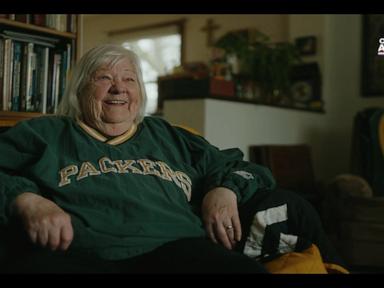
Drive north to Green Bay, Wisconsin, and the aesthetic shifts completely. Here, survival is part of the sport. The menu turns to bratwurst boiled in beer and onions, heavy stews, and cheese curds that squeak against your teeth. The attire is utilitarian—heavy layers of blaze orange and green wool, designed to withstand temperatures that would freeze a southern tailgate solid.
Yet, the core human architecture remains identical. Look closely at how these spaces are organized:
- The Perimeter: Marked by pop-up tents and flags hoisted high into the air. These are not just decorations; they are lighthouses. They tell your friends where to find you in a sea of identical vehicles.
- The Hearth: The grill or smoker. This is the undisputed center of gravity. Men and women gather around the fire, not just to cook, but to seek warmth and a shared focal point. It is easier to talk to a stranger when you are both staring at a sizzling piece of meat.
- The Commons: The open space between trucks where games are played and food is passed. This is the neutral zone where politics, religion, and socioeconomic status are temporarily suspended.
The Great Equalizer
The beautiful lie of the stadium parking lot is that for one day, everyone is equal.
Inside the stadium, the stratification of modern society is on stark display. The ultra-wealthy sit high above the bowl in climate-controlled luxury suites, sipping champagne behind glass walls. The middle class sits in the lower bowl, while the students and the budget-conscious are relegated to the upper decks, exposed to the elements.
But out on the asphalt? The asphalt does not care about your net worth.
A CEO who flew in on a private jet has to park his luxury SUV in the same grid as a construction worker who drove an aging sedan. Their tents might look different, but they are breathing the same charcoal smoke. They are using the same porta-potties. They are subject to the same sudden downpours.
This radical democratization is rare in modern life. Football is merely the excuse we use to allow it to happen. The game itself lasts three hours; the tailgate often lasts six. We pretend the sport is the main event, but deep down, we know the true value lies in the hours before the kickoff, when the outcome is still uncertain and everyone is still winning.
The Tradition of the Next Generation
Watch an older fan hand a spatula to a teenager. It looks like a simple gesture, but it is an inheritance.
For two hundred and fifty years, Americans have been passing down traditions through fractured lenses—stories told across kitchen tables, old photographs kept in albums, recipes scrawled on index cards. The tailgate is a living museum of these micro-traditions. It is where a young girl learns how to properly season a rack of ribs, how to back a trailer into a tight space, and how to talk to someone who looks and thinks completely differently than she does.
It is a messy, loud, imperfect school of citizenship.
When the game ends, the parking lot undergoes a slow, melancholic transformation. The flags come down. The tents are folded back into their canvas bags with a metallic click. The leftovers are packed into melting ice.
But look closely at the ground before the street sweepers arrive. Among the flattened beer cans and the discarded napkins, there are circles of gray ash scattered across the black pavement. They look like small, fading embers of a hundred individual campfires, burnt down to the wick, waiting for next weekend to be lit all over again.