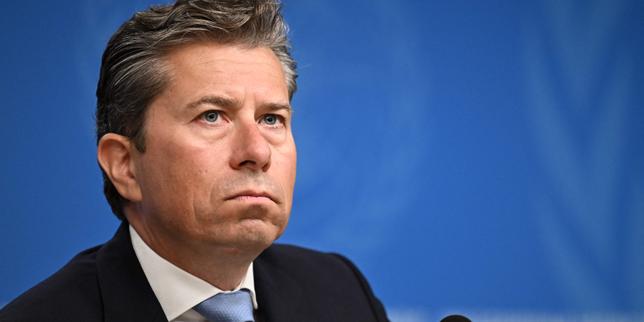
The global diplomatic press core has a favorite script. It plays out every time the world edges closer to a precipice. A high-ranking UN official steps up to a podium, looks into the cameras, and issues a solemn, high-minded plea to the leaders of the G7. “Use your power,” they beg. “Act before it is too late.”
We saw it again recently with Tom Fletcher, the UN Under-Secretary-General for Humanitarian Affairs, making an impassioned appeal to G7 leaders to step up and wield their immense influence to stabilize global crises.
It is a beautiful sentiment. It is also entirely blind to the mechanics of modern power.
The comforting myth that seven Western-aligned heads of state can sit around a polished table and orchestrate global stability is dead. Worse, continuing to beg the G7 for salvation actively distracts us from where power actually resides, how crises are funded, and why the international aid apparatus is structurally broken.
The premise of the question we keep asking—"How can the G7 fix this?"—is flawed. The real question is: Why do we expect a 1970s-era talking shop to solve decentralized, twenty-first-century chaos?
The Illusion of G7 Omnipotence
To understand why these appeals fail, you have to look at the math.
When the G7 was formed in 1975, its members (the US, UK, France, Germany, Japan, Italy, and Canada) controlled nearly 70% of global GDP. They were the undisputed board of directors of the global economy. If they agreed on a direction, the world moved.
Today, that share has plummeted to roughly 43% in nominal terms, and even lower when adjusted for purchasing power parity (PPP). You cannot run a company when you only control a minority stake, yet the international community treats the G7 like it still holds a monopoly on global leverage.
When UN leadership calls on the G7 to "use their power," they ignore a brutal reality: that power has leaked out of the room. It has migrated to the G20, to sovereign wealth funds in the Gulf, to supply chain choke points in Taipei and Shenzhen, and to private technology monopolies that control the literal infrastructure of modern warfare and communication.
Begging the G7 to dictate terms to global conflict zones is like asking the board of Blockbuster Video to regulate the streaming industry. They have the brand recognition, but they no longer control the pipes.
The Flawed Architecture of the United Nations Appeal
Having spent years analyzing international trade flows and institutional funding bottlenecks, I have watched well-meaning diplomatic strategies collapse against the hard rock of national self-interest. The structural incentive for a G7 leader is always domestic survival, not global altruism.
When an official like Fletcher appeals to the G7, they are operating under the assumption that these leaders are held back only by a lack of political will. This is a naive misdiagnosis. They are held back by structural insolvency and hyper-polarized electorates.
Consider what happens when the G7 actually tries to deploy its supposed power:
- The Funding Trap: Traditional Western powers are drowning in sovereign debt. The US national debt exceeds $34 trillion; Italy’s debt-to-GDP ratio hovers around 140%. The financial runway to fund massive, Marshall Plan-style global interventions simply does not exist.
- The Consensus Deadlock: The G7 operates on consensus. Aligning the domestic political calendars of Washington, Paris, and Tokyo to agree on aggressive, proactive geopolitical interventions is nearly impossible. By the time a communique is signed, the crisis has already evolved.
- The Legitimacy Deficit: For a large swath of the Global South, a directive issued by the G7 is not seen as an act of benevolent leadership. It is viewed as neo-colonial dictation. The moment the G7 unilaterally asserts authority over a global crisis, it creates an immediate, reactionary counter-mobilization from BRICS blocks and regional powers.
Stop Asking the G7 to Fix the Aid System
One of the most persistent "People Also Ask" themes in international relations is: Why can't the richest countries just fund global humanitarian deficits?
The answer is brutally honest: because the current international aid architecture is a leaky bucket.
Pouring more G7 capital into the existing multilateral system is an exercise in diminishing returns. According to data compiled from various humanitarian logistics assessments, between 60% and 80% of traditional humanitarian aid budgets are consumed by administrative overhead, compliance tracking, security costs, and domestic procurement requirements (such as forcing aid organizations to buy food from Western farmers and fly it across the world on Western carriers).
If G7 leaders actually wanted to disrupt this cycle, they wouldn't increase their pledges. They would dismantle the monopoly of the legacy UN agencies and route capital directly to local, on-the-ground networks that operate at a fraction of the cost. But they won’t do that, because legacy aid agencies provide excellent diplomatic cover and thousands of high-paying jobs for Western expatriates.
The De-Centering of Geopolitics
If the G7 can't save us, who can? The counter-intuitive truth is that stability is no longer top-down; it is transactional and horizontal.
Look at how major conflicts and logistical crises are actually negotiated today. It is not happening through G7 communiques. It is happening through ad-hoc, hyper-localized coalitions of convenience.
When global shipping lanes in the Red Sea were disrupted, it wasn't a G7 consensus that kept regional trade moving; it was a complex, quiet web of bilateral assurances involving regional actors like Oman, Saudi Arabia, and private maritime insurance syndicates. When grain corridors needed to be opened in Europe, it was Turkey and private commodity traders driving the deal, not the G7.
The fixation on getting seven Western leaders to save the world is a form of intellectual laziness. It allows the international community to pretend there is still an adult in the room. It spares us from the terrifying, necessary work of negotiating with the messy, multipolar reality that actually exists.
The Risk of the Contrarian Reality
Admitting that the G7 is obsolete comes with a massive downside. If we stop pretending they are in charge, we enter a world devoid of a global safety net.
Without a centralized clearinghouse of power, global crises become wildly unpredictable. There is no single phone number to call when things go wrong. It means accepting a fragmented world where human rights standards are non-negotiable in one region and completely ignored in another based entirely on who holds the local economic leverage.
But pretending the G7 can still paper over these cracks is worse than admitting the truth. It leads to the exact scenario we see unfolding today: UN officials making desperate, empty speeches to empty rooms, while the real players in the world ignore them entirely.
The era of the global boardroom is over. Stop looking at the G7 podium. Look at the supply lines, look at the sovereign wealth flows, and look at the local actors who actually hold the keys to the terrain. The leaders in that G7 group photo aren't holding back their power; they are just trying to hide how little of it they have left.