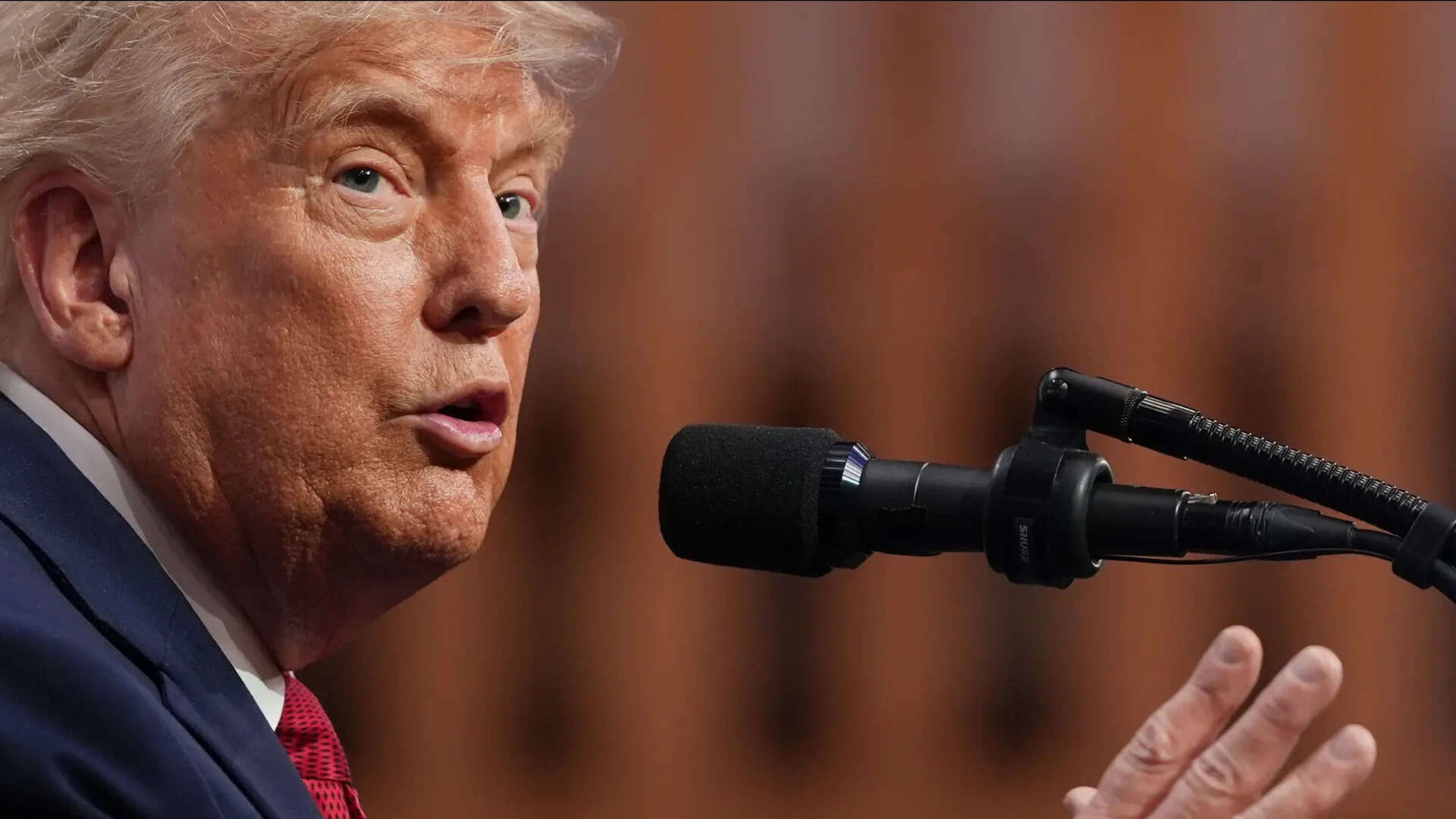
The air in the briefing room always tastes like stale coffee and nervous sweat. When you sit in those chairs for decades, watching the machinery of global politics grind gears, you learn to look past the podium. You look at the hands. You look at the slight twitch in a staffer’s jaw. You look for the moment where reality forces a pivot.
Geopolitics is often treated like a grand chessboard, a bloodless game played by disembodied intellects. It isn’t. It is a fragile construct built on ego, public posture, and the terrifying realization that words spoken to a crowded rally can lock a nation into a corner.
For years, the rhetoric surrounding international accords followed a predictable script. One side promised ruin; the other promised peace. In the center of this specific storm sat a complex, multi-nation deal designed to curb a state's nuclear ambitions, a pact scrutinized, lambasted, and eventually walked away from by a leadership that declared it the worst arrangement in human history. The narrative was set in stone. The missiles were an existential threat. The deal was a disaster.
Then, the ink dried on a new reality.
Consider the weight of a sudden shift in perspective. It does not happen overnight, even if the public announcement makes it seem so. It happens in quiet rooms, under the dim glow of desk lamps, where intelligence briefers lay out satellite imagery and telemetry data.
The public posture had been unyielding: every piece of machinery, every test flight, every silo was a harbinger of the end times. But when the theoretical becomes operational, the language changes. The shift was stark. Suddenly, those same intermediate-range ballistic threats were recast not as civilization-ending anomalies, but as conventional military assets.
The rationale offered to the microphones was jarringly pragmatic. They don't blow up the planet.
It is a phrase that stops you in your tracks. It is a sentence that forces a re-evaluation of everything that came before. In five words, the hyperbole that fuels cable news cycles and fundraising campaigns was stripped away, replaced by a cold, almost casual calculus.
To understand how a leader moves from threatening fire and fury to offering a shrug of geopolitical tolerance, you have to understand the distinction between existential terror and manageable risk. Nuclear weapons represent the former. They are the absolute end of the conversation, a flash of light followed by silence. Conventional missiles, even those capable of traveling thousands of miles, belong to the messy, horrific, but ultimately survivable world of traditional warfare.
Imagine a specialized technician working in a defense facility somewhere in the desert. Let us call him David. David spends his days analyzing payload capacities and CEP—circular error probable. To David, a missile is not an ideological statement. It is a weight-to-thrust ratio. He knows that without a nuclear warhead, a missile is just a very expensive, very fast delivery system for conventional explosives. It can destroy a building. It can crater a runway. It cannot erase a civilization.
When the political leadership finally acknowledges David’s reality, the whiplash can be deafening for the public. For years, the populace was conditioned to view every launch notification as a countdown to doomsday. When the narrative changes to "they are like nuclear, but they don't blow up the planet," the underlying admission is that the threat was calibrated for maximum emotional impact rather than strategic accuracy.
This is the hidden cost of high-stakes diplomacy conducted via headlines. Trust is a finite resource. When the dial is turned to eleven for years, turning it down to a five requires a level of rhetorical gymnastics that leaves the audience bewildered. The deal in question, once painted as a total capitulation, suddenly becomes the framework within which reality is managed. The implementation of the agreement alters the baseline of what is acceptable.
The real problem lies elsewhere, far from the cameras and the teleprompters. It rests in the minds of the adversaries and allies who watch these shifts in real-time. They do not just listen to the words; they analyze the volatility of the policy.
When a nation's stance can pivot based on the realization that conventional weapons are, indeed, conventional, it signals a deeper vulnerability. It suggests that the initial policy was driven by optics rather than a clear-eyed assessment of national security. It tells the world that the red lines drawn in marker can be erased with a damp cloth when the administrative burden of maintaining them becomes too high.
The transition from absolute condemnation to conditional tolerance is a well-worn path in international relations, but rarely is the curtain pulled back so brutally. The bluntness of the statement removes the veneer of diplomatic sophistication. It exposes the raw, transactional nature of modern statecraft.
Step back and look at the broader pattern. This is not an isolated incident of a leader changing his mind; it is a demonstration of how the world actually works when the cameras are off. The grand pronouncements of the campaign trail eventually collide with the stubborn facts of geography, physics, and military capability.
The missiles exist. They will continue to exist. The deal, for all its flaws, created a structure. And in the absence of a willingness to engage in a total, catastrophic conflict, the only remaining option is to redefine the threat. You take the thing that was once deemed unacceptable and you find a way to live with it, wrapping the concession in a blanket of newfound pragmatism.
The briefing ends. The journalists pack up their laptops, their fingers flying across keys to capture the quote before it loses its immediate freshness. The room empties, leaving only the smell of that bad coffee and the echo of a sentence that redefined the stakes of a global standoff.
On the screens outside, the news tickers begin to roll, translating the shift into talking points, trying to make sense of a world where the line between total destruction and a conventional strike is negotiated in real-time. The sun sets over the capital, casting long shadows across the monuments of men who used to believe that words were permanent.


