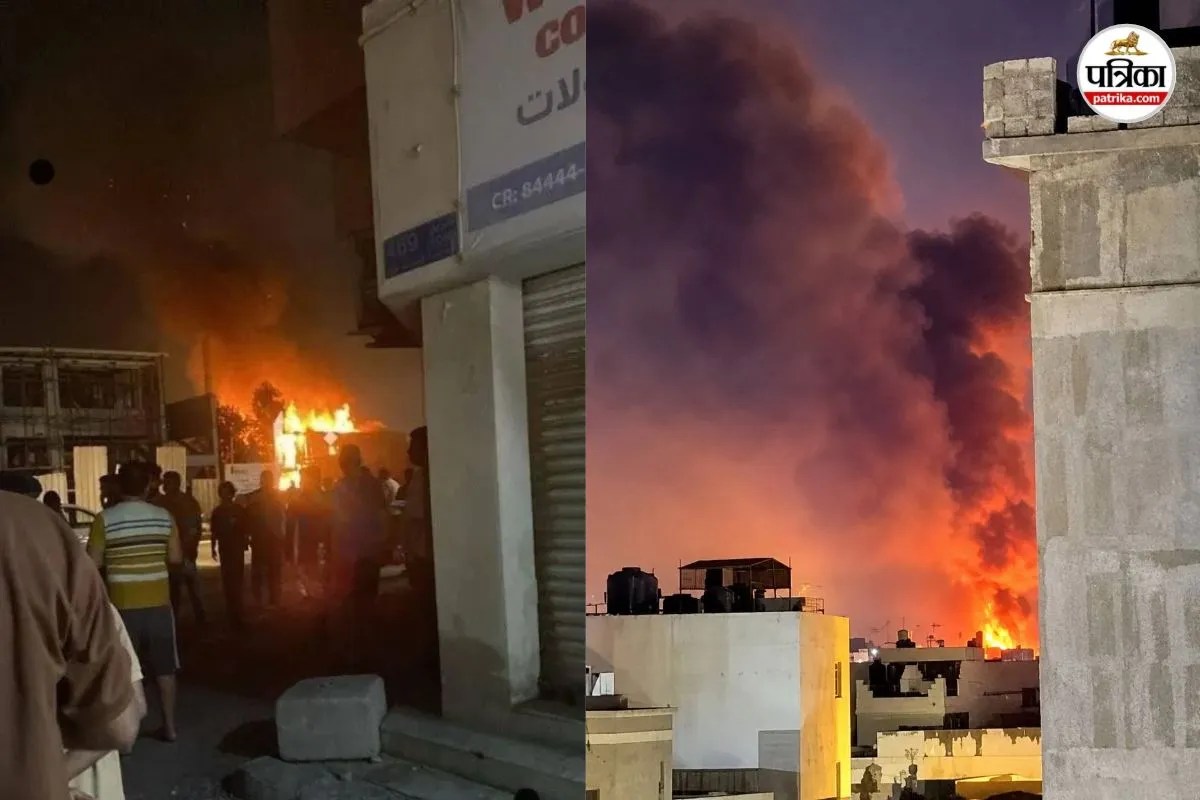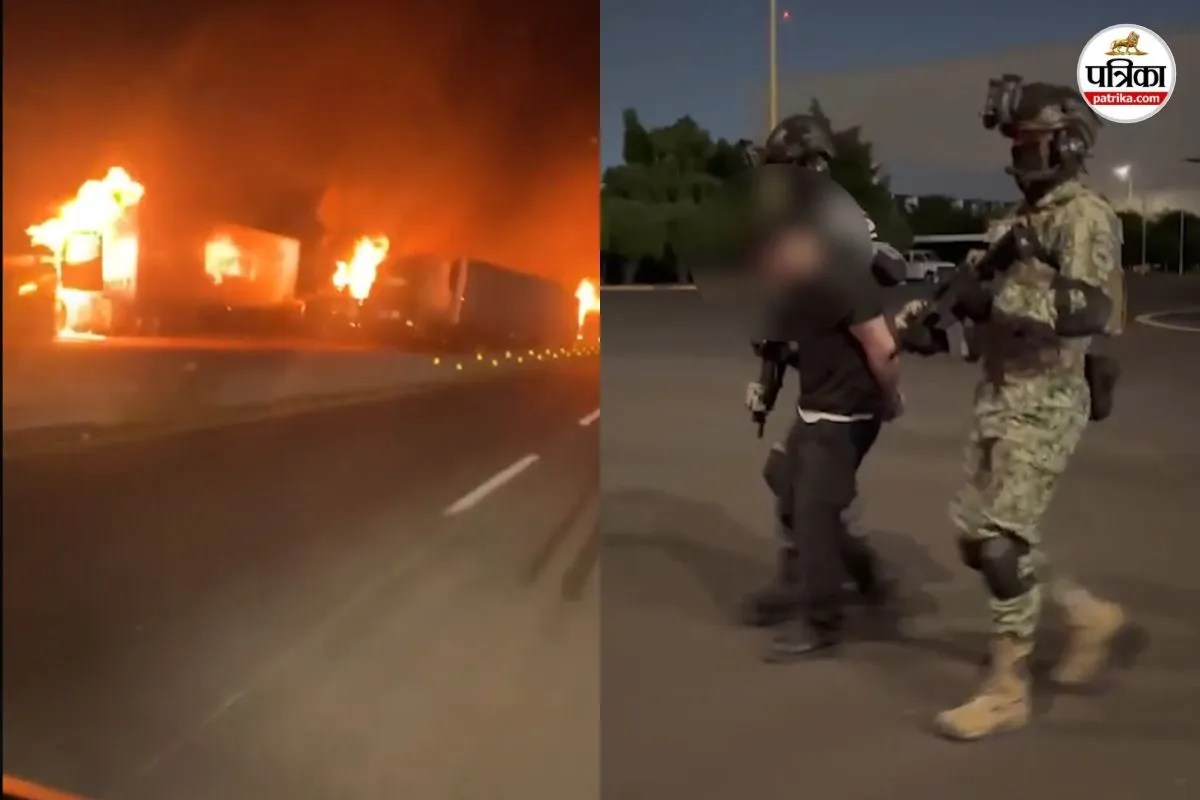
Eleven dead in a cartel shootout. A high-profile arrest of a most-wanted drug boss. An immediate security alert from Washington.
Read the standard breaking news wire, and the script feels pre-written. Catch the kingpin. Expect a blowout. Watch the travel warning pop up. Move on by lunch. For a different look, see: this related article.
That script is lazy. Worse, it is wrong.
When security forces arrest a top cartel leader, violence does not wind down. It fractures. It metastasizes. What looks like a decisive blow on a press release often acts like a spark in a dry timber yard. And the travel advisories that follow usually misunderstand where the real danger sits, who actually faces it, and why a headline body count tells you almost nothing about how criminal markets work on the ground. Related coverage regarding this has been shared by USA Today.
I have spent years advising multinational operations, supply-chain teams, and risk analysts on Latin American security dynamics. I have watched companies blow millions of dollars pulling staff out of safe industrial corridors because of a scary news alert, while leaving people exposed in places that looked calm on paper. I have seen security plans built on kingpin myths get torn apart in twenty-four hours when mid-level lieutenants decided the succession rules were open for negotiation.
Let us strip away the comfort food in that coverage and look at the mechanics people keep ignoring.
The Kingpin Fallacy Behind Every Cartel Arrest Headline
Conventional coverage treats a cartel like a traditional corporation with a single CEO at the top. Cut off the head, and the body slows down.
Criminal organizations do not work like that. Drug trafficking syndicates operating across Mexico and the broader Western Hemisphere are closer to franchises, holding companies, or armed logistics networks than neat top-down hierarchies. A boss at the top manages relationships, high-level deals, financial laundering channels, and political insulation. Beneath that layer sit regional commanders, plaza bosses, enforcement cells, and synthetic drug chemists who control routes, ports, and local extortion rackets.
When a top figure goes down in handcuffs, three things happen fast:
- Succession fights open up. Lieutenants who kept quiet while the boss held leverage suddenly see a vacuum. Loyalty evaporates when there is no one left to enforce discipline.
- Territorial borders blur. Rival groups test weak spots along smuggling corridors, highways, and municipal boundaries. A shootout leaving eleven people dead is rarely random chaos. It is frequently a price-discovery mechanism—testing who holds a road, a neighborhood, or a distribution node.
- Discipline weakens at the street level. When central command fractures, local cells rely more heavily on rapid intimidation, kidnappings, and public displays of force to prove they still own the block.
Political scientists and security researchers who study organized crime—scholars such as Vanda Felbab-Brown, Cecilia Farfán-Méndez, and institutions like InSight Crime and the International Crisis Group—have documented this pattern across years of enforcement campaigns. Removing a top leader without dismantling financial networks, municipal corruption, and armed enforcement wings frequently triggers kingpin proliferation and bloody internal splits rather than lasting calm.
So when a headline pairs a major arrest with a fresh wave of cartel gunfire, the two events are not sitting side by side by accident. One feeds the other. Treating the arrest as "progress" and the gunfire as a "last gasp" gets the cause and effect backward.
Why "11 Dead" Is a Incomplete Metric in Cartel Warfare
Numbers in breaking reports carry a deceptive authority. Eleven dead sounds concrete. Exact. Final.
In cartel conflicts, raw body counts are often the least informative metric in the room. A single shootout with eleven fatalities tells you a skirmish happened. It does not tell you whether the clash was between rival factions inside the same syndicate, a dispute over synthetic precursor chemicals, a battle for local extortion fees, or a retaliation hit after an arrest.
Even more important: what gets counted versus what gets buried?
In high-tension regions, violent events do not always show up cleanly in initial tallies. Bodies get moved. Disappearances get logged under different categories. Local media faces pressure or self-censorship. Early figures in fast-moving incidents are snapshots taken in fog, yet readers treat them like audited accounting ledgers.
Imagine a scenario where a security analyst looks at a single day's tally of eleven dead in one municipality and declares the entire state a war zone, while ignoring a steady, quiet shift of extortion and kidnappings into a neighboring corridor two hours away. That analyst is chasing noise instead of structure.
To understand whether violence is actually escalating or shifting shape, look at three signals instead of a single headline number:
- Geographic spread: Is the violence concentrated along a specific smuggling route or municipal line, or is it spilling into commercial hubs and commuter arteries?
- Targets: Are hits aimed at rival gunmen and smuggling assets, or are local merchants, transport operators, and civilians being squeezed?
- Duration: Is there a one-day spike tied to an immediate arrest or raid, or a multi-week campaign reshaping who controls territory?
A single shootout is a data point, not a trend line.
The Washington Alert Trap: What Travelers and Businesses Misread
Whenever violence flares after a high-profile arrest, U.S. government alerts and embassy notices surge back into headlines. For many readers, an official alert functions like a flashing red light over an entire country.
That reaction misses how diplomatic advisories are built and how risk is actually distributed.
Government travel alerts are broad legal and duty-of-care instruments. They are written to cover worst-case liability and wide geographic zones—often entire states—even when actual armed clashes are hyper-localized. A state can contain a violent rural or border pocket while an industrial park, airport corridor, or business district operates under tight private and state security protocols.
Conversely, a quiet week with no fresh alert does not mean zero risk. Crime in Mexico is deeply localized. Two neighborhoods in the same city can feel like two different countries. Two highways running parallel can carry completely different risk profiles depending on time of day, cargo type, and local control.
I have seen executives cancel critical supplier visits across an entire region because of a broad alert sparked by an incident hundreds of miles away, while ignoring ground-level road risks on a routine trip closer to home. Fear spreads faster than facts, especially when headlines flatten complex geography into a single fear-inducing summary.
Are We Asking the Wrong Questions About Cartel Violence?
When people read about a cartel boss getting arrested, eleven people dying in gunfire, and a U.S. alert going out, they usually jump to familiar questions:
- "Is Mexico spiraling out of control?"
- "Does this alert mean it is unsafe to travel or do business there?"
- "Will arresting top leaders finally break the cartels?"
Each of those questions leans on a flawed premise.
On whether the country is "spiraling out of control": That phrasing treats a complex, uneven security landscape like a single falling domino. Violence in Mexico is severe and real in specific hotspots, and it has caused immense human tragedy. Yet treating every violent flare-up as uniform nationwide collapse obscures where state institutions, local economies, and daily life still function—and where criminal governance is genuinely entrenched.
On whether an alert means you should cancel everything: Broad alerts are a starting point for due diligence, not a substitute for local intelligence. The right question is not "Is there an alert?" It is "Which exact routes, hours, neighborhoods, and local partners are involved, and what controls are in place?"
On whether kingpin arrests break cartels: Decades of enforcement history say no—not on their own. Arresting a high-value target can disrupt specific operational links or satisfy political pressure, but as long as high-margin illicit markets, cross-border demand, firearms flows, and local corruption remain intact, new operators step into the gap.
What Actually Works When Violence Spikes After an Arrest
If you want real protection—whether for personal travel, corporate logistics, or strategic analysis—do not rely on headline shock or rigid checklists. Change how you operate when a high-profile arrest hits the news.
- Freeze unverified movement for 24 to 72 hours. The hours right after a major capture or shootout are prime time for retaliatory blockades, road ambushes, and shifting checkpoints. Waiting out the initial shock wave avoids unnecessary exposure.
- Audit routes, not just cities. Criminals care about chokepoints—highways, bridges, border crossings, and industrial corridors. Shift travel times to daylight hours, avoid secondary roads during flare-ups, and verify live conditions with people on the ground rather than relying on stale assumptions.
- Separate PR wins from operational reality. When authorities announce a major arrest, treat it as a trigger for heightened short-term volatility, not instant safety. Expect pushback from rival or splintered factions.
- Invest in hyper-local intelligence. Generic news summaries lag behind street reality. Reliable local contacts, vetted security providers, and route-specific reporting beat broad advisories every time.
The Catch With Contrarian Risk Thinking
Taking a contrarian view on security has a real downside if you get carried away: overconfidence.
Contrarians love pointing out when the crowd is panicking over nothing. That habit can turn dangerous if it makes you dismiss real threats just to sound clever. Just because a headline exaggerates national collapse does not mean a specific highway is safe at midnight. Just because kingpin arrests often spark turf wars does not mean law enforcement should never target violent leaders.
Nuance requires discipline. You have to hold two truths at once: the conventional narrative is oversimplified, and the danger on the ground can still be lethal.
Stop reading cartel breaking news like a scoreboard where arrests equal peace and alerts equal total lock-down. Watch the power vacuum. Track the corridors. Respect the chaos that follows when a boss falls.