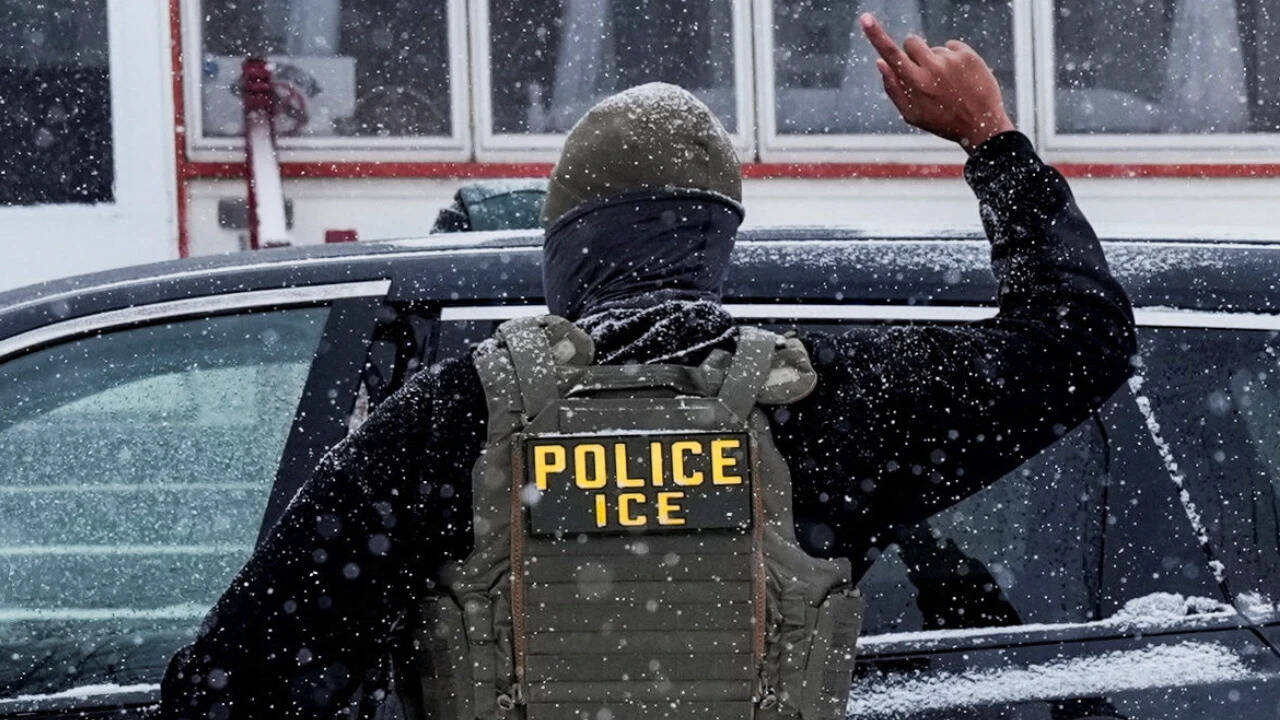
Accountability for federal law enforcement has always moved at a glacial pace. When an immigration enforcement officer shoots an unarmed civilian, the default response from the apparatus is usually protection, procedural delays, and closed doors. But the eight-month standoff surrounding the arrest of former ICE agent Christian Castro just shattered that playbook.
If you've been following the explosive fallout of Operation Metro Surge in Minneapolis, you already know the stakes are high. What started as a chaotic dynamic on the ground during federal sweeps spiraled into an interstate political chess match. Now that Castro is finally in custody facing both state and federal charges, it is time to look past the political posturing and examine what this case actually reveals about accountability, jurisdictional warfare, and the limits of qualified immunity. For a deeper dive into this area, we suggest: this related article.
The Anatomy of a Cover-Up
The incident dates back to January, right in the thick of a massive federal immigration crackdown in Minnesota. Christian Castro fired his weapon through the door of an occupied home, striking a Venezuelan man named Julio Cesar Sosa-Celis in the leg.
Right away, the official narrative followed a familiar script. Agents claimed they faced a direct threat and acted in self-defense. The target of the raid was initially slapped with criminal charges for allegedly assaulting officers. For additional details on this topic, detailed reporting can be read at USA Today.
There is just one major problem: video evidence.
As it turns out, surveillance and bystander footage completely blew holes in the official account. Federal prosecutors eventually had to drop the charges against the victim because the video made it painfully obvious that the official reports were fabricated. When visual evidence leaves zero room for interpretation, the standard narrative falls apart. Castro was subsequently suspended, stripped of his routine protections, and indicted for assault and making false statements to investigators.
Interstate Standoff and Political Shielding
Getting an indictment is one thing. Actually hauling the suspect into a courtroom is entirely different when state lines and partisan politics get involved.
Following local charges brought by Hennepin County Attorney Mary Moriarty, Castro retreated to Texas. What followed was an extraordinary months-long jurisdictional war. Texas Governor Greg Abbott refused to fast-track extradition, effectively providing a political shield that kept the accused agent out of Minnesota’s reach.
Minnesota officials grew frantic. Legal filings even pointed to intercepted conversations where Castro allegedly discussed fleeing to Mexico. The Department of Homeland Security didn't help matters, initially dismissing the local prosecution as a political stunt.
This friction highlights a terrifying gray area in American law enforcement. When federal agents operate locally, who watches the watchers? If a state tries to prosecute a federal officer, governors can play geopolitical football with extradition, turning a standard criminal matter into a federalist crisis.
The Federal Pivot and Unresolved Tensions
The standoff finally broke when federal authorities stepped in directly, leading to Castro's apprehension by the Texas Rangers and subsequent transfer into federal custody. He faces parallel tracks now: state assault charges in Minnesota and federal indictments for lying to investigators.
Yet, the handling of the case remains messy. Reports surfaced detailing internal battles within the Department of Justice, with whispers of friction over whether to pursue heavier civil rights charges. For victims like Sosa-Celis, the legal battle for genuine justice is far from over. Civil rights groups are rightly pointing out that undercharging violent federal infractions sets a dangerous precedent.
When law enforcement officers lie in official reports to justify the use of lethal force, the integrity of the entire justice system takes a hit. The fact that it took eight months of bitter political warfare just to get an agent into a courtroom proves that the system isn't built to police its own. True reform will only happen when accountability is automatic, transparent, and completely divorced from political shielding.