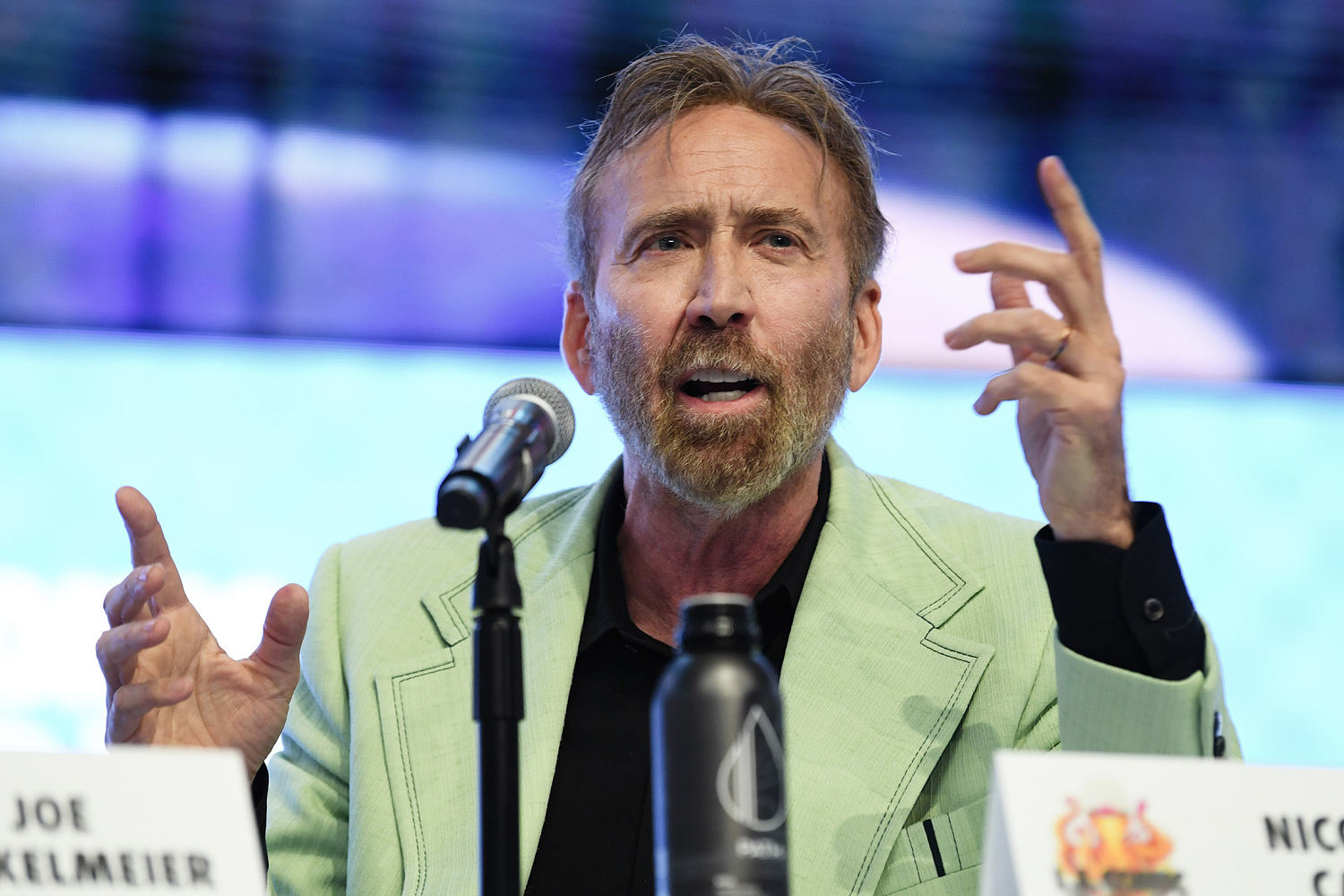
Everyone is applauding Arnold Schwarzenegger for raising $9.75 million at his backyard charity gala for After-School All-Stars. They shouldn't be.
The headline reads like a triumph of civic duty. A former governor opens his Brentwood estate, invites a roster of A-listers and tech billionaires, auctions off a few luxury watches and private experiences, and walks away with nearly ten million dollars to keep low-income kids off the streets between 3:00 PM and 6:00 PM. Legacy media outlets treat this number like a victory lap. They publish the press release, slap a heartwarming photo of Arnold smoking a cigar next to a smiling donor at the top of the page, and call it journalism.
They are looking at the gross revenue and ignoring the unit economics.
When you pull back the velvet rope on high-net-worth charity galas, the math stops looking like altruism and starts looking like an expensive wealth-transfer mechanism that barely moves the needle for the students it claims to save. Having spent fifteen years auditing non-profit balance sheets and structuring corporate social responsibility funds, I have watched organizations burn millions on white-tablecloth theater while starving the actual programs of predictable capital.
The Illusion of the Record-Breaking Check
Let’s look at the $9.75 million figure in isolation. To an everyday taxpayer, ten million dollars sounds like an infinite sum of money. It sounds like enough to buy every underprivileged kid in America a laptop, a tutor, and a hot meal.
It isn't. Not even close.
After-School All-Stars operates across roughly 60 cities and serves over 100,000 students annually. Divide $9.75 million by 100,000 students. You get $97.50 per kid for the entire year. That breaks down to roughly fifty-four cents per school day.
Fifty-four cents does not buy a STEM curriculum. It does not pay for a credentialed mental health counselor. It barely covers the cost of a juice box and a bag of pretzels.
Yet, the cultural narrative surrounding celebrity fundraising treats this single night as a systemic solution to American educational inequality. This is the exact trap economists like Rob Reich at Stanford University warn about in Just Giving. Big-ticket philanthropy creates an optical illusion of progress. It allows the ultra-wealthy to feel as though they have solved a public crisis over filet mignon, relieving the political pressure required to fix the broken municipal tax structures that defunded after-school programs in the first place.
The Hidden Overhead of Hollywood Altruism
When a non-profit announces it "raised" $9.75 million at a single event, the public assumes $9.75 million lands in a bank account earmarked for textbooks and coaches.
That is rarely how event-based fundraising works.
To extract ten million dollars from high-net-worth individuals in Los Angeles, you have to spend massive amounts of money on friction. You need high-end event production, security details, catering, valet logistics, public relations firms, and auctioneers who take a percentage of the hammer price. Even when celebrities underwrite a portion of the party costs—which Schwarzenegger famously does to keep overhead low—the opportunity cost and administrative drag remain staggering.
Non-profit finance experts track a metric called Cost Per Dollar Raised (CPDR). For direct digital campaigns or institutional endowment grants, a healthy CPDR sits between $0.05 and $0.15. For high-end gala events, the industry standard regularly balloons to $0.35 or $0.50 on the dollar once you account for staff hours spent courting VIPs, managing seating charts, and fulfilling auction deliverables.
Furthermore, auction revenue is structurally different from pure philanthropic giving. When a billionaire pays $150,000 for a custom watch, a private workout session, or a piece of movie memorabilia, they are not making a pure donation. They are purchasing a Veblen good—a luxury status symbol—with a tax-deductible wrapper. According to IRS guidelines on quid pro quo contributions, donors can only deduct the amount that exceeds the fair market value of the item received. In practice, appraisals on "priceless" celebrity experiences are notoriously elastic, allowing buyers to convert luxury consumption into a tax write-off while the charity absorbs the fulfillment headache.
Volatility Kills Educational Outcomes
The biggest flaw in the celebrity gala model isn't the overhead. It is the volatility.
Running an effective after-school program requires multi-year predictability. You cannot hire top-tier youth development specialists, sign multi-year leases on community facilities, or build longitudinal mentorship programs if your funding depends on whether a movie star is in town next September or whether the stock market had a good third quarter.
Imagine a scenario where a school district in East Los Angeles or South Chicago relies on a local chapter of a celebrity-backed non-profit to keep its doors open until 6:00 PM. In year one, the gala breaks records. The chapter hires three new robotics instructors. In year two, a recession hits, or the celebrity host is filming on location in Europe, and gala pledges drop by 40 percent. Those three robotics instructors get laid off in November. The kids lose their mentors mid-semester.
In institutional finance, we call this revenue concentration risk. Relying on a single charismatic figurehead to carry the fundraising load violates the most basic rule of organizational survival. Schwarzenegger is an extraordinary fundraiser with unmatched personal charisma, and his genuine commitment to youth fitness dates back decades to his work with the Inner-City Games. Nobody questions his heart. We are questioning the architecture. When a non-profit’s financial engine is tied to one man’s personal Rolodex, that non-profit has a single point of failure. When Arnold eventually steps back, the gravity pulling those billionaires to Brentwood disappears overnight.
What People Actually Ask About Celebrity Charities
If you look at how the public searches for information on these events, the questions reveal a deep skepticism—usually aimed at the wrong targets.
Does Arnold Schwarzenegger take a salary from After-School All-Stars?
No. Like most celebrity founders, he serves on the board without taking direct compensation, and he routinely covers event expenses out of pocket. Critics who look for personal embezzlement at this level are chasing ghosts. Billionaires and movie stars do not start charities to steal cash; they do it for reputational equity, social capital, and legacy building.
How much of the $9.75 million actually goes to students?
According to independent charity evaluators like Charity Navigator and ProPublica’s Nonprofit Explorer, After-School All-Stars historically maintains a solid program expense ratio, typically directing around 80 to 85 percent of its total annual budget toward programs rather than executive salaries. However, "program expenses" is an accounting bucket that includes regional administrative staff, insurance, and compliance costs—not just direct cash spent on a child.
Why do after-school programs rely on celebrities instead of government funding?
Because American public education funding is fundamentally broken. Property-tax-based school funding guarantees that wealthy neighborhoods get state-of-the-art facilities and enrichment, while low-income neighborhoods rely on federal Title I grants and 21st Century Community Learning Centers funding—both of which have failed to keep pace with inflation for twenty years. Celebrity galas exist to patch a bullet wound with a designer bandage.
The Uncomfortable Downside of Rejecting Gala Money
If you dismantle the celebrity charity model, you have to confront a brutal reality: if After-School All-Stars canceled the Brentwood gala tomorrow, nobody is stepping in to replace that $9.75 million.
The federal government is not going to pass a bipartisan bill next week to fully fund municipal youth programs. Local school boards are already drowning in pension liabilities and declining enrollment. For the specific kids who get a safe place to do homework and play basketball because of Schwarzenegger’s event, fifty-four cents a day is infinitely better than zero cents a day.
That is the trap. Philanthropy acts as a release valve for societal failure. Because the rich step in with flashy checks, the middle class feels good about the system, politicians get to pose at ribbon-cuttings without raising taxes on corporations, and the structural rot continues unchecked.
How Real Educational Impact Gets Funded
If ultra-high-net-worth donors actually wanted to maximize the return on their $9.75 million, they would stop throwing parties and start deploying capital the way they do in their own businesses.
- Endowments Over Events: Instead of spending millions on annual galas to fund operating expenses, wealthy donors should pool capital into permanent municipal endowments. A $100 million endowment invested in standard index funds throws off $4 million to $5 million every single year in perpetuity, with zero gala overhead and zero reliance on celebrity appearances.
- Unrestricted Multi-Year Grants: The gold standard in modern philanthropy—championed by thinkers like Dan Pallotta and practiced at scale by MacKenzie Scott—is large, unrestricted grants given directly to vetted local operators. Stop forcing non-profits to waste time tracking whether a dollar was spent on a basketball or a math workbook. Trust the operators on the ground and give them five-year runways.
- Policy Lobbying: A billionaire spending $1 million to lobby a state legislature to reform school funding formulas can unlock $500 million in permanent public funding for after-school care. That is a 500x return on capital. Buying a $200,000 watch at a backyard auction gives you a 1x return at best, minus the cost of the champagne.
Celebrity charity galas are brilliant entertainment. They generate great press, flatter the egos of the donor class, and keep a vital safety net from completely collapsing. Just stop pretending that a $9.75 million party is a victory for American students. It is an admission that we have outsourced our children’s futures to the whims of a billionaire's social calendar.