The mainstream media is treating the announcement of Pope Leo XIV’s upcoming Mass at Ulm Minster as a historic moment of ecumenical healing. They are calling it a triumph of faith over historical division, wrapped in the awe-inspiring optics of the world’s tallest church.
They are missing the point entirely.
This isn't a celebration of faith. It is a calculated, multi-million-dollar PR stunt designed to mask a deeper institutional crisis. By staging a massive spectacle at a structure that took five centuries to finish, the Vatican is trying to borrow the structural permanence of the past to hide its current cultural evaporation.
We need to stop looking at the top of the spire and start looking at the motive.
The Flawed Premise of Spiritual Scale
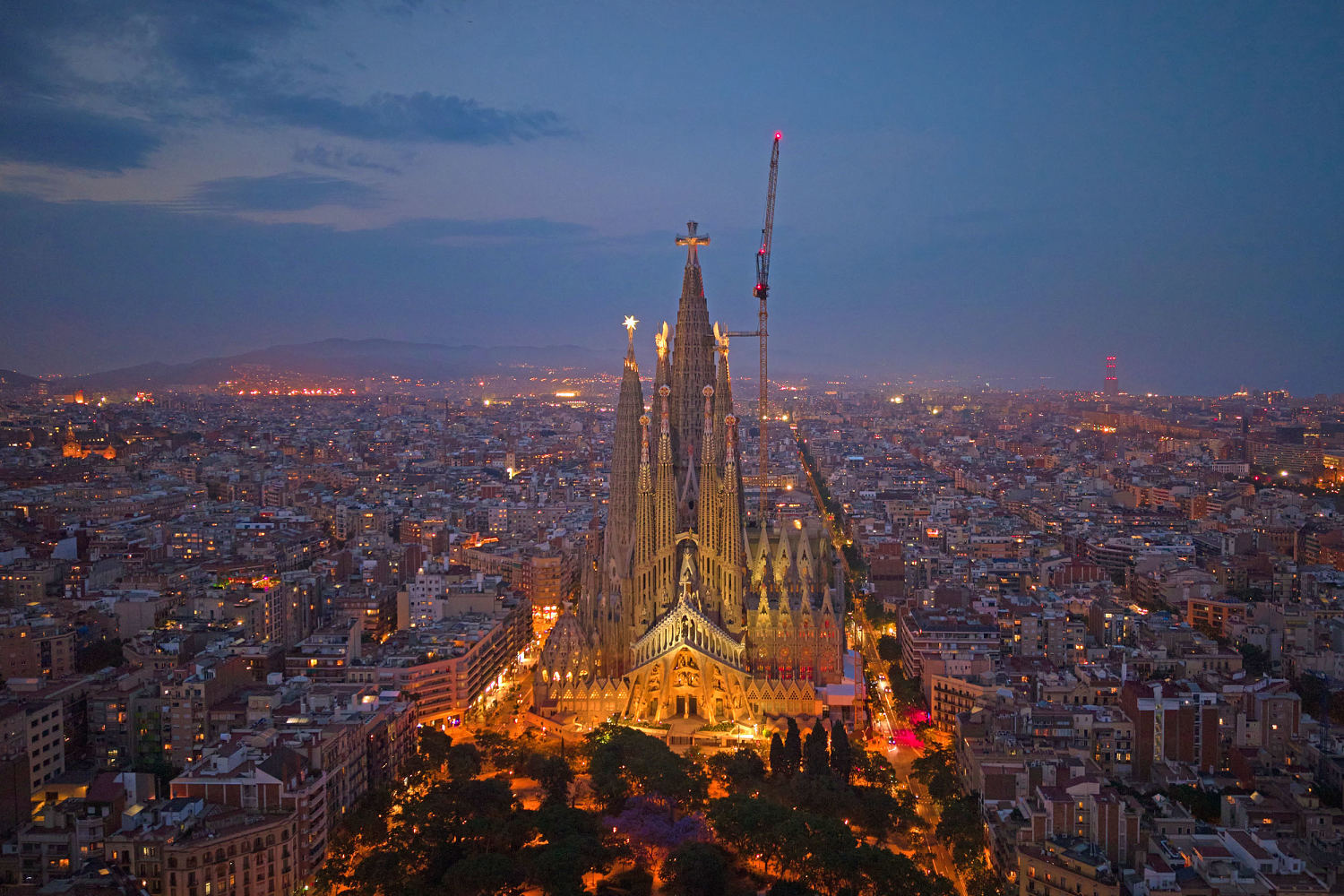
The lazy consensus dominating the headlines views the choice of Ulm Minster through a lens of pure romance. Journalists are obsessed with the numbers: a 161.5-meter steeple, thousands of expected pilgrims, and the symbolic weight of a Catholic pontiff crossing the threshold of a traditionally Lutheran mega-structure.
The prevailing narrative asks: How will this historic venue elevate the global message of the Church?
That is the wrong question. The real question is: Why does an institution that claims to champion the meek suddenly require the world’s tallest steeple to validate its relevance?
The obsession with architectural dominance is a classic misdirection. Historically, monumental architecture was designed to inspire awe and signify the axis mundi—the connection between heaven and earth. Today, it functions as a corporate billboard. When a tech giant builds a shiny new headquarters, we see it for what it is: an exercise in brand dominance. When a religious institution does it, we are told to lower our heads in reverence.
Let's look at the data. European church attendance has been in a freefall for decades. A 2018 Pew Research Center study showed that while the vast majority of Europeans identify as Christian, only a tiny fraction regularly occupy the pews. In Germany, the decline is so pronounced that both Catholic and Protestant churches are hemorrhaging members—and tax revenue—at record rates.
Flying the Pope into Baden-Württemberg to stand beneath a towering Gothic vault does not solve this problem. It highlights it. It is the religious equivalent of a failing legacy brand buying a Super Bowl ad. It creates a temporary spike in visibility while the core product continues to rot on the shelf.
The Ecumenical Mirage
The secondary argument pushed by the press is that this Mass represents a monumental leap forward for Christian unity. Ulm Minster, while started as a Catholic church in the 14th century, has been a Protestant bastion for centuries. The media wants you to believe this event is a selfless act of bridge-building.
It isn't. It is a hostile brand takeover disguised as a handshake.
True ecumenism requires a mutual recognition of authority and theological parity. This event, by contrast, centers entirely on the papal cult of personality. The liturgy, the security apparatus, the media pool, and the global broadcast rights belong exclusively to Rome. The host venue is reduced to a magnificent backdrop—a rented Airbnb for the Vatican’s global marketing engine.
I have spent two decades analyzing institutional strategy, and this pattern is painfully familiar. When a major player loses market share in its primary territories, it stops innovating and starts colonizing adjacent cultural spaces. By occupying a Lutheran space for a high-profile Catholic ritual, the Vatican subtly asserts a historical claim over the architecture of the Reformation. It is a visual assertion that, despite the schisms of the past, all roads eventually lead back to the Roman pontiff.
The Lutherans allowing this are not practicing radical hospitality; they are capitulating to a superior marketing machine because they lack the cultural momentum to fill their own historic spaces.
Dismantling the Practicality of Megachurch Liturgy
Let's address the operational reality of this event. Liturgy, by its very definition, is meant to be communal. It is the "work of the people."
When you scale a liturgical event to fit a cathedral of gargantuan proportions, the communal aspect dies. The experience is stripped of intimacy and replaced by a theatrical production.
The Acoustic Nightmare
Gothic cathedrals were engineered for Gregorian chant and singular, localized voices echoing through stone vaults. They were never designed for modern line-array sound systems, television broadcast crews, and the cacophony of thousands of smartphone-wielding tourists.
To make a modern Mass work in a space like Ulm Minster, the Vatican must install massive amounts of audio-visual infrastructure. The result is a bizarre hybrid: an ancient stone shell filled with digital delays, video monitors, and media scaffolding. The pilgrims in the back rows won't be looking at the altar; they will be watching a jumbotron. They might as well be sitting at home on their couches.
The Security Industrial Complex
The moment a modern Pope travels, a massive security apparatus follows. The historic, open plaza surrounding Ulm Minster will be transformed into a militarized zone. Swiss Guards, German federal police, snipers on medieval roofs, and biometric checkpoints will dismantle the very concept of sanctuary.
- The Illusion: A welcoming gathering of the global faithful.
- The Reality: A high-security corporate summit where access is restricted to VIPs, dignitaries, and pre-screened ticket holders.
This operational friction reveals the hypocrisy of the entire enterprise. You cannot preach a message of an open, vulnerable church while standing behind bulletproof glass and three layers of steel barricades in a square that has been cleared of the local population.
The Real Cost of Structural Nostalgia
There is a financial reality here that nobody wants to talk about. Staging an event of this magnitude costs millions. Between logistics, security, media production, and municipal coordination, the bill for a single afternoon of television coverage is staggering.
Defenders will argue that the tourism revenue generated for the city of Ulm justifies the expense. That is a short-sighted macroeconomic myth. Event-driven tourism creates a brief, artificial spike in local hospitality revenue, followed immediately by a sharp drop-off as regular travelers avoid the chaos. The long-term economic footprint for the city is negligible, while the permanent carbon footprint of flying thousands of people in for a two-hour spectacle is undeniable.
More importantly, look at the opportunity cost. If the goal of the global church is truly to alleviate suffering and address systemic poverty, spending millions to project an image of power from the top of a medieval spire is an ideological failure.
Imagine a scenario where the Vatican canceled the trip entirely. Imagine if, instead of spending those funds on a media broadcast from Germany, they quietly distributed those resources directly to the failing social parishes in the global south—the places where the church is actually growing but lacks basic infrastructure. That would be a disruptive, counter-cultural move. It would be a story worth writing about.
But they won't do that. Because a quiet distribution of wealth doesn't generate a three-minute package on the evening news. It doesn't provide a dramatic aerial photograph of a white vestment contrasting against the dark, weathered stone of a 500-foot steeple.
The Flawed Questions We Keep Asking
The public discourse surrounding this event is broken because the questions driving it are fundamentally flawed. Look at the standard queries filling internet search feeds:
Is Ulm Minster bigger than St. Peter's Basilica?
This question confuses height with volume and significance. Ulm Minster has the tallest spire, but St. Peter's is exponentially larger in interior volume and cultural footprint. Asking which is "bigger" is a superficial metric pushed by tourism boards. The fact that the public is focused on a tape-measure comparison shows how thoroughly the spiritual nature of the institution has been replaced by secular stadium metrics.
Can a Pope legally celebrate Mass in a Protestant church?
Yes, canon law allows for hospitality under specific ecumenical circumstances. But focusing on the legality misses the ethical dimension entirely. Just because you have the legal right and the diplomatic leverage to occupy a space does not mean it is pastorally prudent to do so. The question shouldn't be can he, but why must he?
The Inevitable Aftermath
When the television cameras are packed away, the scaffolding is disassembled, and the Pope’s jet leaves the tarmac, what actually changes?
Nothing.
The structural decline of the European church will continue unabated. The pews of Ulm Minster will return to being largely empty, populated mostly by secular tourists paying a few euros to climb the stairs for a view of the Danube. The systemic issues plaguing the Vatican—financial scandals, bureaucratic inertia, and a deep alienation from the modern demographic—will remain exactly where they were before the first television cable was laid.
This Mass is a monument to institutional vanity. It is an attempt to use the architectural genius of dead builders to validate a living institution that has lost its creative spark. It asks the world to look up at a steeple because the organization no longer knows how to look the public in the eye.
Stop buying into the romance of the scale. Stop letting the optics of a medieval spire dictate your understanding of institutional health. The tallest church in the world is currently nothing more than a very expensive prop for an organization running out of ideas.