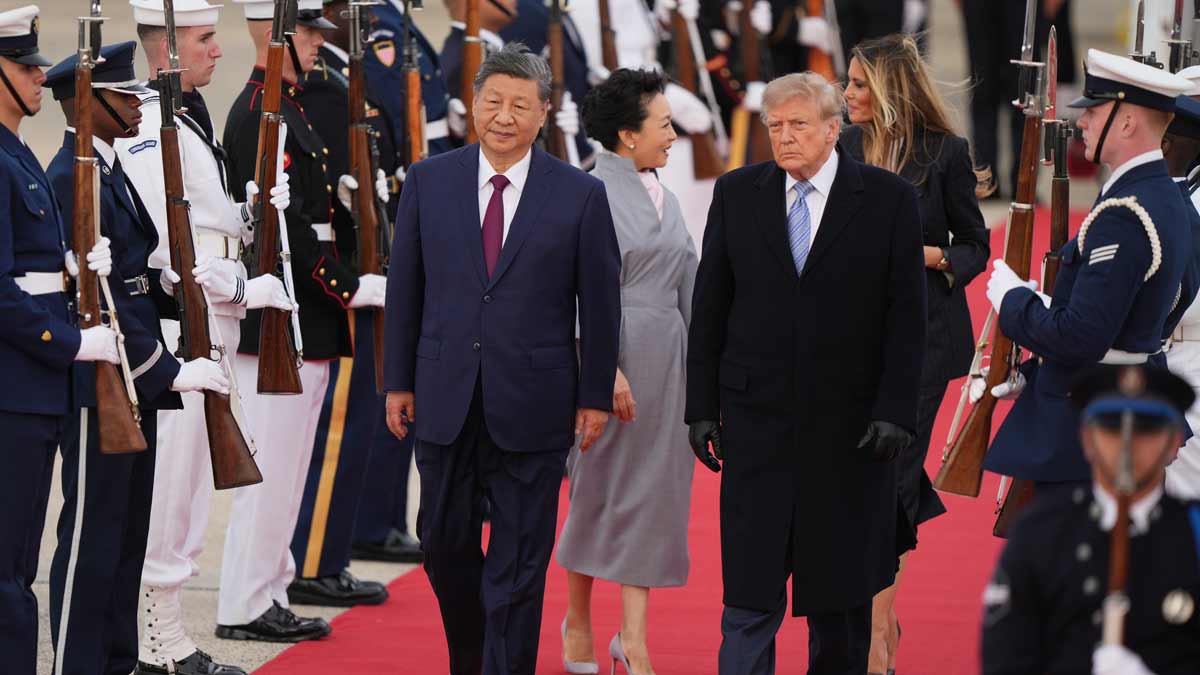
The Mechanics of Managed Friction
Diplomatic handshakes in high-stakes summits rarely signal permanent resolutions. When Donald Trump and Xi Jinping agree to extend a trade truce, the underlying friction does not vanish. It merely changes shape. Beneath the polished veneer of presidential press conferences lies a grinding reality of economic statecraft, bureaucratic foot-dragging, and strategic maneuvering.
Trade wars do not end with a single signature. They evolve into protracted wars of attrition.
For months, global markets react violently to every rumor of tariff escalation. Supply chains fracture, corporate boardrooms freeze capital expenditures, and national security advisors draft overlapping export controls. When both superpowers step back from the brink to announce a temporary extension of existing tariff ceilings, observers often mistake a tactical pause for a lasting peace.
That interpretation ignores the structural incentives driving both capitals.
The Domestic Imperative Behind the Pause
Washington and Beijing face starkly different domestic pressures, yet both require breathing room. In the United States, inflation metrics, corporate lobbying, and agricultural supply chain stability dictate political tolerance for sustained trade conflict. Broad tariffs act as a regressive tax on domestic consumers, a political vulnerability that sharpens as election cycles approach or economic growth stutters.
At the same time, the national security establishment insists on protecting domestic manufacturing and safeguarding critical technology sectors from foreign acquisition.
Balancing these competing forces requires theatrical containment. Extending a trade truce allows the administration to project stability to Wall Street while quietly maintaining targeted export restrictions on semiconductors, quantum computing, and advanced telecommunications. It is a strategy of managed hostility.
Across the Pacific, Beijing confronts its own formidable economic headwinds. Property sector distress, localized debt burdens, and a shifting demographic landscape demand sustained export performance to keep factories humming and employment stable. A sudden spike in American import duties threatens the exact economic engine China relies upon to engineer its transition toward high-tech manufacturing.
When Xi Jinping sits across the negotiating table, his objective is securing predictable access to foreign markets and high-end components while shielding domestic industrial policies from foreign interference. Agreeing to a truce buys time for domestic stimulus measures to take root and preserves supply chain continuity.
Supply Chains in Permanent Transition
Corporate executives who view these diplomatic pauses as a return to normal operational conditions are committing a strategic error. The era of low-cost, frictionless global manufacturing is over.
Multinational corporations have spent recent years quietly restructuring their operational footprints. Factories are migrating away from single-source concentration toward diversified hubs in Southeast Asia, Mexico, and domestic markets. This phenomenon, often termed nearshoring or friendshoring, is capital-intensive and irreversible in the short term.
Even if Washington and Beijing extend their trade truce indefinitely, the psychological damage to predictability has already altered corporate behavior. Chief executive officers no longer ask whether tariffs will rise, but rather when the next regulatory shockwave will hit. Consequently, capital expenditure flows toward risk mitigation rather than pure efficiency.
Insurance against geopolitical volatility is now a standard line item on corporate balance sheets.
The Technology Chokepoint
Tariffs on consumer goods and industrial machinery represent the visible architecture of economic conflict. The real battleground is invisible, unfolding within cleanrooms, software repositories, and silicon wafers.
Both administrations understand that technological leadership dictates geopolitical dominance. The ongoing negotiations regarding export controls on advanced semiconductors illustrate the limits of traditional trade truces. While tariff levels on steel or automobiles might be frozen or rolled back, controls on semiconductor manufacturing equipment remain tightly locked.
Washington seeks to maintain a permanent technological lead by restricting access to the tools required to fabricate sub-nanometer chips. Beijing views these measures as an existential containment strategy designed to stunt its economic ascent.
No diplomatic truce can bridge this fundamental philosophical divide. Trade negotiators can structure temporary compromises regarding agricultural quotas or rare earth mineral exports, but they cannot negotiate away a technological arms race.
The Cost of Perpetual Uncertainty
Financial markets crave certainty. They price risk based on historical models and predictable regulatory frameworks. The current dynamic of perpetual provisional truces shatters those models.
When a trade agreement carries an expiration date of six months or a year, long-term planning becomes an exercise in speculation. Small and medium enterprises, lacking the legal and lobbying resources of multinational conglomerates, bear the heaviest burden. They cannot easily relocate supply chains or hedge currency exposure against sudden tariff announcements.
The result is a browning out of entrepreneurial investment in cross-border ventures. Capital retreats to safer, domestic harbors, reducing global economic dynamism.
Reading the Signals Behind the Communique
Deciphering the outcome of high-level summits requires looking past the optimistic language of joint communiques. Words like framework, constructive dialogue, and mutual respect are diplomatic filler designed to soothe volatile equity indices.
The true metric of progress lies in enforcement mechanisms and verifiable behavioral shifts. If a truce lacks teeth, enforcement timelines, and clear penalties for non-compliance, it is merely a political placeholder.
As the ink dries on the latest extension, the underlying structural contest between the world's two largest economies persists. The rules of global trade are being rewritten in real time, not through multilateral treaties, but through bilateral friction, strategic decoupling, and the steady accumulation of defensive economic policies.
The truce holds for now because neither side can afford its collapse today. That calculation can shift tomorrow.


