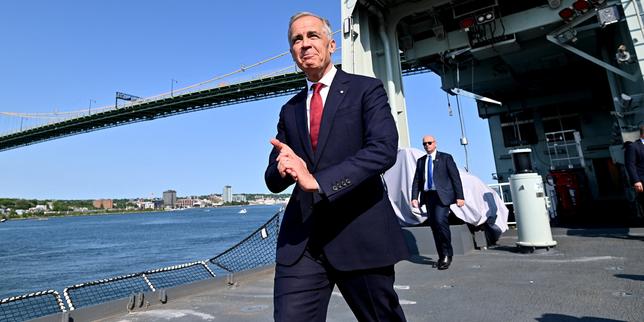
The Canadian government's designation of Germany's Thyssenkrupp Marine Systems (TKMS) as the preferred supplier for the Canadian Patrol Submarine Project (CPSP) represents a fundamental pivot in middle-power geopolitical strategy. Rather than evaluating this up-to-12-vessel procurement through a simple asset-replacement lens, the decision must be analyzed through three interconnected variables: maritime operational capacity across three oceans, domestic industrial economic multipliers, and the tactical mitigation of shifting transatlantic security architectures.
The transaction—estimated between 20 billion and 30 billion Canadian dollars ($14 billion to $21 billion USD) for initial acquisition, with lifecycle sustainment expenditures scaling to between 40 billion and 50 billion Canadian dollars—is the largest defense procurement in Canadian history. By selecting the Type 212CD platform over South Korea's Hanwha Ocean KSS-III proposal, Ottawa has prioritized long-term multilateral defense integration over immediate industrial delivery velocity.
The Operational Matrix: The Type 212CD vs. The KSS-III
To understand the core drivers of the selection, the maritime threat environment must be mapped against the specific engineering characteristics of the competing platforms. Canada's Royal Canadian Navy (RCN) requires an asset capable of sustained deployment across the Atlantic, Pacific, and critically, the under-ice environments of the Arctic Ocean.
The competitive evaluation balanced two distinct naval design philosophies:
- The Hanwha Ocean KSS-III (South Korea): A highly efficient, heavily armed 3,600-ton conventionally powered submarine. Its primary engineering advantage centered on short production timelines and a robust industrial capacity capable of delivering hulls rapidly to mitigate the looming capability gap left by Canada's aging Victoria-class fleet.
- The TKMS Type 212CD (Germany/Norway): A 3,000-ton diesel-electric platform developed in tandem for the German and Norwegian navies. The platform features an ultra-low acoustic and magnetic signature profile, optimized for non-nuclear stealth operations in highly contested littoral and sub-Arctic environments.
Canada’s selection function prioritized acoustic signature management and environmental optimization over rapid deployment timelines. The Type 212CD's fuel-cell-based Air-Independent Propulsion (AIP) system allows for extended submerged endurance without the requirement to snorkel frequently, a critical capability when operating beneath Arctic ice sheets where surfacing is structurally impossible.
Furthermore, the design maximizes NATO standardization. By embedding the RCN within an existing German-Norwegian production and engineering baseline, Canada minimizes the operational friction associated with custom weapon systems integration. The shared platform architecture allows for direct interoperability, joint crew training, and pooled spare-parts logistics with European allies who face identical operational paradigms in the North Atlantic and European Arctic.
The Cost-Sustainment Function and Capability Gap Risks
The financial architecture of the CPSP reveals a clear distinction between upfront acquisition costs and long-term economic sustainment. While the initial hull construction represents a fixed capital expenditure, the operational lifecycle cost of a naval asset typically accounts for 65% to 70% of its total cost of ownership.
Total Lifecycle Cost = Fixed Acquisition + Variable Operations + Sustainment & Modernization
The underlying risk in the TKMS selection lies in production capacity constraints. The German naval manufacturing complex is currently managing existing orders for both Berlin and Oslo, creating a structural bottleneck. South Korea's Hanwha Ocean possessed a more streamlined industrial throughput, offering a highly predictable delivery schedule to replace the four Victoria-class submarines, of which only one remains consistently operational.
To mitigate the risk of a total underwater capability collapse as the Victoria-class reaches its mandatory retirement window in the mid-to-late 2030s, the Canadian government negotiated an accelerated delivery framework. Contract finalization is slated for the end of 2027, with the first four Type 212CD hulls scheduled for delivery by 2034.
The structural resilience of the procurement process is maintained by retaining Hanwha Ocean as a formal reserve supplier. This dual-track framework provides Ottawa with immediate transactional leverage: if technical, economic, or domestic industrial offsets cannot be finalized with TKMS during the 2026–2027 negotiation window, the state retains the contractual right to pivot to the South Korean option without restarting the multi-year procurement cycle from baseline requirements.
Industrial Offsets and Economic Multipliers
Under Canada's modernized Industrial and Technological Benefits (ITB) policy, defense procurements of this scale require the winning foreign prime contractor to reinvest 100% of the contract value back into the domestic economy. This requirement altered the competitive landscape, shifting the bids from pure hardware sales to sweeping macroeconomic proposals.
The economic trade-offs between the two bids highlighted distinct regional industrial impacts:
- The Hanwha Proposal: Tied closely to heavy industrial manufacturing, including a memorandum with Algoma Steel designed to integrate Canadian steel into global armored vehicle supply chains, which would have directly benefited the Southern Ontario manufacturing corridor.
- The TKMS Proposal: Focused on high-value technology transfer, long-term maritime engineering sustainment, and specialized infrastructure development across both coasts. The German-Norwegian bid pledged a holistic long-term investment package encompassing domestic maintenance facilities, skills development, and collaborative green technology initiatives, including carbon capture partnerships.
The selection of TKMS concentrates economic benefits within Canada's domestic naval repair and maintenance sectors. Because submarine maintenance requires specialized drydocks and highly certified marine engineers, the 40-year operational life of the Type 212CD will mandate the permanent transfer of proprietary technical data packages to Canadian shipyards. This structural knowledge transfer transforms a capital-intensive defense expenditure into a long-term domestic industrial capability, ensuring that subsequent system upgrades and deep maintenance cycles are executed domestically rather than outsourced to European yards.
Geopolitical Realignment and the Transatlantic Pivot
The macro-environmental driver of the CPSP selection extends beyond tactical naval requirements and industrial offsets. The choice of a European, NATO-centric platform over a Pacific-oriented one reflects a calculated response to shifting geopolitical alignments and fraying security guarantees from the United States.
With Washington applying intense pressure on NATO allies to increase domestic defense spending, Ottawa is using the submarine procurement to aggressively alter its defense expenditure metrics. The multibillion-dollar project serves as a cornerstone for Canada's commitment to hit the revised NATO Defence Investment Pledge of 5% of GDP by 2035, an acceleration from previous capital allocation timelines.
The choice also signals a deliberate diversification of Canada's strategic dependencies. Faced with protectionist trade policies and volatile bilateral security relationships within North America, Prime Minister Mark Carney's administration is leveraging major defense acquisitions to anchor Canada firmly within a European security matrix. This European tilt is not isolated to undersea warfare; it coincides with active reviews of other major defense portfolios, including a reassessment of the American-led F-35 fighter jet program in favor of continental alternatives like Sweden’s Saab Gripen.
By binding its long-term naval capability to Germany and Norway, Canada secures structural integration with nations that share a mutual interest in preserving the rules-based order in the Arctic and North Atlantic. The strategic yields of this partnership include pooled logistics, shared maritime intelligence, and potential crew exchange programs, offering Canada a level of operational integration that a unilateral or non-NATO procurement could not replicate.
The strategic play for Ottawa is now entirely dependent on negotiation execution. Over the next 18 months, the newly established Defence Investment Agency must ruthlessly bind TKMS to strict, legally enforceable performance milestones regarding delivery timelines and domestic supply chain integration. The primary objective must be the elimination of production bottlenecks in Kiel. If TKMS cannot guarantee the 2034 delivery timeline for the initial four hulls under acceptable financial terms during these negotiations, Canada must execute its reserve option with Hanwha Ocean to prevent a catastrophic gap in its three-ocean sovereignty enforcement.