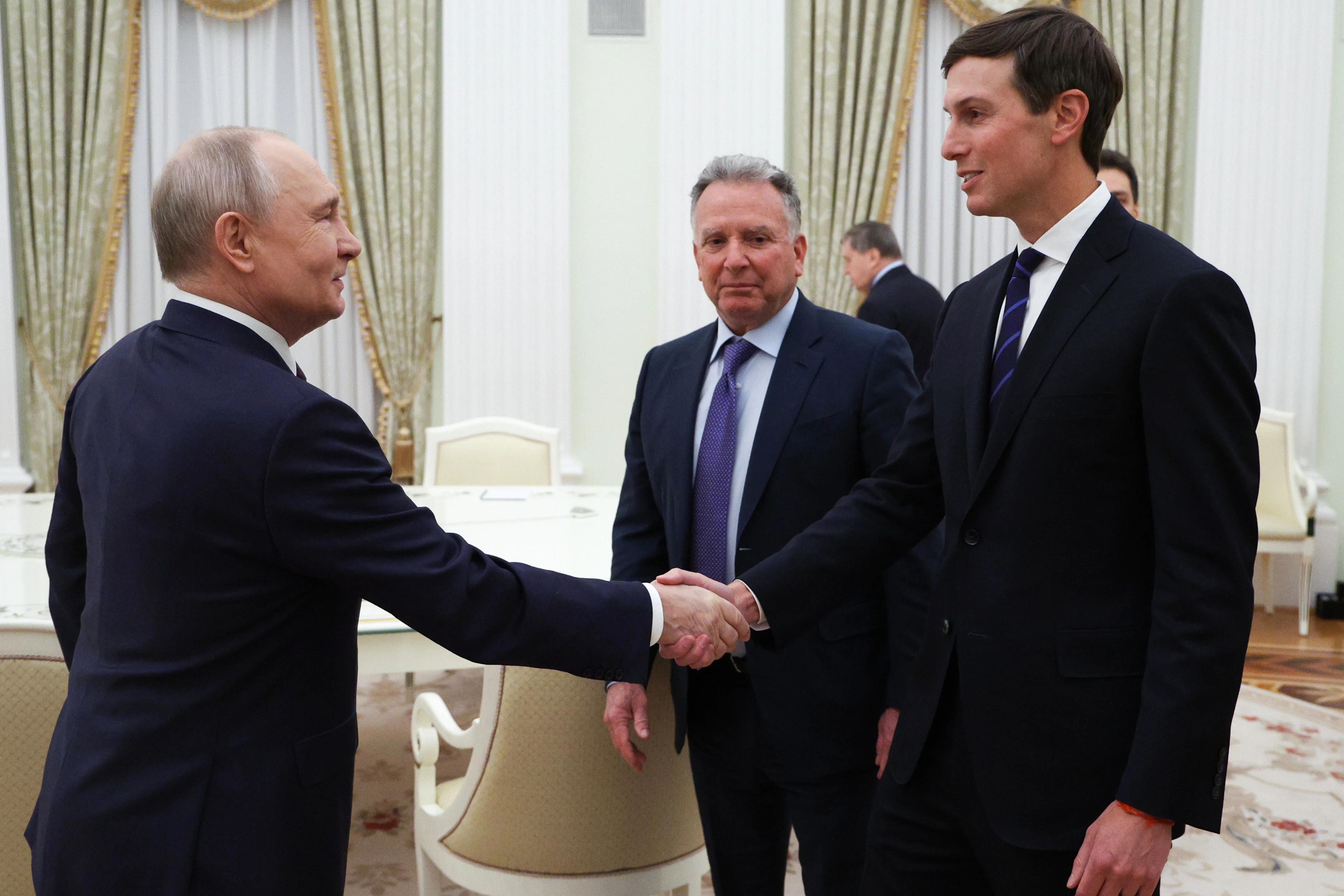
Back-channel negotiations between Washington, Kyiv, and Moscow rely on sequential geographic decoupling to isolate tactical concessions from public political costs. When American envoys transition directly from consultations regarding Ukraine in Abu Dhabi to high-level meetings with Vladimir Putin in the Kremlin, the diplomatic sequence follows a strict game-theoretic logic: establish baseline parameters with allied or third-party intermediaries in a neutral Gulf hub before presenting a calibrated, take-it-or-leave-it framework to the primary adversary.
Standard diplomatic reporting treats these multi-stop itineraries as mere logistical sequences or vague gestures toward peace. That framing misses the structural mechanics of coercive bargaining. Every physical venue in high-stakes conflict resolution serves a specific functional role in managing information asymmetry, domestic audience costs, and alliance cohesion.
The Structural Logic of Venue Sequencing
Diplomatic geography is never incidental. Moving from the United Arab Emirates to the Russian capital executes a two-stage filtering process designed to prevent premature negotiation collapse.
Stage One The Neutral Clearinghouse in Abu Dhabi
Abu Dhabi operates as a low-friction diplomatic clearinghouse. Unlike European capitals bound by NATO consensus rules or Washington, where legislative oversight and media scrutiny immediately weaponize any perceived concession, the UAE provides an insulated environment with high operational security.
The United States utilizes Gulf intermediaries for three specific operational functions:
- Signal Verification: Testing whether back-channel communications from Moscow represent authorized Kremlin positions or unauthorized freelancing by intelligence and business proxies.
- Allied Alignment and Containment: Consulting with Ukrainian representatives or regional stakeholders to define red lines before engaging Russian leadership directly, thereby mitigating the immediate accusation of negotiating over Kyiv's head.
- Logistical Deniability: Allowing senior officials to meet under the cover of bilateral energy, trade, or regional security summits, keeping the political exit doors open if talks stall.
Stage Two Direct Executive Engagement in the Kremlin
Once parameters are bounded in Abu Dhabi, the vector shifts to Moscow. In a hyper-centralized autocratic system, lower-level ministerial talks frequently stall because Russian diplomats lack the mandate to trade core strategic objectives. Engaging Putin directly in the Kremlin bypasses bureaucratic risk aversion.
This direct engagement changes the bargaining dynamic from exploratory dialogue to executive decision-making. By arriving in Moscow immediately after Abu Dhabi, U.S. envoys project a unified front—signaling that the terms on the table have already cleared preliminary regional and allied vetting.
The Four Variables of the Bargaining Matrix
To understand what actually occurs inside the Kremlin following Gulf consultations, one must strip away public readouts and examine the four core variables governing the Russo-Ukrainian conflict. Neither side negotiates on abstract principles; both negotiate on quantifiable leverage.
1. Territorial Frozen Lines Versus De Jure Recognition
A fundamental distinction separates a ceasefire line from a political settlement. Moscow's primary objective is converting kinetic territorial gains into permanent, internationally recognized sovereignty, or at minimum, lifting the economic friction associated with occupation. Washington's structural constraint is the legal and normative impossibility of recognizing borders altered by force, alongside Kyiv's refusal to cede sovereign territory.
The mechanism used to bridge this gap in back-channel talks is de facto administrative freeze paired with de jure ambiguity. Envoys explore frameworks modeled on historical armistices—where military lines are stabilized and monitored without requiring either party to formally surrender its constitutional claims.
2. The Sanctions Relief Asymmetry
Economic coercion operates on a ratchet effect: sanctions are easy to impose but legally and politically complex to dismantle. U.S. envoys cannot offer immediate, wholesale removal of financial and technological restrictions because many are codified in congressional statutes or require European Union unanimity.
Instead, negotiations focus on sequenced, reversible carve-outs:
- Financial plumbing: Restoring limited SWIFT access for specific agricultural or energy transactions via designated intermediary banks.
- Asset immobilization: Using the roughly $300 billion in immobilized Russian central bank reserves not as a blunt confiscation tool, but as an escrow mechanism tied to ceasefire compliance.
- Secondary tariff relief: Reducing enforcement pressure on third-party buyers in Asia and the Middle East in exchange for verifiable battlefield de-escalation.
3. Security Guarantees and Force Posture
For Kyiv, any pause in hostilities without binding enforcement mechanisms merely gives the Russian military industrial base time to reconstitute. For Moscow, formal NATO accession for Ukraine remains an existential casus belli.
The diplomatic middle ground tested in these sessions involves bilateral security architecture outside Article 5. This includes multi-year commitments for air defense replenishment, domestic Ukrainian weapons manufacturing joint ventures, and demilitarized buffer zones policed by non-NATO multinational observers—a role where Gulf states or neutral powers discussed in Abu Dhabi become directly relevant.
4. Escalation Dominance and Battlefield Timelines
Diplomacy never occurs in a vacuum; it is priced against the marginal cost of the next ninety days of attrition. Before entering the Kremlin, U.S. intelligence and defense planners quantify Russian recruitment rates, artillery shell production, and macroeconomic inflation against Ukrainian manpower deficits and Western munition deliveries.
If Moscow believes its trajectory on the ground yields higher returns than the diplomatic package carried from Abu Dhabi, Kremlin talks function solely as a stalling tactic to fracture Western political will. Conversely, if Russian economic bottlenecks—such as labor shortages and sovereign wealth fund depletion—threaten internal stability, the Kremlin uses the meeting to lock in current gains at peak leverage.
Information Asymmetry and Audience Costs
A critical failure in standard media coverage is taking public post-meeting statements at face value. Both the White House and the Kremlin face severe domestic audience costs—the political penalty leaders pay when they appear to back down from maximalist public threats.
When U.S. envoys leave the Kremlin with terse readouts citing "candid and constructive discussions," this linguistic minimalism indicates active bargaining rather than failure. Publicly announcing a breakthrough before implementation mechanisms are locked down invites immediate sabotage from domestic hardliners in Washington, Kyiv, and Moscow.
Furthermore, this diplomatic choreography creates intentional strategic ambiguity for third parties:
- European Capitals: Forced to calculate whether Washington is preparing a unilateral off-ramp, prompting them to either accelerate independent defense spending or demand a seat at the table.
- Beijing: Compelled to assess whether a U.S.-Russia détente could dilute Moscow's economic dependence on China, altering Beijing's own leverage over Russian energy pricing and Arctic access.
- Kyiv: Placed under implicit pressure to demonstrate flexibility on tactical negotiations to avoid being framed by Washington as the primary obstacle to a settlement.
Operational Limitations of the Envoy Model
Relying on high-level envoys shuttling between Abu Dhabi and Moscow carries structural vulnerabilities that frequently derail settlements during the transition from principle to execution.
The Principal-Agent Problem
Special envoys operate with broad executive trust, yet they often lack deep institutional control over the agencies required to implement an agreement. An envoy can negotiate a maritime ceasefire in the Black Sea or an energy infrastructure moratorium in the Kremlin, but operationalizing verification requires granular coordination across intelligence agencies, treasury departments, and military commands—all of which have bureaucratic incentives to maintain maximum pressure.
Verification Deficits
In low-trust environments, agreements collapse over inspection regimes, not grand strategy. Without intrusive, real-time monitoring—which Moscow historically rejects on sovereign territory—any ceasefire relies on national technical means (satellites and signals intelligence). When minor skirmishes inevitably occur along a thousand-kilometer front, the absence of a neutral, on-the-ground adjudication body allows both sides to claim breach of contract and resume offensive operations.
The Spoiler Effect
Sequential diplomacy between Washington and Moscow inherently sidelines secondary actors who retain kinetic veto power. If Kyiv views the output of the Abu Dhabi-Moscow track as a disguised capitulation, Ukrainian forces can execute deep-strike operations inside Russian territory that spike Russian domestic audience costs and force Putin to abandon the negotiation track entirely.
Evaluating the Signal Versus Noise
Analysts tracking the aftermath of a Kremlin envoy visit must ignore rhetorical posturing and monitor three concrete leading indicators over the subsequent thirty days:
- Kinetic Tempo Shifts: A measurable reduction in long-range missile and drone strikes targeting energy grids or port infrastructure, which serves as the fastest, most easily verifiable confidence-building measure both sides can execute without formal treaties.
- Treasury and Sanctions Guidance: Quiet issuance of general licenses by the U.S. Office of Foreign Assets Control (OFAC) expanding exemptions for specific Russian financial institutions or shipping insurers.
- Technical Working Group Deployments: The unannounced arrival of mid-level military cartographers, sanctions lawyers, and energy ministry officials in neutral hubs like Abu Dhabi, Doha, or Istanbul—proving that executive concepts are being translated into operational text.
Absent movement across at least two of these three indicators within a single billing and operational cycle, the Abu Dhabi-to-Moscow shuttle functions not as a peace process, but as a mutual reconnaissance mission designed to manage escalation risks while both powers prepare for the next phase of attrition.


