The collision between executive infrastructure initiatives and judicial oversight reveals the structural fault lines governing public land management in the District of Columbia. When federal authority attempts rapid, unilateral transformation of federal urban spaces, it runs directly into a multi-layered matrix of environmental statutes, historic preservation mandates, and judicial review mechanisms. The executive push to overhaul the East Potomac Golf Links into a championship-tier venue, characterized by the administration as a much-needed modernization of neglected public property, illustrates the friction that occurs when presidential policy priorities bypass standard administrative notice-and-comment cycles.
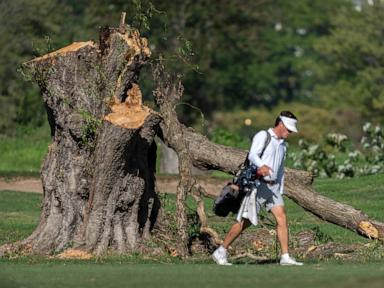
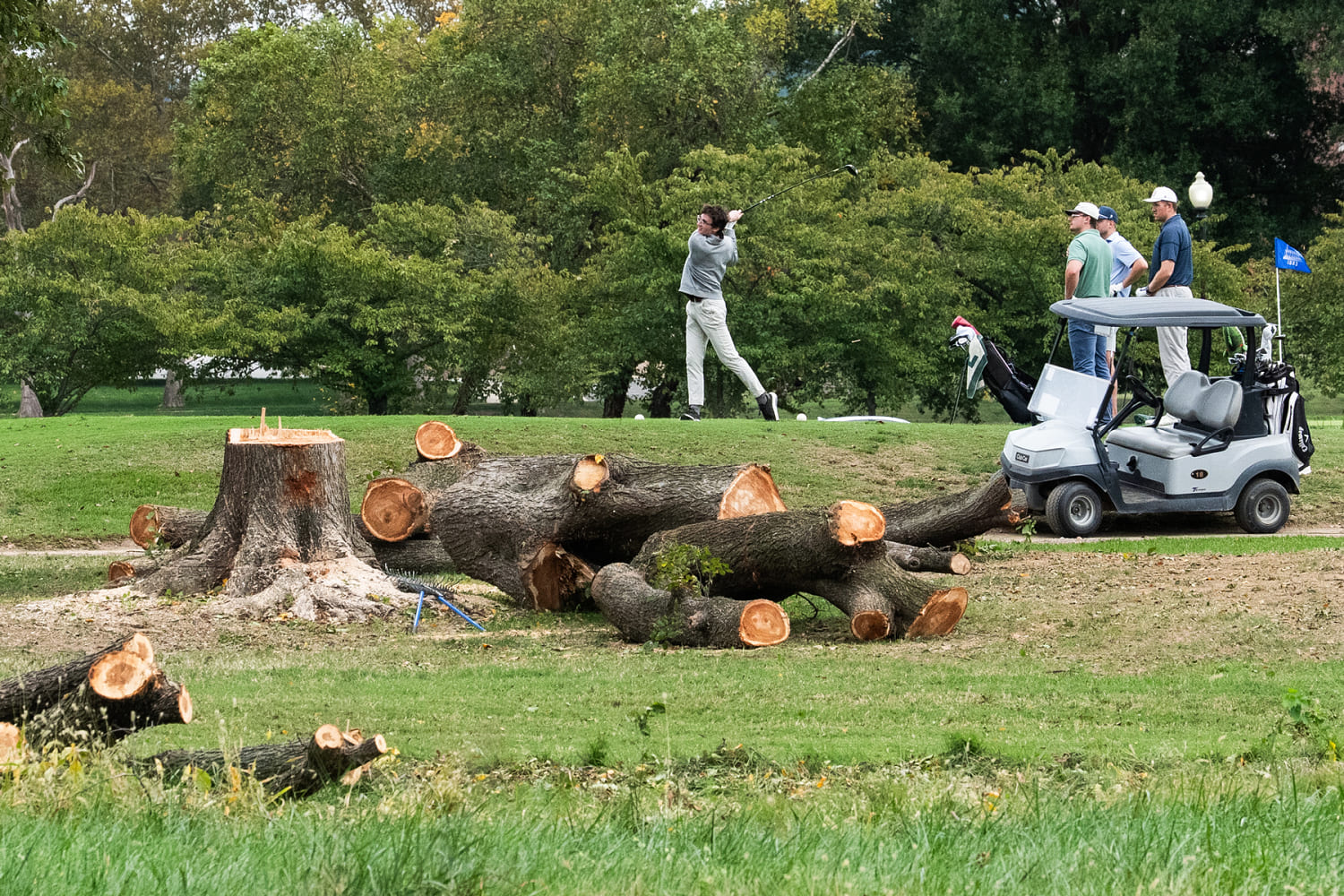
At the center of this friction lies the mechanics of site modification on federal parkland. East Potomac Park occupies a unique designation within the National Capital region, functioning simultaneously as a recreational amenity, an ecological buffer, and a historically sensitive landscape under the jurisdiction of the National Park Service. The administration's plan to consolidate the layout into a single 18-hole course designed by Tom Fazio required immediate vegetative clearing—specifically, the felling of hundreds of mature trees. From an operational perspective, vegetation removal on this scale alters microclimates, disrupts local avian habitats, and changes the hydrological absorption capacity of the peninsula. When execution outpaces formal administrative documentation or environmental impact disclosures, it creates an immediate vulnerability in federal court.
Judicial intervention in these disputes is rarely predicated purely on aesthetic preferences or environmental sentimentality. Instead, federal courts evaluate whether executive agencies have adhered to statutory constraints, such as the National Environmental Policy Act and historic preservation statutes, while maintaining transparency with the judiciary. In the ongoing litigation presided over by U.S. District Judge Ana Reyes, the core conflict crystallized around institutional trust and administrative candor. Tense courtroom exchanges and subsequent restraining orders highlighted a fundamental breakdown in coordination between Department of Justice representatives and the operating agencies. When an administration initiates rapid-response ground work—such as mass tree removals over a holiday weekend—prior to the finalization of formal administrative notices, it invites judicial scrutiny regarding executive overreach and adherence to due process.
The defense mounted by the administration relies heavily on executive authority to manage federal assets and mitigate public safety or facility disrepair risks. Proponents of the redesign argue that the existing facility operates below modern standards and that private philanthropic or executive-backed alignment can deliver a world-class public-access asset without drawing on appropriated congressional budgets. However, this argument confronts the statutory reality of federal land stewardship. Public parks in the capital are bound by statutory frameworks designed precisely to prevent rapid, unilateral alterations by any single administration, ensuring that local stakeholders, non-golfing recreationists, and preservation groups retain a procedural window to contest sweeping physical changes.
The sequencing of the dispute demonstrates how administrative urgency frequently collides with procedural inertia. The administration's objective to close the facility and commence large-scale earthmoving on an accelerated timeline was met with swift coalition-building from municipal preservation organizations represented by legal advocacy groups like Democracy Forward. By leveraging emergency injunctive relief, these groups effectively froze the critical path of the construction schedule. In project management terms, halting site work, equipment staging within root zones, and tree clearing introduces indefinite delay costs, neutralizing the velocity that the executive branch sought to achieve through direct action.
Ultimately, the confrontation over East Potomac Park is a case study in institutional checks and balances. The executive branch possesses the nominal authority to set policy direction for federal lands, but that authority is bounded by procedural statutes that treat urban parks as permanent public trusts rather than temporary administrative canvases. As the legal battle shifts to appellate courts and potential special master reviews, the outcome will establish a clear operational precedent for how future administration-led infrastructure interventions must navigate the complex regulatory topography of the nation's capital.
Federal judge blocks tree cutting at DC golf course
This video provides visual context on the federal judge's ruling to halt tree-cutting operations at the East Potomac Golf Links.