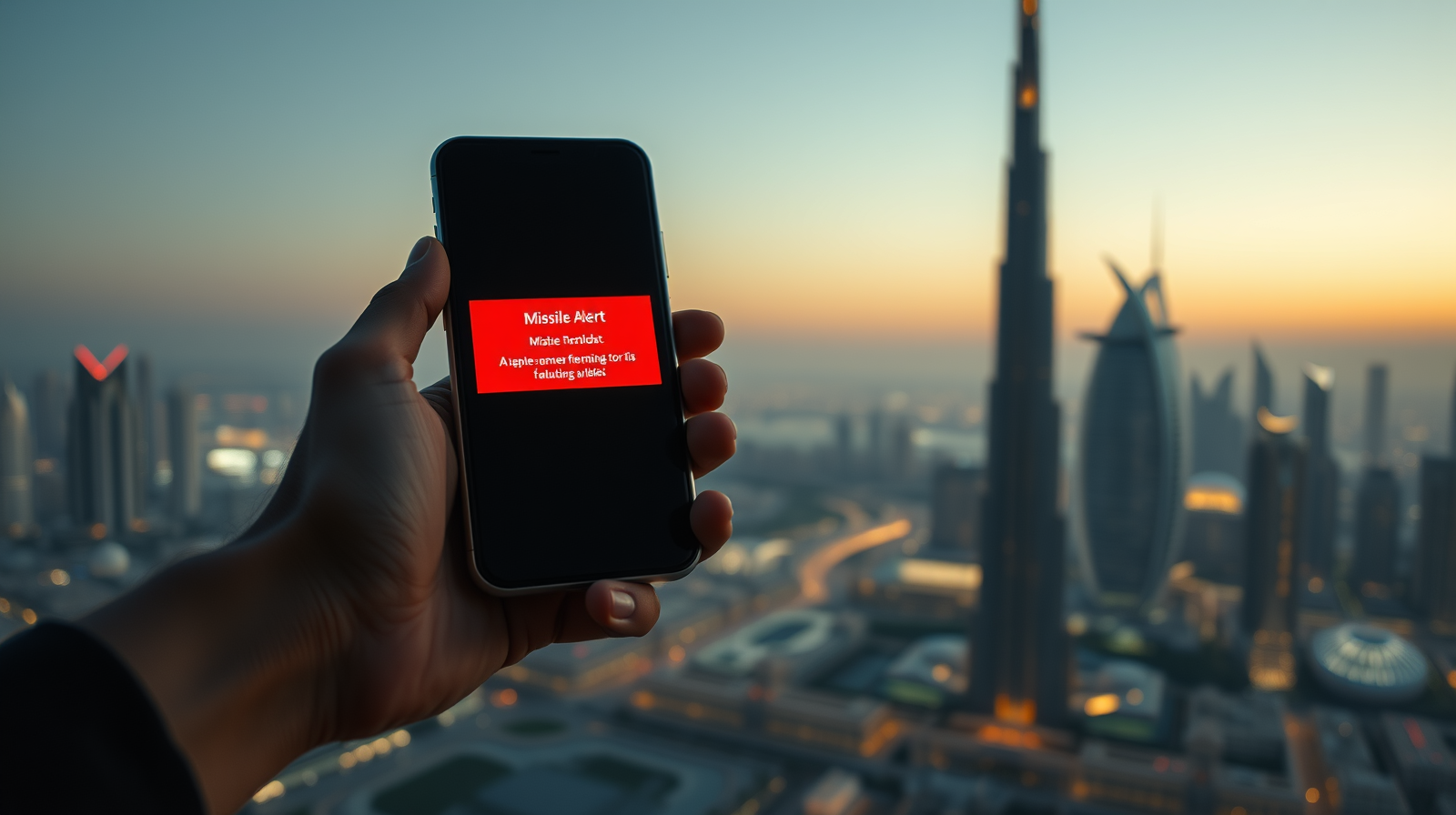
A errant missile alert transmitted to Dubai residents was caused by a configuration error during a routine system upgrade by the local telecommunications authority. The incident, which flashed across hundreds of thousands of smartphones before being retracted minutes later, was not the result of a cyberattack or a geopolitical escalation. It was a failure of the digital fail-safes designed to protect the emirate.
When an emergency notification lights up a phone screen with a blaring siren, the human brain undergoes an immediate, visceral shift. In a global hub like Dubai, home to millions of expatriates and billions of dollars in real-time financial transactions, that shift can trigger immediate economic and logistical ripples. The "disregard this message" follow-up arrived swiftly, but the structural vulnerabilities it exposed within mass notification infrastructure remain wide open.
The Anatomy of an Automated False Alarm
Mass alert systems rely on a technology called Cell Broadcast. Unlike traditional SMS, which sends messages to individual phone numbers one by one, Cell Broadcast targets every mobile device connected to specific radio cells in a geographic area. It bypasses network congestion completely. It is instantaneous. It is also unforgiving.
The core vulnerability in these systems rarely lies in the hardware. It rests in the software gateway where human operators interface with the broadcast network.
- The Test Environment Paradox: Engineers frequently run simulation protocols to ensure system readiness. If the firewall between the testing environment and the live production network is improperly configured, a simulated emergency becomes a public reality.
- The Absence of a Two-Man Rule: Many critical infrastructure networks lack a strict dual-authorization protocol for live broadcasts, allowing a single point of failure—one stressed or distracted operator—to trigger a region-wide panic.
- Protocol Cascades: Once a packet of data is pushed to the network controllers, it cannot be recalled. The data hits the cell towers, the towers transmit the signal, and the phones decrypt it based on hardcoded emergency channels.
When the alert went out, it bypassed the standard silent settings on modern smartphones. That is by design. The technology is built to override user preferences because during a genuine catastrophe, compliance is mandatory. But when the system malfunctions, that same intrusive authority turns the device into a vector for unnecessary chaos.
The Human Toll of Digital Incompetence
We have seen this script play out before, most notably in Hawaii in 2018, when an operator selected the wrong internal menu option and warned an entire island chain of an inbound ballistic missile. The psychological fallout of these events lingers long after the official clarification is tweeted.
People running for shelter, parents hiding with their children in interior rooms, and motorists abandoning vehicles on the highway are not easily pacified by a brief statement attributing the event to a technical glitch.
[System Trigger] ➔ [Cell Tower Broadcast] ➔ [Override Phone Settings] ➔ [Public Panic]
                                                                              │
[Official Retraction] ◄───────────────────────────────────────────────────────┘
The immediate consequence of a false alert is obvious panic. The long-term consequence is far more dangerous: habituation.
When governments repeatedly cry wolf through automated channels, the public develops a psychological defense mechanism known as alert fatigue. The next time the siren sounds, the citizen does not seek shelter. They check social media to see if it is a joke. They text a friend to verify. They wait. In a true crisis, those lost minutes are the difference between survival and disaster.
The Financial Shockwave of a Sixty Second Error
Dubai operates as the financial and logistical nervous system of the Middle East. It is a city built on the perception of absolute safety, predictability, and hyper-modern efficiency. An unverified missile alert strikes directly at that brand equity.
For algorithmic trading desks, automated systems monitor local news feeds and emergency channels for risk assessment. A high-priority emergency broadcast can trigger automated sell orders or pause trading volumes before human compliance officers even read the notification. The friction caused by a five-minute window of uncertainty can cost millions in market liquidity.
Furthermore, the aviation sector—Dubai International Airport is one of the busiest global hubs on earth—relies on split-second coordination. Air traffic control, ground crews, and commercial pilots operating in the airspace must treat every regional security alert with absolute seriousness. While this specific incident did not halt flight operations, the mere threat of a systemic shutdown introduces a risk premium that institutional investors notice.
Fixing the Broken Architecture of Mass Notification
Resolving this vulnerability requires more than issuing an apology and reprimanding a network administrator. It demands a fundamental redesign of how emergency broadcast software operates.
First, the integration of air-gapped testing protocols must be legally mandated for telecommunications providers. A testing environment should be physically incapable of communicating with live broadcast arrays. If code or configurations need to be moved from testing to production, that migration must require cryptographic keys held by separate entities.
Second, the interface design of these emergency gateways needs to evolve.
Many systems still utilize outdated dropdown menus where a "Test Alert" option sits directly adjacent to a "Live Alert" option. Modern user experience engineering dictates that high-stakes actions must require distinct, multi-step verification paths. A live missile alert should require a physical confirmation key or, at the very least, a multi-factor authorization prompt sent to a secondary commanding officer.
+---------------------------------------------------------+
| REQUIRED ACTIONS FOR CRISIS GATEWAYS                    |
+---------------------------------------------------------+
| 1. Physical separation of test and live networks        |
| 2. Multi-signatory authorization for live broadcasts     |
| 3. Mandatory 10-second delay with a cancellation option |
+---------------------------------------------------------+
The Sovereignty of the Screen
The smartphone has become an extension of state infrastructure. Governments can reach inside your pocket, vibrate your chest, and command your attention at any hour of the day or night. This is an extraordinary level of access, granted under an implicit contract of absolute accuracy.
Every time a government agency breaches that contract through sloppiness, bad code, or poor training, their authority erodes. The digital infrastructure of the modern smart city is marvelously interconnected, but its complexity is its primary weakness. When the systems that are supposed to keep us safe become the sources of our anxiety, the entire illusion of technological progress begins to fracture. The real threat to Dubai, or any other modern metropolis, isn't always over the horizon. Sometimes, it is running silently in the server room down the hall.


