Geopolitical volatility in West Asia creates severe operational friction for emerging economies dependent on stable maritime corridors and diversified energy imports. When Indian Prime Minister Narendra Modi met Iranian President Masoud Pezeshkian on the sidelines of the Shanghai Cooperation Organisation summit in Bishkek, the dialogue extended far beyond standard diplomatic pleasantries. The engagement maps the precise calculus required for a middle power navigating a fractured international order, balancing structural economic integration against acute security shocks.
The bilateral framework rests on two distinct optimization problems: insulating maritime supply chains from military escalation and expanding a constrained bilateral trade basket under multilateral frameworks like the BRICS bloc and the Shanghai Cooperation Organisation. Understanding this strategic alignment requires decomposing the core incentives, systemic constraints, and institutional mechanisms driving both states.
The Maritime Security Matrix and Supply Chain Vulnerability
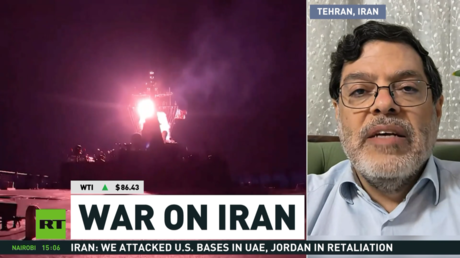
Commercial shipping through West Asian waterways functions as the circulatory system for global energy markets and dry bulk cargo. Following the outbreak of hostilities between the United States, Israel, and Iran, maritime chokepoints face elevated risk profiles. India's foreign policy calculus treats freedom of navigation not as an abstract legal principle, but as a hard economic requirement. More than ten million Indian nationals reside in the broader region, and a significant portion of national hydrocarbon imports transit these contested zones.
Prime Minister Modi emphasized that commercial shipping, civilian infrastructure, and seafarers must be isolated from military targeting under any circumstances. From an operational standpoint, this position addresses three direct threats to economic stability:
- Premium spikes in marine war risk insurance for vessels transiting the Gulf.
- Extended transit times caused by route diversions around volatile sectors.
- Direct physical attrition of civilian maritime assets and human capital.
For Tehran, the security calculus involves managing the downstream effects of asymmetric engagements against US and allied assets in the region. President Pezeshkian's appeal for India to leverage its extensive diplomatic channels reflects an explicit recognition of New Delhi's unique structural position. India maintains high-level communication channels with Washington, Gulf Arab states, and Tehran simultaneously, functioning as an independent diplomatic node capable of conveying non-western perspectives to Western capitals without triggering immediate alignment friction.
Economic Diversification Under Sanctions Pressure
Bilateral trade between India and Iran operates under severe external constraints, primarily driven by US secondary sanctions affecting financial clearing mechanisms and maritime logistics. Despite these structural barriers, both administrations committed to expanding and diversifying the bilateral trade basket.
The primary vector for this economic cooperation remains the development of the Chabahar port. Chabahar serves as a strategic transit multiplier, enabling India to bypass land-route bottlenecks through Pakistan and access Central Asian markets via the International North-South Transport Corridor. However, the cost function of operating through Chabahar involves balancing long-term strategic connectivity against the short-term risk of regulatory penalties from Western financial institutions.
To neutralize these restrictive effects, both leaders pointed toward institutional integration within multilateral platforms. By routing economic coordination through platforms such as the Shanghai Cooperation Organisation and the upcoming BRICS Summit, New Delhi and Tehran aim to establish alternative financial settlements and logistical frameworks that operate independently of dollar-denominated clearing systems. This institutional buffering reduces vulnerability to unilateral economic coercion.
Strategic Divergence and Pragmatic Alignment
The interaction between New Delhi and Tehran cannot be characterized as a traditional alliance; it is a transactional convergence born of geographic necessity and multi-alignment strategy. India must balance its expanding strategic and defense partnership with the United States and Gulf Cooperation Council monarchies against its historical ties and energy security interests with Iran.
Tehran recognizes this multi-vector foreign policy. Rather than demanding a zero-sum choice, the Iranian administration seeks targeted diplomatic support and economic resilience. India's official stance consistently champions multilateralism, adherence to international law, and the resolution of regional disputes through dialogue rather than force. This approach allows New Delhi to maintain credibility with Tehran while simultaneously condemning actions that threaten civilian infrastructure or freedom of navigation.
The structural limitations of this relationship are clear. Without a durable ceasefire in West Asia and a relaxation of secondary sanctions, bilateral trade will remain well below its theoretical potential. Capital investments in infrastructure projects along the North-South corridor will face higher risk premiums, and logistics planning will require continuous contingency routing.
Future diplomatic engagement will hinge on the practical outcomes of the upcoming BRICS Summit. If multilateral coordination yields functional alternative payment mechanisms and secured maritime corridors, middle powers will successfully insulate their regional trade from great power conflicts. The strategic imperative for New Delhi is clear: institutionalize economic connectivity while maintaining strict neutrality in operational theaters to safeguard domestic growth trajectories.