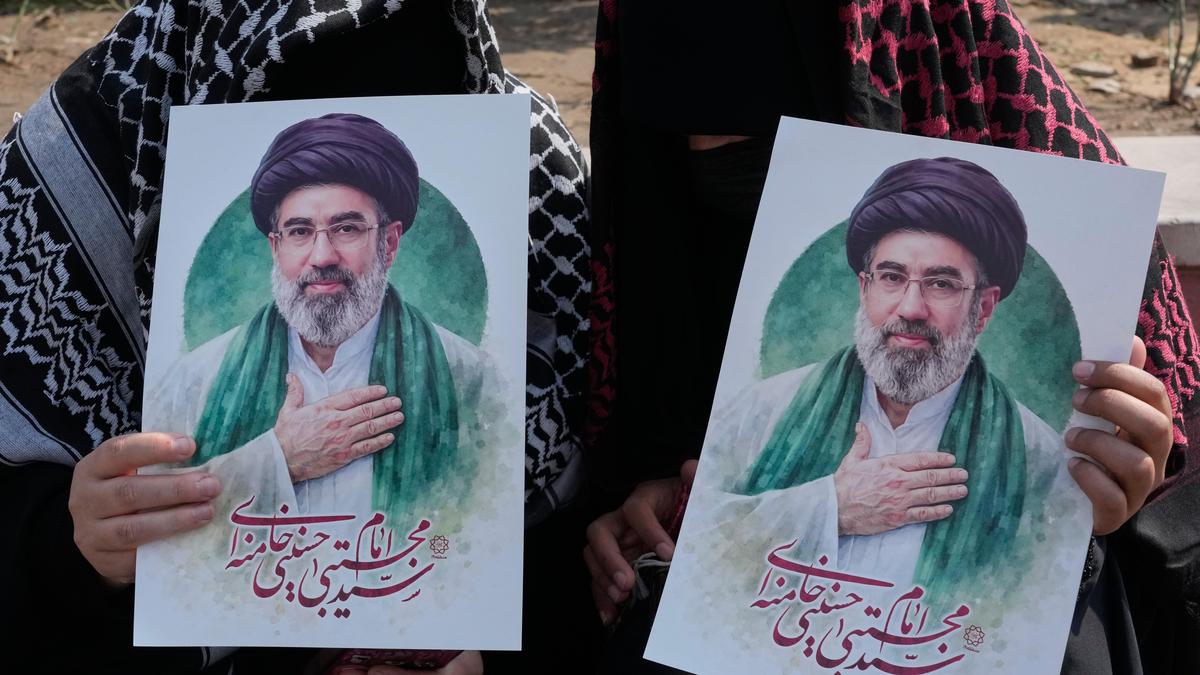
The recent public appearance and subsequent statements by Iran’s Foreign Minister regarding the health of Supreme Leader Ali Khamenei represent more than a routine health update; they are a calculated deployment of "regime signaling" designed to mitigate a specific type of political risk known as the succession vacuum. In highly centralized authoritarian systems, the health of the sovereign is the primary variable in national stability. When rumors of "reported injuries" or incapacitation surface, the state’s response follows a predictable three-stage containment protocol: denial of physical frailty, reassertion of the chain of command, and the demonstration of administrative continuity.
The Mechanics of Sovereignty and Physicality
The legitimacy of the Velayat-e Faqih (Guardianship of the Islamic Jurist) is theoretically grounded in divine and legal scholarship, yet its practical execution depends entirely on the perceived physical presence of the Leader. Unlike democratic systems where power is vested in the office and transferred via constitutional triggers, the Iranian system relies on a charismatic and personalist consolidation of authority.
The Foreign Minister’s "no problem" declaration serves as a corrective to a perceived informational asymmetry. In this context, the Minister is not merely acting as a diplomat but as a high-level proxy intended to project external confidence to internal stakeholders—specifically the Islamic Revolutionary Guard Corps (IRGC) and the Assembly of Experts.
The Information Decay Function in Autocracies
Information regarding the health of a supreme leader in a closed society undergoes a rapid decay of credibility. This creates an environment where:
- Speculation becomes a market force: Internal factions begin hedging their bets, shifting loyalty or resources toward potential successors (the "Succession Hedge").
- External adversaries calibrate pressure: Foreign intelligence agencies monitor the frequency and duration of public appearances to gauge the window for potential geopolitical shifts.
- The Bureaucratic Freeze: Mid-level officials stop making long-term decisions, fearing that a change at the top will lead to a purge or a radical shift in policy.
The Foreign Minister’s intervention attempts to arrest this decay. By framing the Leader’s status as "no problem," the state aims to reset the bureaucratic clock and discourage the formation of pre-emptive factional alliances.
The Strategic Function of the Foreign Ministry
It is structurally significant that the Foreign Minister—rather than a medical official or a domestic spokesperson—addressed these reports. This choice of messenger targets two distinct tiers of risk:
Tier 1: The Geopolitical Risk Premium
Iran is currently navigating a period of heightened regional tension and economic sanctions. Any perception of a power vacuum at the top invites opportunistic aggression from external rivals or increased pressure from international negotiators. By having the chief architect of foreign policy dismiss health rumors, the regime signals that its "Command and Control" (C2) remains intact. The message to the international community is that the strategic trajectory of the state is not subject to the volatility of a single individual's biology.
Tier 2: The Internal Stability Mandate
The Foreign Minister’s proximity to the Leader’s inner circle provides him with "borrowed authority." When he speaks on the Leader’s health, he is verifying the stability of the ultimate decision-making node. This is crucial for maintaining the cohesion of the IRGC, which requires a clear, undisputed source of orders to maintain domestic order.
The Taxonomy of Succession Stressors
The "reported injuries" serve as a stress test for the regime’s continuity frameworks. These frameworks are built on three pillars that must remain synchronized:
- The Constitutional Pillar: The Assembly of Experts, the body tasked with selecting a successor, must appear ready but not eager. Any sign of premature activity within the Assembly confirms the severity of the crisis.
- The Military Pillar: The IRGC must maintain a posture of "business as usual." Increased troop movements or heightened security in Tehran would contradict the "no problem" narrative.
- The Symbolic Pillar: The Leader must eventually be seen. Verbal assurances have a short shelf life. If the Foreign Minister’s statement is not followed by a visual proof-of-life—specifically a video or photo of the Leader engaged in a high-level meeting—the "no problem" claim will be discounted by the 72-hour mark.
The Limitation of Proxy Assurances
Proxy assurances (statements made by subordinates about a leader's health) carry an inherent credibility ceiling. The more frequently a subordinate has to deny a leader’s illness, the more the public and international observers apply a "skepticism multiplier" to the news. This creates a diminishing return on official statements. If the Foreign Minister is forced to repeat this assurance, the market for Iranian stability will price in a high probability of a leadership transition, regardless of the veracity of the initial denial.
Structural Bottlenecks in the Iranian Succession Plan
The difficulty in managing these reports stems from the lack of a transparent, public-facing "Vice President" figure with a clear mandate. The current structure creates several logical bottlenecks:
- The Consensus Failure: If the Leader is incapacitated, the Assembly of Experts must reach a consensus. If the "no problem" narrative is a lie, it suggests that a consensus has not yet been reached, and the regime is buying time to prevent an open factional war.
- The Legitimacy Gap: A successor must not only be legally appointed but also accepted by the security apparatus. The Foreign Minister’s statement acts as a placeholder to prevent the security apparatus from beginning their own autonomous selection process.
Strategic Trajectory and Operational Realities
The "no problem" assertion should be viewed as a tactical delay. For the analyst, the metric to watch is not the statement itself, but the delta between the statement and the next scheduled high-level meeting involving the Supreme Leader.
In any centralized system, silence from the top is a loud signal. If the Leader fails to appear for a major religious or political event in the coming weeks, the Foreign Minister’s statement will be reclassified from a "status report" to a "containment lie."
The regime’s current strategy is to maintain a state of "strategic ambiguity" regarding the health of the Leader while projecting "operational certainty" through its ministers. This allows the state to manage the immediate volatility of the news cycle while internally negotiating the complexities of a transition that has been decades in the making.
Observers must now monitor the internal movements of the Assembly of Experts and the communication frequency of the IRGC leadership. The true state of the Leader’s health will be revealed not by the words of the Foreign Minister, but by the movement of the regime’s most powerful stakeholders as they prepare for the inevitable shift in the center of gravity.
The immediate tactical move for external analysts is to discount the "no problem" claim as a standard bureaucratic output and instead focus on the "Proof of Presence" (PoP) frequency. If the PoP interval exceeds its historical average by more than 20%, the probability of an active succession crisis increases exponentially. The regime is currently in a defensive informational posture; the transition to an offensive posture—characterized by the Leader’s direct address to the nation—is the only variable that will successfully neutralize the current speculative cycle.