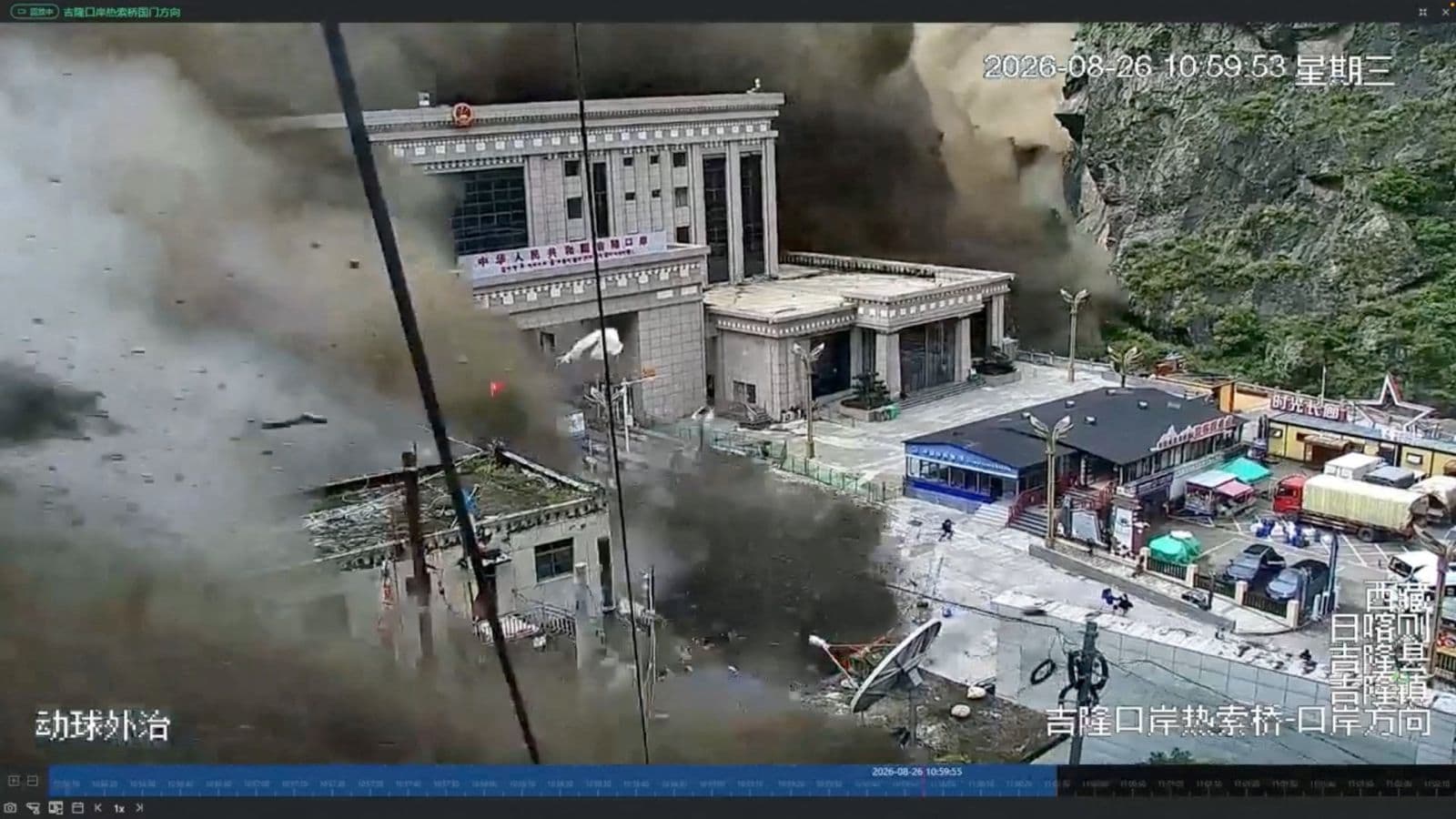
Crisis management within authoritarian state structures relies on a precise operational calculus. When a catastrophic natural event breaches physical and political boundaries, the primary objective of the governing apparatus is not rapid situational awareness or localized mitigation, but structural containment of the narrative. The transboundary flash floods that originated in the Tibet Autonomous Region and devastated downstream communities in Nepal expose the mechanics of modern state-enforced information control. Rather than functioning as a chaotic reaction to an emergency, the systematic scrubbing of citizen-generated digital media represents a calculated strategy designed to eliminate political vulnerability.
Understanding this mechanism requires dismantling the traditional assumption that authoritarian censorship is a blunt, reactive instrument. Modern media management inside tightly controlled jurisdictions operates as an advanced filtering and substitution pipeline. When a disaster strikes a politically sensitive frontier, the information ecosystem undergoes a rigid three-stage transformation: the eradication of primary-source documentation, the freezing of quantitative variables, and the saturation of the channel with centralized heroic tropes.
The initial phase relies on real-time extraction and neutralization of unvetted local data. When flash floods triggered massive mudslides through critical overland trade nodes such as Gyirong Port, local residents and stranded personnel utilized decentralized messaging applications like WeChat and microblogging platforms like Weibo to broadcast raw footage. These digital uploads captured structural collapses of national border gates and torrents inundating commercial zones. Within hours, automated digital content moderation tools—utilizing advanced video fingerprinting, image hashing, and machine-learning filters—identified and suppressed these uploads. The target of this systemic deletion was not explicit anti-state sentiment, but the unauthorized visualization of state vulnerability. A broken border gate or an overwhelmed municipal infrastructure project constitutes an unacceptable breach in the projected facade of total administrative competence.
Concurrently, the quantitative dimensions of the crisis undergo administrative freeze protocols. In decentralized democracies, disaster casualty metrics fluctuate dynamically as rescue teams penetrate isolated sectors. Conversely, within the targeted region, initial casualty figures are locked into rigid, low-bound numerical ceilings. By freezing the reported death toll at minimal numbers while thousands remain missing downstream across international borders, the governing apparatus severs the causal link between environmental degradation and systemic accountability. This numerical rigidity prevents independent analysts from establishing historical trends, particularly given that locations like Gyirong Port experienced recurrent, unacknowledged mudslide vulnerabilities in preceding years. Suppressing the half-year or multi-year frequency of these ecological events protects institutional planning models from external audit.
The final operational layer is narrative substitution. Once unvetted primary accounts are neutralized, state-backed media channels saturate the public domain with highly polished, top-down visual assets. Coverage pivots exclusively away from the mechanics of destruction and relocates to the theatrics of salvation. State wire services prioritize high-resolution aerial drone footage, detailed briefings on the mobilization of military engineering units, and prominent administrative directives issued by supreme leadership. By dominating the airwaves with depictions of disciplined emergency response teams, the administrative apparatus converts a systemic environmental failure into an affirmation of state strength.
This operational model generates severe structural externalities for regional risk mitigation. Transboundary river basins and high-altitude glacial ecosystems require unhindered, real-time data sharing to protect downstream populations. When upstream information is treated as a state secret governed by national security parameters, hydrological forecasting models lose predictive validity. Downstream emergency services are forced to operate within an analytical vacuum, unable to calculate discharge volumes or arrival times of debris flows originating across political borders.
The systemic suppression of disaster documentation demonstrates that information hygiene supersedes humanitarian expediency within high-security zones. The strategic playbook deployed during the Tibet-Nepal border floods confirms that narrative preservation remains the core operational priority of the modern digital censorship state, regardless of human cost. To counter or predict the trajectory of crises in closed information ecosystems, observers must look past the manufactured consensus of state media and measure the velocity of data deletion as the primary indicator of systemic stress.