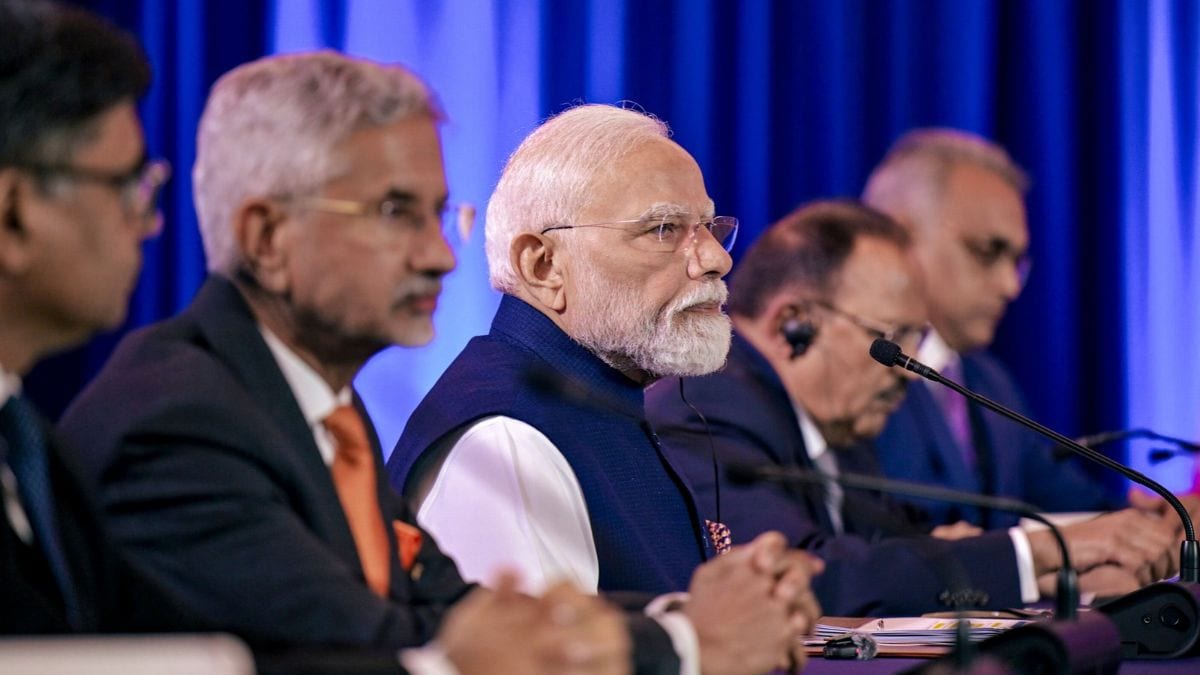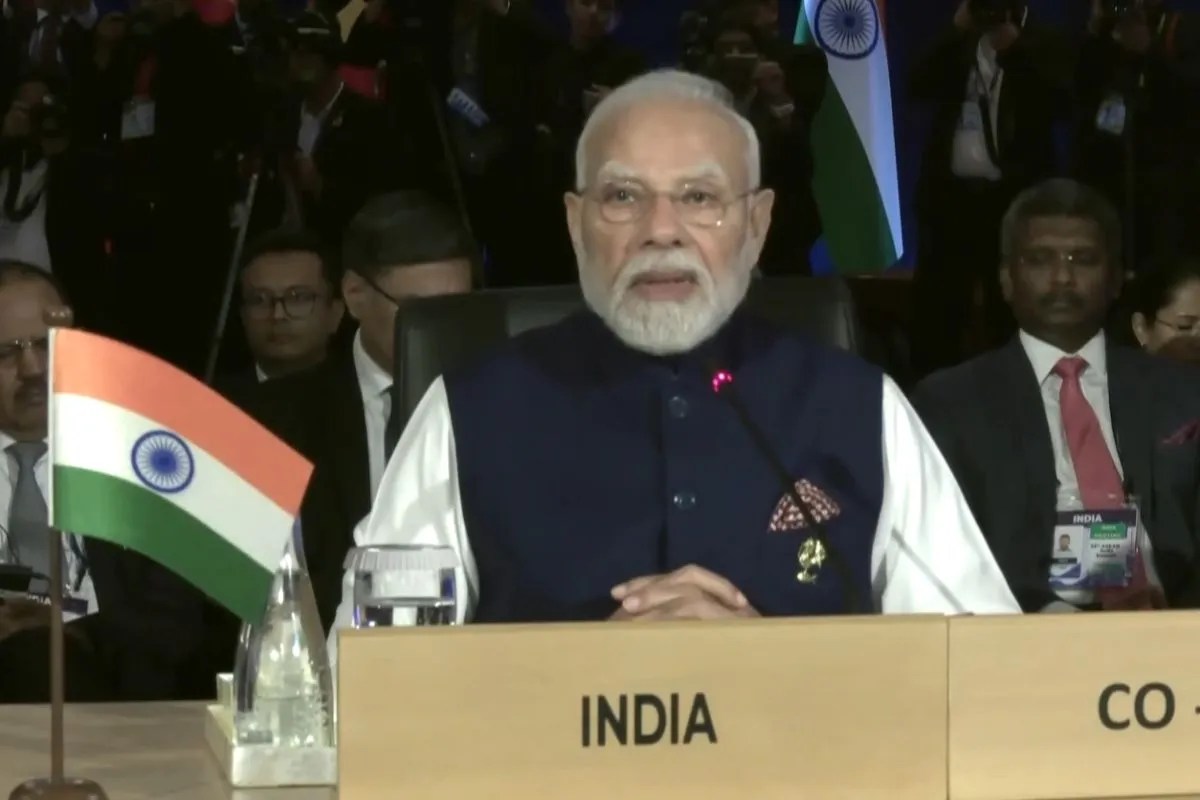
Global supply chains and geopolitical alignments no longer operate on assumptions of permanent peace; they operate on risk-adjusted trust. When Indian Prime Minister Narendra Modi addressed the ASEAN-India Summit with the declaration that the world requires peace, stability, and an environment of trust, he was not offering diplomatic platitudes. He was articulating a structural thesis for economic survival in a multipolar world. Most coverage reduces this summit to standard diplomatic courtesy, missing the underlying operational mechanics: India is positioning itself as the indispensable ballast for Southeast Asia against unilateral coercion and supply chain weaponization.
To understand the weight of this positioning, one must look past the rhetoric of historical ties and analyze the functional architecture of the India-ASEAN relationship. This partnership rests on three interlocking mechanisms: maritime security enforcement, supply chain diversification, and digital public infrastructure export. Each mechanism addresses a specific vulnerability exposed by recent global shocks, turning diplomatic alignment into tangible economic and strategic insulation.
The Structural Deficit in Global Trust
International trade depends on predictable rules and low friction. Over the past decade, three systemic shocks have eroded this baseline: the weaponization of trade dependencies, unilateral maritime assertions in the South China Sea, and the fragmentation of global financial and technological standards.
In economics, a deficit of trust acts as an invisible tax on every transaction. When businesses cannot predict whether a shipping lane will remain open or whether a dominant supplier will restrict critical exports for political reasons, capital expenditure freezes. Companies shift from optimizing for efficiency—just-in-time inventory and single-source manufacturing—to optimizing for resilience, often referred to as "China Plus One" or "friend-shoring."
India’s diplomatic messaging directly targets this friction. By emphasizing a "trusted environment," New Delhi is signaling to ASEAN member states and multinational corporations that its regulatory, security, and economic frameworks are designed to be predictable counterweights. Unlike powers that use debt-trap diplomacy or economic coercion to extract political concessions, India’s strategic value proposition relies on consensus-based multilateralism and adherence to international law, specifically the 1982 United Nations Convention on the Law of the Sea (UNCLOS).
The Cost Function of Regional Instability
For the ten member states of ASEAN, regional instability is not an abstract geopolitical problem; it is an immediate threat to GDP growth. Southeast Asia sits astride the world's most critical maritime chokepoints, including the Strait of Malacca, through which roughly a third of global maritime trade passes.
- Insurance and Freight Premiums: Any kinetic conflict or sustained blockade in the South China Sea immediately spikes war-risk insurance premiums, rendering low-margin manufacturing exports uncompetitive.
- Capital Flight: Foreign Direct Investment (FDI) into ASEAN relies heavily on the region's reputation as a neutral, stable manufacturing hub. Polarization forces nations to choose sides, which fractures regional integration and deters long-term infrastructure investment.
- Resource Depletion: Unregulated maritime claims threaten the exclusive economic zones (EEZs) of littoral states, directly impacting fishing stocks and offshore energy exploration vital to domestic energy security.
Modi’s insistence on peace and stability is an explicit alignment with ASEAN’s core economic survival instinct. It validates ASEAN Centrality—the principle that Southeast Asian nations should remain the primary drivers of regional architecture rather than becoming passive arenas for great-power competition.
Deconstructing the Three Pillars of India-ASEAN Operational Alignment
Diplomatic declarations only matter when backed by institutional mechanisms. The execution of India’s Act East Policy—which evolved from the earlier Look East Policy to emphasize action and project delivery over mere diplomatic engagement—operates across three distinct operational vectors.
1. Maritime Domain Awareness and Security Deterrence
A rules-based order requires enforcement mechanisms, or at least the credible capacity to monitor violations. India and ASEAN have moved beyond joint naval exercises toward structural integration in Maritime Domain Awareness (MDA).
Through the Information Fusion Centre – Indian Ocean Region (IFC-IOR) based in Gurugram, India shares real-time white-shipping data (information regarding non-military merchant vessels) with partner nations. This creates transparency across the maritime commons. When illegal, unreported, and unregulated (IUU) fishing fleets or gray-zone maritime militias operate in contested waters, unified tracking strips away plausible deniability.
Furthermore, defense exports represent a maturing vector of this relationship. The delivery of BrahMos supersonic cruise missiles to the Philippines marks a decisive shift. India is no longer just a security dialogue partner; it has become a net security provider and defense supplier capable of altering the tactical calculus for ASEAN states facing asymmetric maritime pressure.
2. Supply Chain Resilience and the Review of AITIGA
Trade volume between India and ASEAN has grown substantially, yet the structural composition of that trade has long favored ASEAN, resulting in a persistent trade deficit for India. More critically, the existing ASEAN-India Trade in Goods Agreement (AITIGA), signed in 2009, lacked the mechanisms needed to prevent the routing of third-country goods through ASEAN nations into the Indian market without adequate value addition.
The ongoing review of AITIGA is not a bureaucratic exercise; it is a fundamental recalibration of supply chain trust.
- Rules of Origin Enforcement: Tightening verification processes ensures that tariff concessions genuinely benefit ASEAN and Indian manufacturers, rather than serving as a backdoor for heavily subsidized external exports.
- Sectoral Integration: Aligning customs procedures and harmonizing technical standards reduces non-tariff barriers, allowing intermediate goods to move smoothly between Indian pharmaceutical, automotive, and electronics hubs and Southeast Asian assembly lines.
- Critical Minerals and Semiconductors: Both regions are vulnerable to concentrated supply chains for rare earth elements and semiconductor packaging. Joint frameworks aim to map complementary capacities—combining India's chip design talent with ASEAN’s established assembly, testing, and packaging (ATP) infrastructure.
3. Digital Public Infrastructure as a Geopolitical Equalizer
Perhaps the most potent, yet under-analyzed, component of India’s outreach is the export of Digital Public Infrastructure (DPI). While Western tech models rely on proprietary corporate ecosystems and authoritarian models rely on state surveillance architectures, India has pioneered an open-source, interoperable stack (exemplified by Aadhaar for identity, UPI for payments, and DigiLocker for data exchange).
For developing economies in ASEAN, building sovereign digital infrastructure from scratch is capital-intensive and slow. By offering the India Stack as a modular, low-cost framework, New Delhi enables ASEAN nations to digitize their economies without surrendering data sovereignty to foreign tech monopolies or state-backed telecom giants.
The linkage of India’s Unified Payments Interface (UPI) with Singapore’s PayNow is the prototype for this regional architecture. It reduces the cost of cross-border remittances and merchant payments, bypassing traditional, high-fee correspondent banking networks. As this model scales to Malaysia, Thailand, and Indonesia, it creates a unified regional financial rail that deepens economic interdependence through technical interoperability rather than political coercion.
Connectivity: The Physical Bottleneck
Strategic alignment fails if physical infrastructure cannot carry the load. Connectivity between India and ASEAN remains the primary bottleneck preventing the relationship from reaching its theoretical potential. While maritime trade is well-established, overland connectivity through India’s Northeast into Myanmar and Thailand faces severe execution challenges.
The India-Myanmar-Thailand (IMT) Trilateral Highway and the Kaladan Multi-Modal Transit Transport Project are designed to transform India’s landlocked Northeast into a thriving commercial bridge to Southeast Asia. However, internal instability and civil conflict within Myanmar have severely delayed construction timelines and compromised security along these transit corridors.
This reality highlights a critical constraint in strategic planning: geography cannot be wished away by diplomatic consensus. Until the security environment in Myanmar stabilizes, overland trade will remain sub-optimal. Consequently, strategy must adapt by over-indexing on maritime connectivity—upgrading ports along India’s eastern seaboard (such as Chennai, Visakhapatnam, and Paradip) and integrating them into regional shipping networks—while accelerating digital and aviation links that bypass terrestrial chokepoints entirely.
Strategic Limits and Structural Friction
An objective analysis requires acknowledging the limitations of the India-ASEAN framework. Three structural realities prevent this partnership from becoming a formal military alliance or a seamless single market in the immediate term.
First, ASEAN is not a monolith. The ten member states possess divergent threat perceptions and varying degrees of economic dependence on major external powers. Maritime states like the Philippines and Vietnam share acute security concerns regarding territorial sovereignty, making them natural partners for deeper defense cooperation with India. Conversely, mainland states like Cambodia and Laos have deep economic and political ties to Beijing, creating internal friction when ASEAN attempts to issue unified statements on sensitive security issues. Consensus-based decision-making within ASEAN means the bloc often moves at the speed of its most cautious member.
Second, India’s domestic protectionism creates trade friction. While New Delhi advocates for trusted global supply chains, its domestic industrial policy—characterized by Production Linked Incentive (PLI) schemes and selective tariff increases—aims to build self-reliance (Atmanirbhar Bharat). Balancing domestic manufacturing protection with the market access demands of export-driven ASEAN economies requires constant, delicate negotiation. India’s decision to opt out of the Regional Comprehensive Economic Partnership (RCEP) demonstrated that New Delhi will not sacrifice its domestic agricultural and industrial sectors on the altar of broad regional free trade agreements if the terms threaten domestic producers.
Third, capacity constraints limit execution speed. India’s diplomatic and financial bandwidth is stretched across multiple theaters—from managing border tensions in the Himalayas to leading initiatives in the Global South, the Quad, and the Middle East. While strategic intent is clear, the bureaucratic and financial execution of overseas infrastructure projects still lags behind competitors capable of deploying massive, state-directed capital rapidly.
The Path Forward for Regional Stakeholders
The convergence of India’s economic rise and ASEAN’s need for strategic autonomy creates a rare window for structural realignment. However, capitalizing on this requires moving beyond summit declarations to aggressive operational execution.
Policymakers and corporate strategists operating in the Indo-Pacific must treat the India-ASEAN corridor not as a single homogenous market, but as a federated network of bilateral and minilateral opportunities. The immediate strategic imperative is to finalize a modernized, asymmetric AITIGA that protects against third-country dumping while aggressively slashing tariffs on intermediate industrial inputs. Simultaneously, private sector leaders should leverage the expanding UPI-linked cross-border payment rails to establish localized supply chain financing, bypassing legacy banking friction. Ultimately, stability in the Indo-Pacific will not be secured by multilateral communiqués, but by the rapid deployment of interoperable digital rails, resilient maritime logistics, and targeted defense deterrence that make unilateral coercion economically irrational.