The most powerful rooms in politics are rarely the ones you see on television. They do not have mahogany podiums, velvet ropes, or cameras flashing in the faces of exhausted politicians. Instead, they are cluttered offices hidden deep within party headquarters, smelling of lukewarm coffee and printer toner, littered with spreadsheets of voting data and half-eaten sandwiches.
In rooms like these, the fate of a country is quietly mapped out. For a closer look into this area, we suggest: this related article.
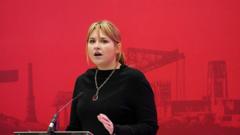
For the last two years, Hollie Ridley sat at the very center of that mapping machine. As General Secretary of the Labour Party, her signature carried the weight of an entire political apparatus. When she sent an internal email to party staff announcing her intention to step down this autumn, it was not just a routine HR notification. It was the closing of a chapter on an extraordinary era of backroom engineering.
Her departure, timed carefully for September after the party’s annual conference, comes at a moment of profound transformation. Just weeks ago, Keir Starmer announced he was stepping down as Prime Minister. With Andy Burnham widely expected to take the reins of both the party and the country later this month, the tectonic plates of British governance are shifting. Ridley’s exit ensures that the incoming leader can place a trusted ally in the ultimate gatekeeper role. For broader background on the matter, in-depth analysis is available on Associated Press.
But to understand what is truly leaving the building when Ridley walks out, you have to look far beyond the mechanical chess game of Westminster. You have to look at Dagenham.
The Girl from Dagenham
Imagine a teenage girl growing up in east London, the daughter of a lorry driver and a family support worker. The year is 2011. The far-right British National Party is gaining traction in her community, spreading a specific brand of division. She is angry. She wants to fight back.
When she talks to her teachers about her desire to change things, they give her the advice so often reserved for working-class kids. Lower your sights. Be realistic. Politics is a game played by people with different accents, different bank accounts, and different family trees.
She refused to listen.
Instead, at twenty-two, she walked into the Labour Party as a trainee organizer. To use a metaphorical comparison, she did not enter the palace through the front gates; she began in the boiler room, shoveling the coal that makes the engine turn.
What followed was a brutal, fifteen-year climb through every single layer of the party machine. She was a campaign organizer, a regional director, a training manager, and the head of key seats. If a vote was won in a difficult corner of the country, Ridley’s fingerprints were usually on the strategy. When Labour pulled off an against-the-odds victory in the 2019 Peterborough by-election, it was Ridley who spearheaded the ground operations.
By the time the historic 2024 general election arrived, she was the field director. She built the ground campaign that swept the party into power. When David Evans stepped down later that year, she took the top job unopposed.
The Weight of the Machinery
People often misunderstand the role of a general secretary. They see the title and think of administration. They think of minutes, agendas, and conference bookings.
The reality is far more severe.
The general secretary is the chief executive of a massive, volatile human corporation. You are responsible for compliance, discipline, candidate selections, and keeping a fragile coalition of trade unionists, socialists, and social democrats from tearing each other apart. When a scandal breaks at midnight, your phone rings. When a local candidate says something disastrous on social media, you have to wield the axe.
It is a lonely, exhausting existence. It requires an iron stomach and an absolute willingness to be hated by factions who believe you are standing in the way of their purity.
Ridley held that line during a tumultuous transition of power. But politics possesses a cruel, unyielding appetite. Leaders change, and when they do, the court changes with them. Just as Keir Starmer relied on Ridley to secure the interior walls of his project, Andy Burnham will inevitably require his own architect to build what comes next.
In her message to staff, Ridley cited personal reasons alongside the political logic of allowing the National Executive Committee to choose her successor. It was a characteristically disciplined move. By announcing her departure now, she prevents a messy, prolonged turf war later. She gives the new leadership space to breathe.
The Invisible Stakes
There is a quiet dignity in knowing when your shift is over.
For a working-class girl who was told that her voice did not belong in the halls of power, rising to command the internal mechanics of a governing party is a victory that cannot be diminished by the fleeting nature of political cycles. Starmer called her one of the most formidable campaigners the party had ever produced. It was a rare moment of unvarnished praise in a world usually defined by calculated statements.
Consider what happens next: the party will gather in the autumn heat of the conference hall. Speeches will be made from the podium, and promises will be projected on massive screens to cheering crowds. The public will watch the new prime minister outline a vision for Britain.
But behind the main stage, past the security guards and the thick black curtains, a woman who started fifteen years ago with nothing but a fierce hatred of bigotry and a refusal to lower her sights will be packing up her office.
She will leave the keys on the desk for the next occupant. The machinery will keep humming, indifferent to the hands that turn the dials, powered by the quiet momentum of those who refuse to stay in their place.


