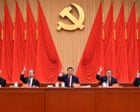
Record-breaking expulsion figures from the Chinese Communist Party (CCP) do not signal a system collapsing under corruption; they demonstrate the operational maturation of an asymmetric political compliance apparatus designed to eliminate principal-agent risk at scale. Standard media coverage treats the removal of senior cadres and rank-and-file bureaucrats as episodic scandals or sudden ideological crackdowns. That interpretation misreads the structural mechanics of the Central Commission for Discipline Inspection (CCDI). Under Xi Jinping, disciplinary enforcement functions as a continuous governance mechanism—a high-friction auditing system engineered to centralize decision-making authority, enforce policy execution across sprawling provincial bureaucracies, and neutralize alternative power centers before they can coalesce into organized opposition.
To understand why expulsion metrics continue to break historical ceilings more than a decade after the anti-corruption campaign began, analysts must separate headline volume from institutional targeting. When the CCDI publishes annual enforcement totals, those numbers conflate two distinct operational tracks: mass-scale bureaucratic hygiene at the county and township levels, and surgical decapitation strikes against ministerial, provincial, and military leadership. Treating these two tracks as a single phenomenon obscures how Beijing allocates political capital and manages institutional stability. Discover more on a similar topic: this related article.
The Dual-Track Enforcement Model
A functional analysis of CCP disciplinary data requires segmenting the target pool by administrative rank and operational function. The party apparatus spans nearly 100 million members, creating severe information asymmetries between the Politburo Standing Committee in Beijing and local executors in the provinces. Left unchecked, local officials naturally optimize for regional rent-seeking, statistical fabrication, and factional self-preservation rather than central directives.
Track One Bureaucratic Hygiene and Grassroots Compliance
The overwhelming numerical majority of party expulsions occurs among "flies"—low-to-mid-level civil servants, municipal administrators, hospital directors, and state-owned enterprise (SOE) branch managers. Expanding the net to capture record volumes of grassroots officials serves three concrete administrative objectives: More analysis by USA Today delves into comparable perspectives on this issue.
- Public Legitimacy Arbitrage: Everyday citizens rarely interact with Politburo members, but they routinely encounter predatory local taxation, embezzlement of agricultural subsidies, and medical kickbacks. Expelling tens of thousands of local functionaries allows the central leadership to absorb public frustration and redirect it away from the party's monopoly on power toward individual "corrupt elements."
- Fiscal Leakage Containment: As China's macroeconomic growth slows and local government financing vehicles (LGFVs) face acute debt-servicing pressures, Beijing cannot afford capital dissipation through grassroots graft. Aggressive auditing acts as a deflationary check on illicit administrative overhead.
- Deterrence through Statistical Certainty: High-volume enforcement shifts the expected value calculation for local bureaucrats. By increasing the baseline probability of detection via digital surveillance, cross-provincial inspection teams, and whistleblower hotlines, the CCDI raises the perceived cost of petty rent-seeking without requiring constant intervention from senior leadership.
Track Two Elite Decapitation and Factional Neutralization
While grassroots expulsions drive the headline totals, the political significance of recent purges lies in the accelerated removal of "tigers"—vice-ministerial officials, provincial party secretaries, financial regulators, and senior People's Liberation Army (PLA) commanders. Unlike grassroots enforcement, which targets financial graft, elite purges primarily target political unreliability, policy foot-dragging, and organizational factionalism.
In authoritarian governance systems, the primary threat to the paramount leader is not popular revolt, which can be suppressed through security apparatuses, but elite coordination—a scenario where military commanders, financial technocrats, and regional bosses align their interests against the center. High-profile expulsions in the defense procurement sector, the Rocket Force, and state banking institutions illustrate how the CCDI disrupts elite coordination. By removing senior leaders alongside their immediate subordinates, private secretaries, and regional proteges, the disciplinary apparatus severs patronage networks vertically and horizontally.
The Mechanics of the CCDI Institutional Engine
Standard political commentary often portrays Xi's purges as arbitrary exercises of personal whim. Operational reality points to the exact opposite: the institutionalization and bureaucratization of purge mechanics. Over the past decade, the CCP has transformed anti-corruption from an ad-hoc campaign into a permanent, legally codified branch of the state.
The establishment of the National Supervisory Commission (NSC) in 2018 merged party disciplinary organs with state anti-corruption agencies, extending the CCDI's jurisdiction beyond party members to cover all public-sector employees, including university administrators, state media editors, and SOE executives. This structural integration eliminated jurisdictional safe harbors.
The operational workflow of a senior expulsion follows a deterministic sequence designed to maximize psychological pressure and extract comprehensive network intelligence:
- Parallel Investigation and Roving Inspections: Central inspection teams deploy to targeted ministries or provinces without prior notice, bypassing local party committees to audit financial records, procurement contracts, and personnel promotion logs.
- Liuzhi Detention: Once preliminary evidence of disciplinary or legal infractions is secured, suspects are placed under liuzhi—a system of extra-judicial, incommunicado detention lasting up to six months. During this phase, suspects have no access to legal counsel, preventing them from coordinating narratives with co-conspirators or liquidating hidden assets.
- Network Mapping via Plea Leverage: Interrogators use the threat of severe sentencing—and potential legal exposure for family members—to compel detained officials to implicate superiors, peers, and subordinates. A single investigation into a deputy minister routinely generates dozens of secondary leads across banking, infrastructure, and regulatory agencies.
- Shuanggui-Style Public Stripping: Before formal criminal prosecution begins in state courts, the CCDI announces the target's "double expulsion" (shuang kai)—removal from both the party and public office. The official communiqué uses standardized, coded language ("lost ideals and beliefs," "acted disloyally and dishonestly toward the party," "engaged in superstitious activities") that signals the specific political and financial transgressions to the broader bureaucracy.
Sectoral Concentration and Strategic Logic
Expulsion data is not distributed uniformly across the Chinese state; it clusters around sectors experiencing acute policy friction or strategic vulnerability. Mapping where the purges concentrate reveals the leadership's immediate operational anxieties.
Financial Regulation and State Capital Allocation
The intensified purging of central bank officials, state-owned commercial bank chairmen, and securities regulators reflects Beijing's effort to assert absolute political control over capital allocation. For years, financial technocrats operated with relative autonomy, leveraging complex offshore vehicles, shadow banking instruments, and private equity partnerships to enrich connected elites while misallocating credit into speculative real estate.
Expelling top financial executives serves to dismantle the revolving door between regulatory agencies and private capital. By criminalizing unauthorized financial innovation and undisclosed equity stakes, the leadership forces state banks to channel liquidity exclusively toward strategic priorities: advanced manufacturing, semiconductor self-sufficiency, green energy infrastructure, and sovereign debt absorption.
Military Modernization and Procurement Integrity
The sweeping removals within the Central Military Commission, the Equipment Development Department, and the PLA Rocket Force expose a critical principal-agent failure in defense modernization. Beijing poured hundreds of billions of yuan into rapid force projection capabilities, assuming financial inputs would translate linearly into combat readiness.
Instead, opaque procurement processes and lack of independent oversight enabled widespread kickback schemes and substandard hardware delivery. When high-level corruption compromises missile fuel integrity or silo construction, it directly degrades strategic deterrence. The resulting purges represent a forced recalibration: the leadership is willing to absorb short-term command disruption and public embarrassment to purge compromised supply chains before a potential kinetic crisis in the Taiwan Strait or South China Sea.
The Cost Function of Continuous Purges
While aggressive disciplinary enforcement solves the immediate problem of elite disobedience and visible graft, it introduces severe second-order distortions into the Chinese administrative system. Every governance mechanism carries a cost function, and the CCP is currently paying a steep price in bureaucratic paralysis and risk aversion.
The Principal-Agent Paradox and Bureaucratic Inaction
In classical organizational theory, when punishment for failure or deviation becomes asymmetric—meaning the penalty for a mistake is ruinous while the reward for initiative is marginal—rational actors minimize risk by minimizing action. This dynamic has produced a widespread phenomenon within the Chinese civil service known as "lying flat" (tangping) or "lazy governance" (lanzheng).
Provincial and municipal officials now face a paralyzing compliance matrix:
- They are mandated to hit aggressive GDP growth targets, attract foreign direct investment, and resolve local debt crises.
- Simultaneously, any unconventional policy experiment, aggressive land sale, or unapproved financing mechanism risks retrospective investigation by the CCDI if economic conditions shift or a political patron falls from grace.
The rational response for a mid-career bureaucrat is procedural strictness and inaction. Officials delay signing off on infrastructure projects, hoard fiscal transfers rather than deploying them, and kick routine administrative decisions up the chain of command to diffuse personal liability. The disciplinary apparatus successfully eliminated overt defiance, but it simultaneously degraded the local administrative dynamism that drove China's economic expansion for three decades.
Information Distortion and Adverse Selection
A secondary cost of pervasive fear is the corruption of upward information flows. When regional leaders know that reporting negative economic data, social unrest, or policy implementation failures could trigger a disciplinary audit, they sanitize their reporting. Beijing receives overly optimistic assessments of industrial output, local debt sustainability, and consumer sentiment, blinding central planners to systemic risks until they reach acute crisis levels.
Furthermore, continuous purges alter the talent selection pipeline. High-performing technocrats with strong analytical skills and independent judgment increasingly view senior political appointments as high-risk traps rather than prestigious career milestones. Over time, promotion algorithms favor ideological conformists and risk-averse sycophants over competent problem-solvers, gradually eroding the state's administrative capacity to manage complex macroeconomic shocks.
Distinguishing Known Facts from Analytical Hypotheses
Rigorous assessment requires separating verifiable empirical data from strategic extrapolation:
- Verified Fact: Official CCDI statistical releases confirm record numbers of disciplinary investigations, punishments, and party expulsions across both provincial cadres and centrally managed senior officials (zhongguan ganbu).
- Verified Fact: The institutional scope of the CCDI/NSC has expanded legally and operationally, incorporating non-party public employees and penetrating previously insulated sectors such as state finance, healthcare, and military procurement.
- Verified Fact: Official state media and party directives repeatedly warn against bureaucratic inaction, formalism, and "lazy governance," acknowledging that fear of disciplinary retribution is slowing policy execution.
- Analytical Hypothesis: The acceleration of purges among Xi's own appointed loyalists—particularly within the military and foreign affairs establishment—indicates that factional alignment no longer guarantees immunity. The system has evolved beyond mere factional warfare into a permanent, automated loyalty-testing mechanism where proximity to power increases, rather than reduces, surveillance intensity.
- Analytical Hypothesis: Because the CCP lacks independent judicial review, free press scrutiny, or electoral accountability, it cannot reduce disciplinary pressure without triggering an immediate resurgence of rent-seeking. Therefore, the purge rate cannot plateau; it must remain elevated indefinitely to preserve system equilibrium.
Strategic Implications for Institutional Decision-Makers
Multinational corporations, institutional investors, and geopolitical risk analysts operating in or exposed to China must abandon legacy assumptions about political stability and regulatory predictability. Traditional relationship-driven market entry strategies—relying on close ties with powerful municipal mayors, provincial party secretaries, or SOE chairmen—now carry acute counterparty hazard. A local political patron is no longer a protective shield; if that official is swept into a CCDI network investigation, every enterprise associated with their tenure faces immediate asset freezes, contract nullifications, and regulatory audits.
To mitigate exposure to China's permanent purge environment, organizations must execute three structural adjustments:
- Decouple Commercial Operations from Individual Political Patrons: Replace personalized government relations with institutionalized, multi-tiered compliance frameworks. Audit all local joint-venture partners, third-party intermediaries, and procurement vendors against state disciplinary watchlists and beneficial ownership registries to eliminate indirect exposure to compromised officials.
- Price Policy Execution Lag into Financial Models: Account for bureaucratic risk aversion when forecasting project timelines, regulatory approvals, and fiscal stimulus transmission. Expect prolonged decision cycles at the municipal and provincial levels, as local administrators systematically defer approvals to avoid personal liability.
- Monitor Disciplinary Communiqués as Leading Economic Indicators: Track CCDI inspection schedules and sectoral purge clusters to anticipate regulatory crackdowns. When roving inspection teams deploy to a specific industry—such as pharmaceuticals, semiconductors, or state banking—treat it as a leading signal of imminent margin compression, contract restructuring, and tightened state capital controls within that sector over the subsequent two to four quarters.