State-sponsored luxury hospitality operates under a fundamentally different economic utility function than commercial five-star resorts. While private hospitality assets optimize for Revenue Per Available Room (RevPAR) and asset-light management fees, properties like Shenzhen’s Kylin Villa (Qilin Shanzhuang) are engineered to maximize geopolitical signaling, perimeter security, and multi-lateral diplomatic throughput. Understanding Kylin Villa requires stripping away standard travel-journalism tropes and examining the asset through the mechanics of statecraft infrastructure, spatial isolation, and post-summit commercial monetization.
The Structural Economics of State Guesthouses
Standard commercial luxury hotels rely on high-density urban footprints, transient business travelers, and dynamic pricing algorithms to service debt and generate equity returns. State guesthouses—known within China’s administrative apparatus as guobinguan—invert every variable of this model.
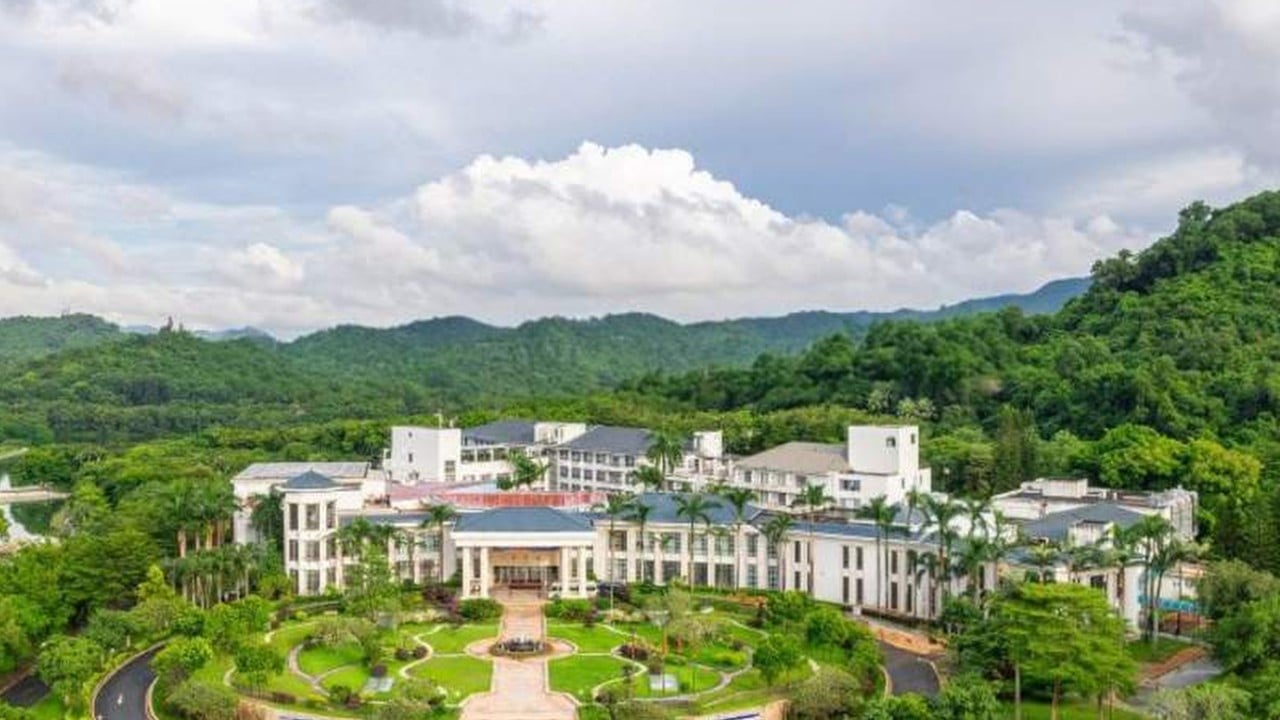
- Capital Allocation and Land Opportunity Cost: Kylin Villa occupies roughly 880,000 square meters of prime ecological land within the Nanshan District of Shenzhen, adjacent to Tiegang Reservoir and Xili Lake. In a commercial real estate market characterized by extreme land scarcity and high floor-area ratios, dedicating nearly a square kilometer to low-density villas represents a massive deliberate opportunity cost. The state absorbs this cost because the primary return on investment is not financial yield, but sovereign prestige and diplomatic control.
- Capacity vs. Footprint Ratios: Commercial resorts maximize room keys per acre to amortize fixed infrastructure costs. Kylin Villa suppresses room density to maintain acoustic, visual, and physical separation between delegating parties. Low building-to-land ratios ensure that heads of state can conduct bilateral negotiations without cross-contamination of security perimeters or media intrusion.
- Operating Expenditure Subsidization: Maintenance of expansive botanical landscapes, private water treatment buffers, and redundant power grids creates an operating cost structure that transient leisure demand cannot sustain year-round. Consequently, financial viability depends on hybridizing operations: functioning as a closed-door diplomatic compound during peak political cycles and pivoting to high-margin domestic corporate retreats, state-owned enterprise (SOE) conferences, and upscale leisure during off-peak intervals.
Spatial Security and the Mechanics of Diplomatic Isolation
When a host nation prepares a venue for high-level summits such as the Asia-Pacific Economic Cooperation (APEC) meetings or bilateral state visits, architectural aesthetics become secondary to threat mitigation and logistical control. The physical layout of Kylin Villa demonstrates how topography is weaponized for diplomatic security.
Natural Buffer Zones as Perimeter Multipliers
Deploying human security personnel across an urban hotel perimeter introduces friction, visibility, and potential choke points. Kylin Villa eliminates most exterior vulnerability through natural geography. Flanked by the Yangtai Mountain range and bordering the Tiegang Reservoir watershed, the property utilizes water and elevation as passive barriers.
Access points are restricted to controllable arterial corridors leading from Shenzhen Bao’an International Airport and the Futian central business district. By controlling the ingress and egress routes through natural bottlenecks, security apparatus can establish concentric rings of clearance without disrupting the broader municipal transit grid.
Villa Modularity and Protocol Segregation
In multi-lateral summits, protocol errors—such as two rival leaders crossing paths unintentionally in a lobby—create diplomatic friction. High-rise hotels rely on dedicated elevator banks, which remain vulnerable to mechanical delays and vertical bottlenecks.
Kylin Villa solves protocol segregation horizontally. By distributing accommodations across independent, low-rise pavilions and standalone villas connected by private internal roadways, logistics teams can execute simultaneous, non-intersecting motorcade movements. Each delegation operates within an autonomous micro-compound featuring dedicated briefing rooms, secure communications infrastructure, and private dining facilities. This modular design allows security teams to isolate specific zones in real time if threat assessments shift.
The Three Pillars of State-Craft Hospitality Design
A state guesthouse must project cultural authority while meeting the functional expectations of international delegates accustomed to global luxury standards. Kylin Villa achieves this balance through three distinct operational pillars.
1. Vernacular Architecture as Soft Power
Rather than importing Western neoclassical or generic glass-box modernism, Kylin Villa employs Lingnan garden aesthetics—characterized by pitched tiled roofs, covered corridors, water courtyards, and asymmetrical spatial progression.
This architectural choice serves a calculated communication function. It anchors the visitor within a specific regional identity (Guangdong/Lingnan culture) while demonstrating continuity between traditional Chinese statecraft and modern economic power. The built environment acts as a non-verbal briefing, signaling to visiting executives and diplomats that Shenzhen’s rapid technological rise is rooted in historical permanence rather than transient industrial speculation.
2. Acoustic and Electronic Counter-Surveillance
For a venue tasked with hosting presidential missions, physical locks are insufficient. Modern diplomatic hospitality requires hardened infrastructure against technical intelligence gathering. While exact specifications of Kylin Villa’s internal systems remain classified operational details, standard state-guesthouse architecture incorporates specific structural countermeasures:
- Faraday-shielded conference rooms: Metallic mesh or conductive coatings integrated into wall assemblies prevent radio-frequency (RF) leakage from sensitive bilateral discussions.
- Acoustic decoupling: Double-stud wall construction, laminated acoustic glazing, and white-noise generation systems within HVAC ducts neutralize laser-microphone surveillance from distant vantage points across the lake.
- Air-gapped telecommunications: Dedicated fiber-optic lines routed directly to state telecom backbones bypass commercial municipal switching nodes, ensuring data integrity during high-stakes negotiations.
3. Culinary Diplomacy and Supply Chain Traceability
Banquet operations at state-level facilities are governed by strict protocols regarding food safety, dietary restriction mapping, and cultural signaling. Unlike commercial resorts that rely on broad third-party food distributors, state guesthouses operate closed-loop supply chains.
Ingredients undergo batch-level provenance verification and chemical screening prior to entering the kitchen perimeter. Menu engineering balances regional Cantonese culinary precision—which emphasizes ingredient freshness and subtle technique—with international palates. The objective is operational zero-defect execution: eliminating any risk of foodborne illness among critical decision-makers while using regional gastronomy as an instrument of cultural persuasion.
The Post-Summit Monetization Bottleneck
Hosting major international events like APEC or welcoming heads of state generates immediate brand equity, yet it introduces a severe operational dilemma once the motorcades depart. State guesthouses frequently suffer from the "monument trap"—becoming overly rigid, bureaucratic, and intimidating to commercial clientele, leading to chronically low occupancy rates.
The Service Culture Friction
Staff trained to execute rigid state protocol prioritize deference, strict adherence to hierarchy, and risk avoidance. Commercial five-star luxury guests, however, demand hyper-personalization, emotional warmth, and frictionless flexibility. When an organization attempts to serve both markets using the same labor pool without structural retraining, service delivery fractures. Corporate guests experience bureaucratic stiffness, while security protocols feel intrusive rather than protective.
Capital Depreciation and Retrofitting Cycles
Infrastructure built to impress foreign dignitaries during a single summit year ages rapidly. Technological standards in audiovisual conferencing, room automation, and sustainable energy management evolve on three-to-five-year cycles. Because state-owned hospitality assets often face complex budgetary approval processes for capital expenditures (CapEx), properties risk falling behind nimble private competitors like Four Seasons, Mandarin Oriental, or Rosewood in Shenzhen’s urban core.
Strategic Positioning in the Greater Bay Area Ecosystem
To remain relevant beyond episodic diplomatic mandates, Kylin Villa must exploit its structural advantages within the Guangdong-Hong Kong-Macao Greater Bay Area (GBA) economy. Shenzhen is no longer merely a manufacturing hub; it is a global center for hardware innovation, artificial intelligence, electric vehicles, and cross-border finance.
- The C-Suite Retreat Monopoly: Urban luxury hotels in Futian and Nanshan offer convenience, but they lack privacy. High-net-worth founders, sovereign wealth fund managers, and multinational board members visiting Shenzhen require venues where confidential mergers, intellectual property discussions, and strategic offsites can occur away from public lobbies. Kylin Villa’s natural isolation directly solves this commercial pain point.
- Government-to-Business (G2B) Bridging: Because the property sits at the intersection of municipal leadership and private enterprise, it functions naturally as neutral ground for high-level public-private dialogues. International executives seeking regulatory clarity or joint-venture partnerships in southern China gain implicit institutional validation simply by convening on the property.
- Ecological Scarcity Value: As Shenzhen’s urban density intensifies, access to unencumbered green space and private waterfront becomes an appreciating luxury asset. Kylin Villa controls an ecological monopoly that no new urban skyscraper development can replicate, regardless of capital investment.
Limitations of the State-Resort Hybrid Model
Operating a dual-use diplomatic and commercial asset carries inherent structural constraints that management cannot fully eliminate:
- Sudden Displacement Risk: Commercial bookings—including lucrative corporate buyouts and weddings—remain permanently subordinate to state mandates. If an unscheduled diplomatic delegation requires the compound on 48 hours' notice, commercial clients must be bumped or relocated. This unpredictability caps long-term booking confidence among international event planners.
- Regulatory and Alcohol/Entertainment Constraints: State-affiliated venues operate under strict anti-corruption and austerity guidelines (such as China's Eight-point Regulation). While private resorts can market ostentatious luxury, rare spirits, and extravagant nightlife to drive high-margin food and beverage (F&B) revenue, state guesthouses must maintain disciplined, understated consumption profiles.
- Limited Global Distribution Integration: Without affiliation to Western loyalty ecosystems (such as Marriott Bonvoy, Hyatt, or Hilton), state properties lack automated global distribution system (GDS) pipelines to capture independent international luxury travelers, forcing reliance on domestic corporate networks and direct government channels.
Tactical Execution for Asset Optimization
To convert diplomatic prestige into sustained commercial performance without compromising security readiness, management of Kylin Villa and comparable state-backed properties must execute a bifurcated operational model:
- Segregate the Asset Physically and Digitally: Establish a permanent architectural firewall between the core presidential villas and the commercial conference/leisure wings. This allows commercial operations to run uninterrupted during minor diplomatic visits, neutralizing the displacement risk that alienates corporate event planners.
- Adopt Dual-Track Staff Training: Separate front-of-house personnel into specialized diplomatic protocol teams and commercial hospitality squads. Cross-train managers in private luxury service standards—focusing on proactive problem-solving and digital guest customization—to strip away bureaucratic friction during commercial stays.
- Monetize Exclusivity Over Volume: Abandon attempts to compete with urban five-star hotels on transient room volume. Instead, package the property around high-ticket, all-inclusive institutional buyouts—targeting sovereign wealth summits, private equity annual general meetings, and deep-tech product launches where absolute perimeter privacy is the primary purchasing criterion.