Large-scale aerial bombardments against metropolitan centers represent a calculated convergence of ordnance design, interceptor economics, and air defense saturation. When high-density saturation strikes hit capital infrastructure, the resulting damage is rarely the product of random dispersion. Instead, it reflects a structured methodology designed to exploit specific vulnerabilities in multi-layered defense architectures. Deconstructing these military operations requires moving past casualty reporting to examine the mechanics of saturation, the cost curves of interception, and the systemic strain placed on urban resilience.
The Mechanics of Saturation
Modern long-range air campaigns rely on heterogeneous weapon packaging. A typical multi-vector strike does not employ a single munition type; it combines high-speed ballistic missiles, low-altitude cruise missiles, and mass-produced jet-powered or propeller-driven loitering munitions. This mix serves a specific tactical purpose: cognitive and sensor overload.
- Vector Diversion: Low-cost, high-volume drones are launched ahead of primary strike packages to map remaining radar signatures and force early allocation of short-range air defense assets.
- Speed Asymmetry: Subsonic cruise missiles follow terrain contours to complicate tracking, forcing defenders to maintain continuous low-level radar coverage.
- Ballistic Penetration: High-velocity ballistic and hypersonic platforms approach terminal descent at speeds that compress the decision-making window of human operators and automated batteries alike.
When hundreds of distinct vectors converge on a single urban administrative zone simultaneously, the limiting factor shifts from interceptor capability to fire-control channel capacity. A battery can track and engage only a finite number of targets concurrently. Saturation occurs when the incoming object count exceeds the maximum simultaneous engagement threshold of the defending grid, allowing unengaged vectors to reach designated impact points.
The Economics of Interception
The viability of defending a major urban center against persistent aerial attacks is governed by an asymmetrical cost function. Premium interceptor missiles—such as those utilized in high-tier western-supplied defense systems—exist in finite global stockpiles and carry unit costs exponentially higher than the offensive platforms they neutralize.
The defense cost curve rises steeply because every incoming ballistic threat demands an exact, high-tech kinetic response to prevent catastrophic ground impact. Conversely, the offensive cost curve remains relatively low through the deployment of modular drones and legacy missile variants. This economic mismatch creates a long-term attrition problem. Even when interception rates remain nominally high—such as shooting down forty out of forty-six cruise missiles or large percentages of incoming drones—the unintercepted percentage represents absolute damage to urban infrastructure. Over time, the depletion rate of high-end interceptors outpaces industrial replenishment capacities, widening the vulnerability gap.
Urban Vulnerability and Infrastructure Cascades
Cities function as tightly coupled networks of power generation, water distribution, medical triage, and residential housing. Strategic strikes targeting urban nodes exploit these interdependencies. When an industrial component, a fuel depot, or a transport hub is hit, the disruption generates secondary and tertiary shockwaves across municipal operations.
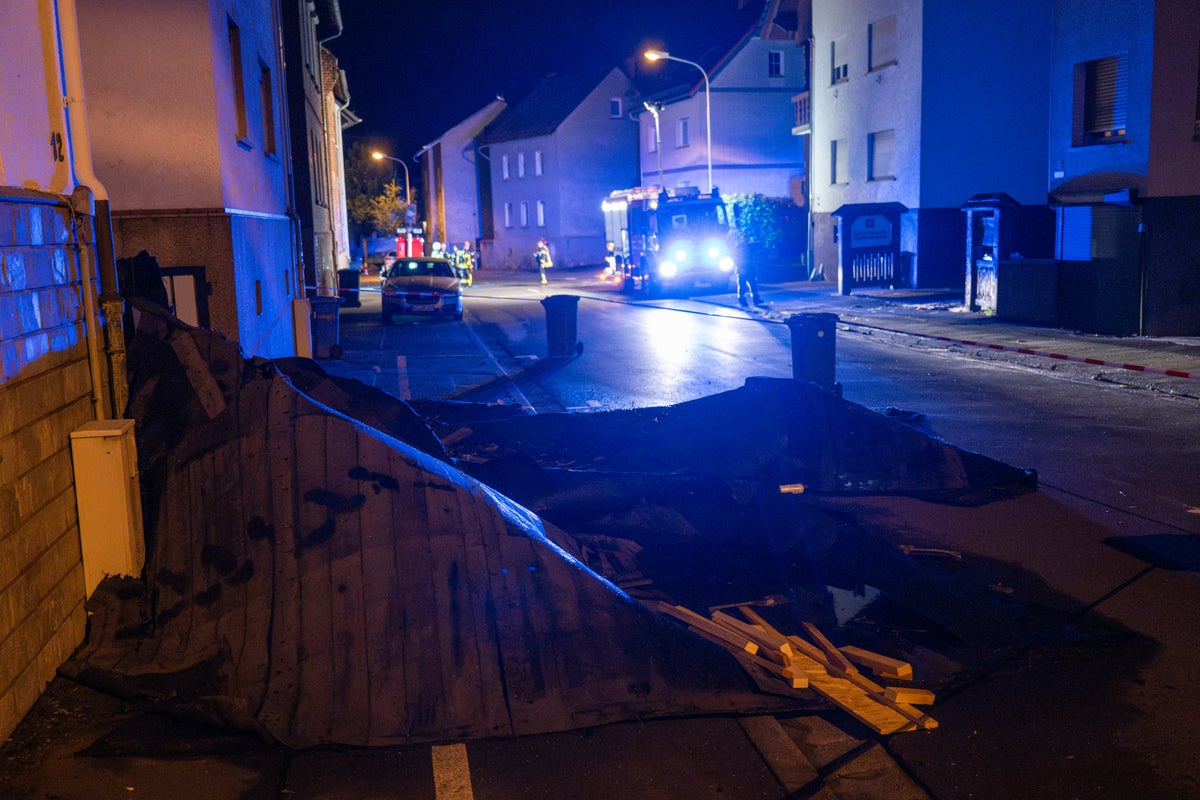
Residential destruction compounds the crisis by displacing civilian populations and overwhelming first-responder networks. Emergency services must divide resources between structural fire suppression, search and rescue operations in collapsed multi-story buildings, and medical triage for injured non-combatants. When strikes hit close to medical centers or emergency infrastructure, the local operational capacity degrades rapidly, turning localized structural damage into a systemic municipal failure.
Furthermore, the psychological and logistical strain on the population alters civil-military cohesion. Prolonged air-raid warnings lasting multiple hours disrupt economic productivity, constrain supply chains, and force millions of residents into subterranean shelters. This routine exhaustion functions as a secondary vector of pressure, testing the endurance of the civil populace independent of front-line military engagements.
Strategic Adaptation and Systemic Limitations
Defending high-value urban areas against deep-strike arsenals requires continuous tactical adaptation. Because mobile air defense units cannot provide uniform coverage across expansive national territories, commanders face a constant allocation dilemma: protecting industrial supply lines versus shielding population centers.
The limitation of current defense models lies in their reactive posture. Interception is a terminal solution to an upstream problem. Long-term survivability depends not merely on increasing interceptor density within urban perimeters, but on disrupting the industrial supply chains, launch platforms, and assembly nodes origin-side before payloads can be integrated and deployed. Until supply-side constraints match the scale of the offensive architecture, metropolitan centers will remain vulnerable to the calculated mathematics of aerial attrition.