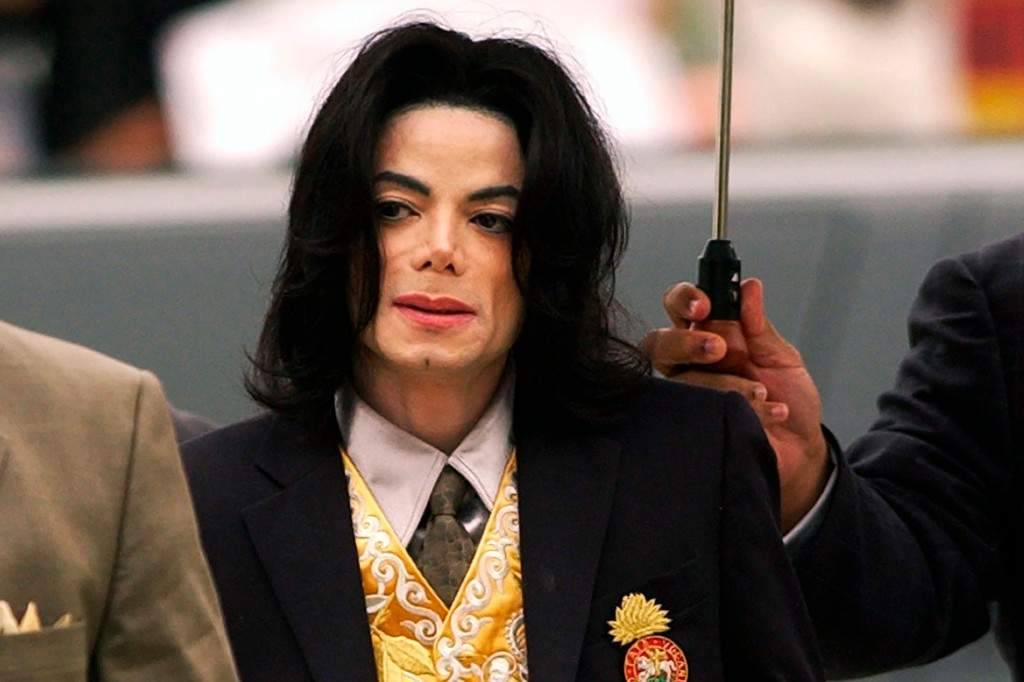
The room was silent, but for the hum of a digital recorder. Dan Reed sat across from two men who had spent their lives trying to reconcile the image of a god with the memory of a monster. As the director of Leaving Neverland, Reed had waded through hundreds of hours of testimony, legal filings, and the visceral, shaking grief of Wade Robson and James Safechuck. But as he looked back on the wreckage, he found himself drawing a dark comparison that most would find unthinkable. He wasn't looking at Michael Jackson as a mere pop star anymore. He was looking at him as a strategist.
Reed recently made a chilling assertion: Michael Jackson was "worse than Jeffrey Epstein." For a different look, consider: this related article.
It is a statement designed to provoke. It grates against the ears of anyone who grew up moonwalking in their living room. Epstein, after all, was a financier who built a logistical assembly line for horror, a man whose very name has become shorthand for a global network of depravity. To place the King of Pop in a category even darker feels like a betrayal of our collective childhood. Yet, Reed’s argument isn't about the number of victims or the breadth of a social circle. It is about the intimacy of the betrayal. It is about the precision of the snare.
The Engineering of Devotion
Epstein operated through the cold mechanics of money and power. He bought people. He pressured them. He used the blunt force of his wealth to create a vacuum where accountability disappeared. It was transactional. Cruel, yes, but identifiable in its villainy. Related coverage on this matter has been provided by The New York Times.
Jackson’s approach was different. It was surgical.
He didn't just walk into a room and demand compliance; he spent years auditioning families. Think of a hypothetical father—let’s call him David. David is a struggling musician or perhaps just a man who feels the world has overlooked his talented son. When the most famous man on earth calls David’s house, the oxygen leaves the room. The world tilts. Suddenly, the King of Pop isn't a distant icon; he’s a mentor. He’s a best friend. He’s the person offering to pay for the private school, the vacation, the future.
This wasn't a transaction. It was an adoption.
Reed argues that Jackson’s "grooming" was the most sophisticated the world has ever seen because it relied on the one thing more powerful than money: love. He didn't just target a child; he targeted a family unit. He became the "third parent." He wove himself into the domestic fabric of his victims' lives until he was indispensable. By the time the abuse began, the walls were already up. The parents were his fiercest defenders because to admit Jackson was a predator was to admit they had handed their child to him with a smile.
The Predator in the Spotlight
How do you hide a secret when the entire world is watching? You do it by making the secret part of the brand.
Jackson’s eccentricities—the sleepovers, the Peter Pan complex, the "Childhood" anthem—were presented as the quirks of a man who had been robbed of his own youth. We bought it. We turned him into a tragic figure, a man-child who just wanted to play. This created a psychological shield that Epstein never had. Epstein was a shadow. Jackson was the sun. You don't look for darkness in the middle of a sunbeam.
Reed’s perspective shifts the focus from the act to the environment. He describes a machine of isolation. At Neverland Ranch, the clocks didn't just stop; they didn't exist. There were trains, zoos, and candy counters that never closed. It was a physical manifestation of a psychological state—a place where the rules of the adult world were suspended.
For a child, this wasn't a prison. It was a kingdom where they were the chosen prince.
But the cost of entry was total. To keep the magic, you had to keep the secret. The brilliance of Jackson’s method, according to those who studied the case files, was making the victim feel like they were the one in control. They were the special one. They were the only ones who truly "understood" Michael. This inversion of power is what Reed finds so much more damaging than Epstein’s systemic exploitation. Epstein broke bodies; Jackson rewired souls.
The Weight of the Evidence
Critics often point to the 2005 acquittal as the ultimate proof of innocence. They see a man persecuted by a greedy system. But Reed’s work suggests that the legal system is ill-equipped to handle this specific brand of manipulation. Law relies on "yes" or "no," on physical evidence and clear-cut timelines. It struggles with the "Stockholm Syndrome" of a child who has been convinced that their abuser is their savior.
The facts of the civil suits and the testimony in Leaving Neverland paint a picture of a man who used his fame as a silencer. When you are Michael Jackson, you don't need a non-disclosure agreement to keep someone quiet—though he used those too. You have the weight of a billion fans ready to tear down anyone who speaks a word against the dream.
Safechuck and Robson didn't come forward when Jackson was alive and at his most litigious. They came forward decades later, after the "magic" had curdled into the gray reality of adult trauma. They spoke of "wedding ceremonies" and "engagement rings." These weren't the actions of a man who didn't know better. They were the actions of a man who was meticulously mimicking the structures of commitment to bind his victims to him forever.
The Invisible Stakes
Why does this comparison matter? Why drag Epstein’s ghost into the conversation about a musical legend?
Because we are still vulnerable to the "Golden Shield." We live in a culture that equates talent with goodness. We assume that if someone can create something beautiful—a song that makes us dance, a film that makes us cry—then they must possess a beautiful spirit. Reed’s comparison is a warning. It suggests that the most dangerous predators aren't the ones hiding in the bushes. They are the ones we invite into our homes through our television screens.
The "worse than Epstein" label isn't a statistical ranking. It’s a qualitative judgment on the destruction of the family unit. Epstein took girls away from their lives. Jackson convinced families to give their lives up voluntarily. He didn't just steal a childhood; he co-opted the very concept of "family" and turned it into a weapon.
Consider the aftermath. When an Epstein victim speaks out, the world is horrified by the perpetrator. When a Jackson victim speaks out, the world is often horrified by the victim. They are called liars, gold-diggers, and traitors. They are attacked by a global fanbase that feels a personal ownership of the Jackson legacy. This is the final stage of the grooming: the public becomes the secondary abuser, defending the idol at the expense of the truth.
The Loneliness of the Truth
Reed’s mission wasn't to destroy a discography. You can still hear "Billie Jean" in a grocery store and feel the urge to tap your foot. That is the tragedy of it. The art remains. But the man behind the art was a master of a different craft entirely. He understood human longing. He knew that everyone wants to be special, to be seen, to be part of something magical.
He used that knowledge to build a fortress that took decades to even begin to crack.
The "human element" here isn't just the victims. It’s us. It’s our willingness to look away because the truth is too heavy to carry. It’s our desire to keep the King on his throne so we don't have to reckon with the fact that we cheered for a man who was allegedly destroying lives behind the curtain.
As the sun sets on the legacy of Neverland, we are left with a landscape of broken promises and delayed justice. The comparison to Epstein serves as a cold splash of water. It forces us to ask: what is more dangerous? The man who uses his power to exploit, or the man who uses his genius to make us love the exploitation?
The answer lies in the eyes of the men who sat in that silent room with Dan Reed. They aren't looking for a settlement. They aren't looking for fame. They are looking for someone to finally believe that the man who gave them the world was the same man who took everything away.
The music still plays, but for those who survived the gilded cage, the melody is nothing but a scream.