The environmental lobby is currently obsessed with a ghost story. They want you to believe that a few thousand tourists in high-tech parkas are on the verge of turning the White Continent into a petri dish of global pathogens. They point to the "unprecedented" 100,000 visitors per year as a ticking biological time bomb.
They are wrong. Not just slightly off—fundamentally, structurally wrong.
The panic over Antarctic tourism isn't about science. It’s about gatekeeping. It’s about a small group of researchers and career bureaucrats who have enjoyed an exclusive, taxpayer-funded playground for seventy years and now resent the fact that the taxpaying public wants to see the receipt. If you actually look at the data provided by the International Association of Antarctica Tour Operators (IAATO) and compare it to the logistical footprints of national research programs, you realize the "contamination" narrative is a convenient distraction.
The Myth of the Virgin Wilderness
The primary argument used by the alarmists is that tourism introduces invasive species and zoonotic diseases like Avian Influenza. They treat Antarctica as if it were a sterile vacuum before the first cruise ship arrived.
This is biological illiteracy. Antarctica has never been isolated.
Migratory birds—petrels, skuas, and terns—have been flying "unregulated" sorties between the southern oceans and the rest of the world for millennia. They don't scrub their boots with Virkon S. They don't undergo bio-security screenings. Nature is the primary vector for disease, and it always has been. To suggest that a tourist stepping off a Zodiac is more dangerous than a million scavenging birds is a triumph of emotion over mathematics.
The real "contamination" isn't coming from the person paying $20,000 to take photos of penguins. It’s coming from the permanent infrastructure we’ve spent decades building in the name of science.
The Science Footprint vs. The Tourist Ripple
Let’s talk about the heavy hitters. McMurdo Station isn’t a "tent in the wilderness." It is a sprawling industrial hub. At its peak, it houses over 1,000 people. It has a power plant, a water distillation facility, and a history of soil contamination that would make an urban developer blush.
Research stations are permanent. They require massive fuel shipments, heavy machinery, and long-term waste management. Tourists, by contrast, are ghosts. They sleep on ships. They carry their waste back to the mainland. They operate under a "leave no trace" policy that is enforced with a level of rigor you won’t find at a national park in the states.
- Tourists: Stay for 5-10 days, eat on ships, leave nothing.
- Researchers: Stay for months, build permanent runways, leak fuel, and produce sewage.
If we were serious about "protecting" Antarctica from human impact, we wouldn't be banning cruise ships. We would be decommissioning half the research stations that exist primarily as geopolitical flag-planting exercises.
Avian Flu and the Scapegoat Strategy
The recent spread of High Pathogenicity Avian Influenza (HPAI) H5N1 to the Antarctic region is being used as the ultimate "gotcha" against tourism. The logic goes: "We found a dead bird; therefore, we must stop the boats."
Except H5N1 wasn't carried to the sub-Antarctic islands by a luxury expedition vessel. It was carried by the very animals the environmentalists claim to protect. Predatory gulls and skuas brought it from South America.
We are seeing a classic "correlation is not causation" fallacy being weaponized for policy shifts. By blaming tourists, regulators can feel like they are "doing something" without having to address the reality that global weather patterns and wildlife migrations are beyond their control.
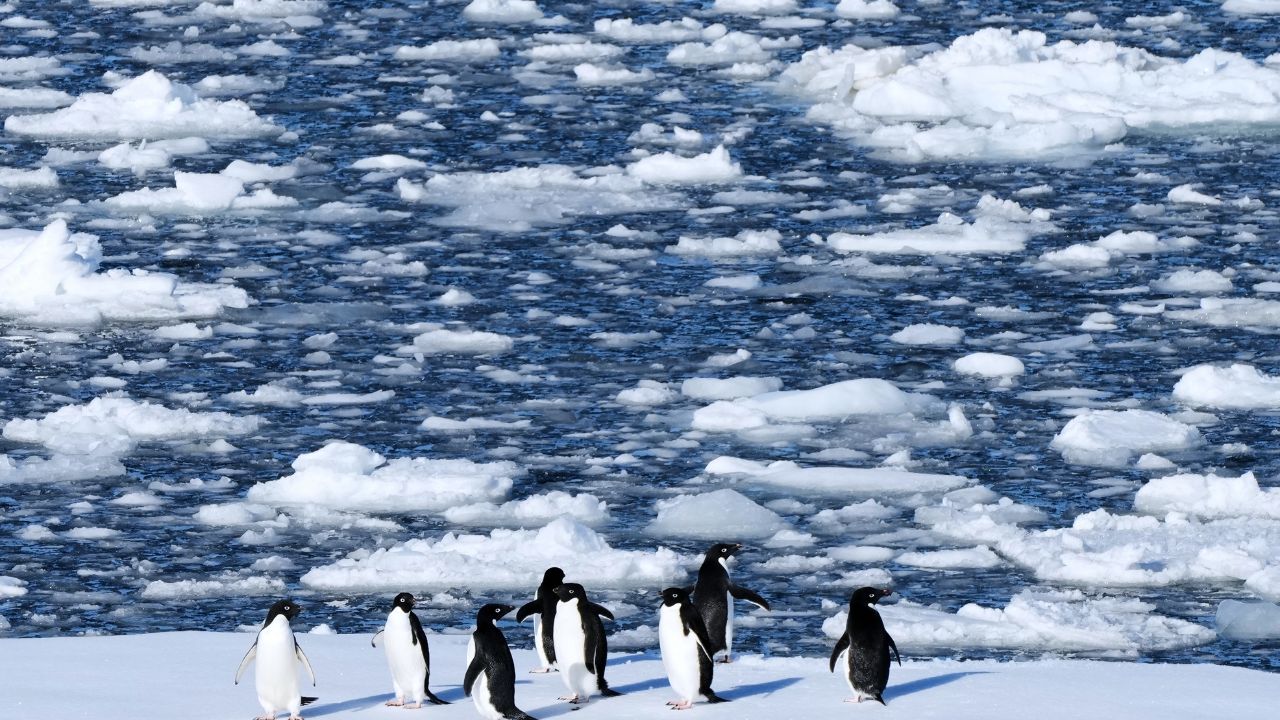
The hypocrisy is breathtaking. Scientists regularly handle wildlife, tag seals, and enter breeding colonies to collect data. They do this in the name of "conservation." Yet, the mere presence of a tourist 25 meters away from a penguin colony is treated as an existential threat. I’ve seen researchers walk through nesting grounds with less care than a well-briefed tourist who has been told they’ll be banned for life if they deviate from the marked path.
The "Over-Tourism" Lie
People love to cite the 100,000 visitor figure because it sounds large. In the context of a continent that is 5.5 million square miles, it is statistically zero.
Antarctica is larger than the United States and Mexico combined. The vast majority of tourism is concentrated in a tiny sliver of the Antarctic Peninsula—less than 1% of the coastline. To call this a "continental crisis" is like saying a crowded elevator in New York City constitutes an overpopulation crisis for the entire state of Alaska.
The concentration of tourism is actually its greatest strength. By funneling people into a few dozen "landing sites," IAATO and the Antarctic Treaty System ensure that 99.9% of the continent remains entirely untouched by human feet. This is the most successful model of managed tourism on the planet.
The Economic Reality of Conservation
Here is the truth that the non-profit sector hates to admit: Tourism funds the protection of Antarctica.
Without the "Antarctic ambassadors"—the wealthy, influential people who return from their trips obsessed with southern ocean conservation—the political will to maintain the Antarctic Treaty would evaporate.
If Antarctica becomes a closed laboratory accessible only to people with PhDs, the public will eventually stop caring about the billions of dollars required to maintain it. You cannot ask the global taxpayer to protect a place they are forbidden from seeing.
The industry insider’s secret is that the "threats" are often exaggerated to secure more grant funding for the very studies that "monitor" those threats. It is a self-sustaining ecosystem of alarmism.
Why You’re Asking the Wrong Question
The question isn't "Should we stop people from going to Antarctica?"
The question is "How can we use the massive logistical power of the tourism industry to help the research industry?"
Right now, we have a fleet of high-tech, ice-strengthened vessels roaming the Southern Ocean every summer. Instead of treating them as enemies, we should be treating them as a distributed network of sensor platforms.
- Citizen Science: Tourists are already collecting water samples, tracking whale sightings, and monitoring phytoplankton levels.
- Logistical Support: Expedition ships frequently transport supplies and personnel to remote camps, saving national programs millions in fuel costs.
- Immediate Response: When a research vessel gets stuck or a station has an emergency, it’s usually a "contaminating" tourist ship that is first on the scene to help.
Dismantling the Bio-Security Theater
We are told that "stringent" new measures are needed. But let's look at what's already happening.
Every tourist undergoes a bio-security briefing. Every boot is scrubbed in disinfectant before and after every landing. Every pocket is vacuumed for seeds. This is more oversight than you'll find at any international airport.
The "concern" about disease is often a mask for a different, more elitist concern: that the "wrong kind of people" are seeing the ice. There is a specific brand of environmentalist who believes that nature only has value if no one is looking at it. They want a museum, not a planet.
The Cold Truth
The greatest threat to Antarctica isn't a traveler with a Leica. It is the global carbon footprint of the eight billion people who aren't going there.
Focusing on localized "contamination" from ships is like worrying about a scratch on the paint of a car that is currently driving off a cliff. It’s a micro-fix for a macro-problem. The warming of the Southern Ocean and the melting of the ice shelves are driven by industrial activity in the northern hemisphere, not by the fuel burned by a few dozen ships in the Drake Passage.
By obsessing over tourist boots, we are letting the real villains off the hook. We are engaging in "virtue signaling" through regulation. It feels good to sign a treaty limiting Zodiac landings, but it doesn't do a damn thing to stop the warming of the Circumpolar Current.
Stop Apologizing for Antarctica
If you want to go to Antarctica, go. Do not feel guilty about it.
You are not a "contaminator." You are a witness. You are one of the few people who will actually understand what is at stake when the next international treaty comes up for a vote.
The "experts" will keep shouting about disease and invasive grass seeds because it keeps them relevant and keeps the funding flowing. They want you to stay home and look at a glossy book while they fly in on massive C-130s that leak more oil in a day than a modern cruise ship leaks in a decade.
Antarctica is the most regulated, most protected, and most scrutinously managed travel destination on Earth. The "boom" isn't a disaster; it’s a triumph of sustainable management. Anyone telling you otherwise is either trying to sell you a tragedy or trying to keep the ice all to themselves.
The science is clear: the birds got there first, the researchers stayed the longest, and the tourists are the only ones actually paying the bill for the preservation of the wild.
Don't let the gatekeepers win. The ice doesn't belong to the scientists. It doesn't belong to the bureaucrats. It belongs to the world.
Take the trip. Wear the boots. Scrub them twice. Then go stand in the wind and realize that 100,000 people are a drop of water in an ocean of ice that doesn't even know we're there.