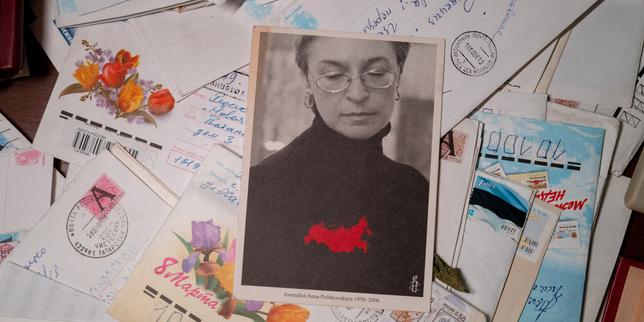
You never really forget the voices that refuse to be silenced. Nearly twenty years after her assassination in a Moscow elevator, Russian journalist Anna Politkovskaya is back in the spotlight. Not through a standard biography or a museum exhibit, but via a startling theatrical creation that imagines her confronting the very machinery of state deception.
French playwright and director Gisèle Sallin brought this haunting premise to the stage with La Vengeance d’Anna P. The production places Politkovskaya directly inside the mind of a fictional Kremlin propagandist. It is a brilliant collision of art, memory, and political accountability. It forces us to look past the talking points on state television and confront the moral corrosion rotting away at the heart of modern media manipulation. In similar news, take a look at: Inside India Electoral Crisis Over Voter List Purges and Opposition Detentions.
The Weight of Memory in Modern Russia
Memory is dangerous territory in Vladimir Putin’s Russia. When Politkovskaya was gunned down on October 7, 2006, the Kremlin hoped her relentless reporting on atrocities in Chechnya and government corruption would die with her. They were wrong. Investigative journalism survived, scattered across exile newsrooms and encrypted channels. Yet, the state apparatus adapted, building an industrial-scale propaganda machine that churns out justifications for war and tyranny daily.
Plays like La Vengeance d’Anna P. matter because they break through the numbness. When you spend years hearing the same cynical lies on the evening news, you start treating propaganda as mere background noise. This production refuses to let you stay numb. It drags the architects of falsehoods into an imaginary interrogation room where they have to answer to their victims. BBC News has also covered this fascinating topic in extensive detail.
The fictional propagandist in the play represents a whole class of media workers who traded their professional ethics for high-rise apartments and state-sanctioned impunity. They aren't mindless drones. They know exactly what they are doing. They rationalize their complicity with the tired excuse that they are just doing their jobs. Politkovskaya's ghost strips away those excuses layer by layer.
What Real Journalism Actually Cost
We throw the word "bravery" around a lot today. Usually, we use it to describe someone posting a controversial tweet or quitting a toxic corporate job. Politkovskaya lived a completely different definition of courage.
She walked into refugee camps in the Caucasus when everyone else looked away. She interviewed warlords, grieving mothers, and broken soldiers. She took death threats seriously because the people making them had a habit of keeping their promises. She knew the risks, and she went back anyway.
If you want to understand why her legacy terrifies the current Russian establishment, look at how they treat her memory. They don't talk about her. Silence is their preferred weapon. When an independent voice gets too loud, they try to erase it from the history books. That makes reclaiming her story an act of defiance in its own right.
The Anatomy of State Deception
Propaganda doesn't work by convincing you that lies are absolute truths. It works by exhausting your critical thinking until you stop caring what is real. The modern Kremlin playbook relies on three core tactics:
- Firehose of falsehoods: Spewing out so many contradictory narratives that the audience gives up trying to find facts.
- Whataboutism: Deflecting every criticism by pointing out flaws in Western democracies, real or imagined.
- Moral equivalence: Convincing the public that everyone lies, so you might as well back your own side.
Politkovskaya spent her career puncturing these exact illusions. She didn't write abstract essays about geopolitics. She wrote about specific human beings suffering under specific acts of cruelty. Details are the kryptonite of propaganda. Broad generalizations let you justify anything; a single ruined life forces you to look at the cost.
Why This Story Still Matters Today
It is tempting to view Politkovskaya's story as a tragic chapter from a closed past. That is a mistake. The machinery she fought against didn't disappear. It metastasized. Today, state television anchors in Moscow casually threaten nuclear strikes while living luxury lives financed by oil revenues. They sit in warm studios while young conscripts die in muddy trenches for a war built entirely on fabricated history.
When artists step in to dramatize these dynamics, they are filling a gap left by traditional diplomacy. They are keeping the moral ledger balanced. You can censor newspapers, and you can close human rights organizations. You can even silence individual reporters. But you cannot stop a haunting story from finding its way onto a European stage.
The propagandists currently earning fat paychecks in Ostankino Tower probably won't buy a ticket to see this play. They don't need to. The play isn't really for them. It is for the rest of us. It serves as a sharp reminder that words have consequences, and that accountability has a long memory.
Listen closely the next time you hear a political commentator smooth over an injustice with a practiced smile. Beneath their polished presentation, you might just hear the quiet, persistent footsteps of someone who refused to let the truth stay buried.


