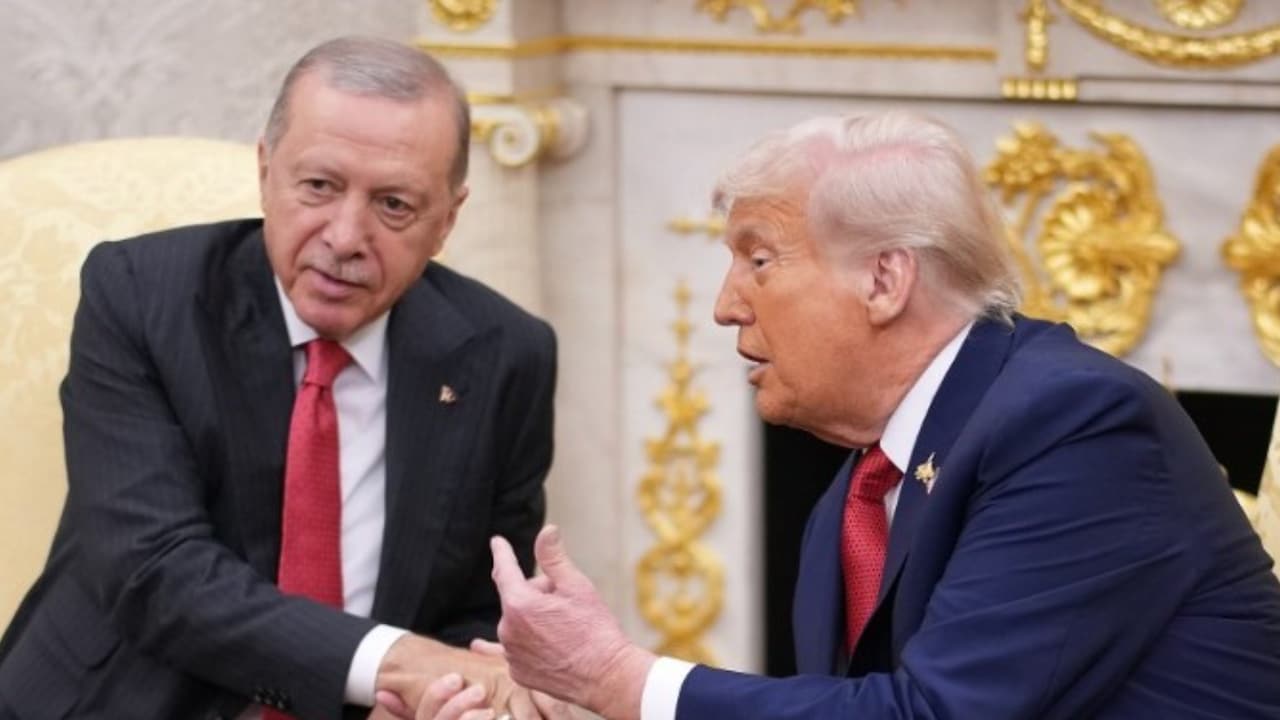
The mainstream press treats Recep Tayyip Erdogan like a diplomatic Boy Scout whenever he picks up the phone to offer mediation. Every time Ankara suggests Washington open a dialogue with Tehran, international desk editors reach for the same tired narrative. They write about regional stability. They talk about bridge-building, de-escalation, and the noble pursuit of Middle Eastern harmony.
It is a fairy tale for the naive. For a closer look into similar topics, we suggest: this related article.
I have spent years watching Turkish foreign policy mutate from strategic depth into opportunistic mercantilism. Ankara does not push for US-Iran talks because Erdogan loses sleep over geopolitical friction. They push for it because a frozen conflict between Washington and Tehran keeps Turkey indispensable, while a hot war burns down their backyard. More importantly, economic normalization between the US and Iran would puncture Turkey's lucrative role as Iran’s primary financial oxygen mask.
Let us dismantle the lazy consensus. To get more context on the matter, extensive analysis is available at TIME.
The Economic Lifeboat of Sanctions
To understand why Turkey wants US-Iran engagement on its own specific terms, you have to look at the balance sheets, not the press releases.
For decades, comprehensive American and international sanctions on Iran created a black-and-grey market goldmine for Turkish intermediaries. When you lock the world's eleventh-largest natural gas holder and a major oil exporter out of the SWIFT banking system, you create an acute scarcity. Someone has to bridge that gap. Turkey stepped into the breach, acting as the primary funnel for Iranian energy imports, gold-for-oil schemes, and clandestine capital flight.
I have watched mid-level bureaucrats in Istanbul orchestrate trade flows that bypass Western clearinghouses entirely, extracting heavy rents for the privilege.
If Washington actually normalizes relations with Tehran—truly normalizes them, lifting primary and secondary sanctions—Iran integrates back into global financial architecture. Tehran plugs directly into European markets, Asian direct investment, and transparent global supply chains.
When that happens, Turkey loses its tollbooth.
Why would Ankara publicly lobby for a diplomatic track that threatens its own geopolitical monopoly on sanctions-evasion arbitrage? Simple. They know the current American political establishment lacks the stomach for a comprehensive, grand-bargain detente with the Islamic Republic. By calling for talks they know Washington will fumble or reject, Erdogan plays the statesman on the global stage while insulating his domestic economy from the blowback of a sudden military escalation.
The Strategic Paranoia of a US-Iran Deal
There is another layer of diplomatic calculus here that the foreign policy commentariat willfully ignores: the nightmare scenario for Ankara is not a permanent Cold War between Washington and Tehran.
The real nightmare for Turkey is a successful US-Iran rapprochement that bypasses Turkish middlemen and reconfigures regional security around a different axis.
Imagine a scenario where Washington cuts a grand strategic bargain with Tehran, stabilizing the Persian Gulf, reopening direct energy pipelines through alternative routes, and realigning security guarantees in the Levant. Turkey suddenly finds itself relegated to the sidelines of the region's biggest energy and security architecture.
Ankara wants dialogue, but only the kind of endless, circular, low-yield dialogue that keeps both adversaries dependent on Turkish backchannels. They want the talks to stay in perpetual motion without ever reaching a destination.
The Kurdish Factor in Tehran
You cannot analyze Turkish-Iranian dynamics without addressing the elephant in the room: the cross-border Kurdish insurgency and how both regimes manage it.
Western analysts love to frame Turkey and Iran as eternal rivals locked in a sectarian or neo-Ottoman versus Persian struggle for regional hegemony. It makes for great television. It also completely misses the operational reality on the ground.
When it comes to suppressing Kurdish nationalist aspirations—whether in Iraq, Syria, or within their own borders—Ankara and Tehran exhibit a cold, functional pragmatism. They have an unspoken non-aggression pact regarding cross-border security operations. Intelligence chiefs from the MIT and the IRGC talk frequently, and they coordinate far more often than their public rhetoric suggests.
By urging Washington to engage Tehran, Erdogan is attempting to preempt any US-led pivot that might empower non-state actors in the region, particularly Kurdish groups in northeast Syria that Washington has historically backed and Ankara views as existential threats. Pushing Trump toward talks with Iran is a subtle play to draw Tehran closer to a shared containment strategy against Western-backed local proxies.
The Myth of Turkish Neutrality
The persistent branding of Turkey as an honest broker between the West and its adversaries is the greatest rhetorical sleight of hand in modern diplomacy.
Ankara is not neutral. Ankara is transactional to its core.
When Erdogan urges the White House to talk to Iran, he is managing multiple domestic and international vulnerabilities at once:
- Inflation Control: Turkey needs cheap energy to keep its fragile domestic economy afloat, and Iranian hydrocarbons—official or smuggled—are a vital narcotic for Turkish industry.
- Western Leverage: By positioning himself as the only regional leader capable of talking to both Washington and Tehran, Erdogan maintains leverage over a US administration that views him with deep suspicion.
- Diversification: It signals to Moscow and Beijing that Ankara remains unmoored from exclusive Western obedience, keeping multiple geopolitical options open.
Accepting the surface-level narrative that Turkey acts out of altruistic desires for regional peace requires ignoring every historical precedent of the last twenty years.
Stop buying the press releases. Look at who profits from the stalemate.
The next time you read about Ankara’s noble crusade for Middle Eastern dialogue, remember what is actually happening behind closed doors: the tollbooth operator is simply trying to keep the highway closed just enough to charge you for using the side road.
Don't look for peace where profit lives.