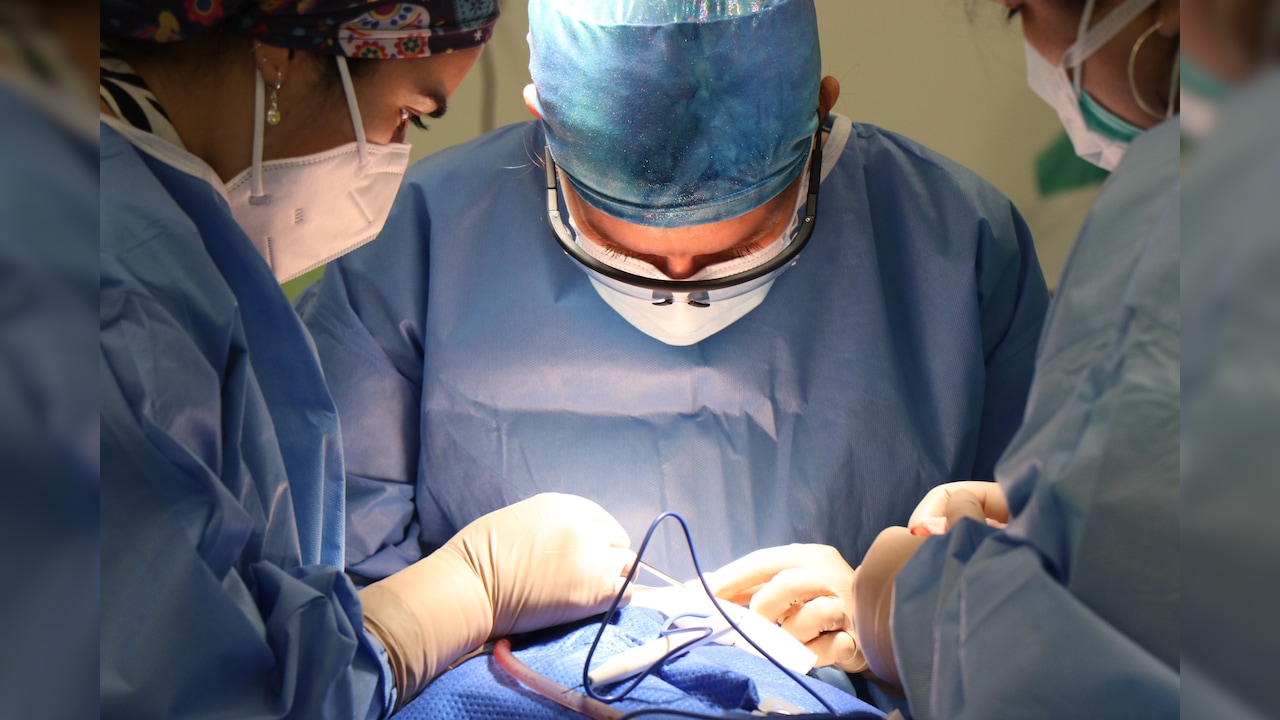
Wrong-organ excisions are rarely the product of isolated practitioner incompetence; they represent the catastrophic breakdown of overlapping institutional safeguards designed to prevent human error. When a surgeon mistakenly removes healthy ovaries—a sentinel event in clinical governance—attributing the outcome to a "rookie mistake" obscures the underlying operational failures in verification protocols, intraoperative spatial orientation, and organizational reporting structures.
Understanding how a preventable surgical error occurs requires dissecting the clinical workflow from preoperative planning to post-procedure disclosure. Healthcare systems rely on defense-in-depth models to insulate patients from cognitive lapses, yet these defenses fail predictably when production pressures override standardized safety checkpoints.
The Myth of the Isolated Human Error
In high-consequence industries such as aviation, nuclear power, and surgery, attributing a severe failure solely to individual negligence violates established safety science. James Reason’s Swiss Cheese Model of accident causation demonstrates that catastrophic errors occur only when latent conditions within an organization align with active failures at the sharp end of care.
An active failure is the immediate physical act—in this case, clamping and transecting the suspensory ligaments of the ovary instead of the intended target structure, or misidentifying anatomical landmarks during a pelvic or abdominal procedure. However, an active failure cannot result in patient harm unless multiple systemic barriers fail simultaneously.
The Three Failure Modes in Surgical Verification
- Preoperative Documentation Drift: Errors frequently originate hours or days before the patient enters the operating theater. Discrepancies between the clinical consultation notes, the surgical consent form, and the operating room scheduling board create ambiguity. When staff rely on memory or informal verbal handoffs rather than primary source verification, the surgical team enters the procedure operating under flawed assumptions.
- Procedural Bypass of the Surgical Safety Checklist: The World Health Organization (WHO) Surgical Safety Checklist mandates a formal "Time Out" prior to skin incision. During this pause, the entire team—surgeon, anesthesiologist, and circulating nurses—must actively confirm the patient's identity, the exact procedure, and the anatomical site. In high-volume surgical centers, the Time Out often degrades into a passive, box-ticking exercise where team members sign off without halting their physical preparation.
- Intraoperative Cognitive Fixation: Once surgery begins, anatomical distortion caused by inflammation, adhesions, obesity, or prior surgeries can obscure standard visual landmarks. Under time pressure, a surgeon experiencing confirmation bias may misidentify a structure, mistaking ovarian tissue or adnexal structures for pathological masses, lymph nodes, or adjacent organs, and proceed with resection without pausing to re-establish anatomical orientation.
Anatomical Misidentification and Pelvic Surgery Mechanics
Pelvic and lower abdominal procedures present distinct spatial challenges that elevate the risk of inadvertent organ removal. Whether performed via open laparotomy or minimally invasive laparoscopy, the surgical field is confined, and vascular structures sit in close proximity to reproductive organs.
During procedures such as appendectomies, hernia repairs, bowel resections, or diagnostic laparoscopies for pelvic pain, the ovaries and fallopian tubes lie directly adjacent to the operative field. In laparoscopic surgery, the loss of three-dimensional depth perception and tactile feedback forces the surgeon to rely entirely on two-dimensional visual cues and instrument manipulation.
If dense pelvic adhesions bind the ovary to the pelvic sidewall or the bowel, the tissue loses its characteristic pearly-white appearance and mobility. A surgeon dissecting through fibrotic tissue without systematically tracing the anatomical planes—specifically identifying the ureter, the iliac vessels, and the round ligament—risks excising normal ovarian parenchyma under the assumption that it is a cyst, an endometrioma, or a benign mesenteric mass.
The Mechanism of Surgical Confirmation Bias
Cognitive psychology identifies three specific traps that compromise intraoperative judgment:
- Inattentional Blindness: When a surgeon is intensely focused on controlling bleeding or freeing a tethered organ, their perceptual field narrows, causing them to miss obvious visual cues that would otherwise signal they are in the wrong anatomical plane.
- Premature Closure: Once a practitioner forms an initial hypothesis about what a structure is, they stop gathering disconfirming evidence. Instead of requesting an intraoperative ultrasound or calling a senior colleague for a visual check, they proceed directly to excision.
- Authority Gradient Suppression: In operating rooms with steep hierarchical cultures, junior nurses, surgical technologists, or anesthesia residents who notice an anomaly often hesitate to speak up. If a circulating nurse observes the surgeon preparing to remove an organ not listed on the consent form, a rigid authority gradient prevents the verbal intervention required to halt the error.
The Physiological and Economic Cost Function of Unintended Oophorectomy
The inadvertent removal of healthy ovaries—bilateral or unilateral oophorectomy—inflicts permanent physiological damage that extends far beyond the immediate surgical trauma. Unlike tissue biopsies or minor excisions, removing ovarian tissue alters the patient's endocrine system instantaneously.
Immediate and Long-Term Biological Consequences
For a premenopausal patient, the sudden loss of both ovaries triggers surgical menopause. Unlike natural menopause, which occurs gradually over several years, surgical menopause causes an abrupt, precipitous drop in circulating estrogen, progesterone, and testosterone.
The physiological cascade includes:
- Loss of Fertility: Bilateral oophorectomy permanently eliminates natural reproductive capacity, requiring complex assisted reproductive technologies using donor eggs if the patient wishes to carry a pregnancy later. Even unilateral removal reduces ovarian reserve, potentially accelerating the onset of menopause and complicating fertility outcomes.
- Cardiovascular and Skeletal Degradation: Estrogen exerts protective effects on vascular endothelium and bone remodeling. Premature estrogen deprivation significantly increases the lifetime risk of coronary artery disease, stroke, and accelerated bone mineral density loss, leading to early-onset osteoporosis and fractures.
- Neurological and Metabolic Disruption: Abrupt hormone withdrawal frequently induces severe vasomotor symptoms, cognitive impairment, sleep architecture disruption, and an elevated risk of mood disorders, alongside adverse shifts in lipid profiles and insulin sensitivity.
Institutional and Legal Liabilities
From an operational and financial perspective, a wrong-organ surgery triggers severe institutional penalties. Health systems face immediate regulatory scrutiny from accreditation bodies and state medical boards, which classify wrong-site and wrong-procedure surgeries as "Never Events"—errors so egregious and preventable that they should never occur in a licensed facility.
Insurers and national healthcare payers routinely deny reimbursement for the surgical episode and any subsequent corrective care. Beyond lost revenue, the hospital and the operating surgeon face civil litigation for medical malpractice. Settlements or verdicts in cases involving the loss of reproductive capacity and permanent endocrine dysfunction routinely reach substantial financial figures, factoring in lifetime hormone replacement therapy, fertility treatments, psychological counseling, and loss of consortium.
Clinical Governance and the Mechanics of Disclosure
When a surgeon recognizes an intraoperative error—or discovers it postoperatively when the pathology report returns identifying normal ovarian tissue—the institutional response determines both the ethical integrity of the organization and the trajectory of subsequent legal proceedings.
Historically, healthcare institutions operated under a "deny and defend" model, driven by fear of litigation and reputational damage. Practitioners were discouraged from admitting fault, leaving patients with vague explanations or complete silence regarding the true cause of their postoperative complications.
Modern clinical risk management has shifted toward Communication and Resolution Programs (CRPs). Under a CRP framework, the institution and the practitioner must execute a transparent, structured disclosure immediately upon discovering the error.
Components of an Effective Error Disclosure
- Factual Transparency: The clinician must state clearly what happened, avoiding euphemisms or defensive framing. Calling an unauthorized oophorectomy a "rookie mistake" in public or to a patient minimizes the severity of the harm and fails to explain the mechanical cause of the error. A clinically sound disclosure states precisely which organ was removed, why it occurred, and what immediate medical steps are required to manage the endocrine consequences.
- Root Cause Analysis (RCA): Within days of the event, the hospital's patient safety committee must convene a formal RCA. This investigation strips away individual blame to examine system vulnerabilities: Was the preoperative imaging reviewed in the room? Did the team conduct a true Time Out? Was the surgeon fatigued due to excessive call schedules?
- Remediation and Financial Restitution: Ethical governance requires proactively waiving all medical bills associated with the surgical error and offering fair compensation for ongoing care, such as endocrinology consultations and hormone replacement therapy, before the patient is forced to initiate litigation.
Limitations of Current Surgical Safety Protocols
While standardized checklists and verification protocols have measurably reduced surgical morbidity globally, they are not infallible. Relying solely on administrative rules creates a false sense of security if the underlying workplace culture remains flawed.
Checklists fail when they become routine administrative hurdles rather than cognitive forcing functions. If a hospital mandates ten different sign-offs prior to surgery, staff experience alert fatigue, leading to automatic compliance without genuine cognitive engagement. Furthermore, checklists cannot compensate for inadequate surgical training, lack of mentorship for junior surgeons, or institutional scheduling practices that prioritize operating room turnover speed over deliberate, unhurried anatomical dissection.
Tactical Protocol for Eliminating Wrong-Organ Excisions
Healthcare executives, surgical department chairs, and operating room directors cannot eliminate human fallibility, but they can engineer environments where a single cognitive lapse cannot result in an irreversible excision.
To harden surgical workflows against wrong-organ errors, institutions must implement four non-negotiable operational controls:
- Enforce Visual Source Verification: Ban the use of memory or secondary summaries during the surgical Time Out. The circulating nurse must project the primary preoperative imaging (ultrasound, CT, or MRI) and the signed patient consent form on a dedicated monitor in the operating room, requiring the lead surgeon to verbally cross-reference the visible anatomy against the imaging before any tissue is transected.
- Institute a Mandatory "Pause Before Transection" Rule: Expand the safety protocol beyond the initial incision. Before clamping or dividing any major vascular pedicle, ligament, or organ—particularly in the pelvis—the surgeon must verbally announce the structure being divided and obtain explicit confirmation from the assisting surgeon or senior scrub nurse.
- Implement Dual-Surgeon Verification for Junior Practitioners: Eliminate unsupervised autonomous operating for recently credentialed surgeons during complex pelvic or abdominal cases. Require a senior attending surgeon to verify anatomical landmarks prior to any organ resection during a practitioner's initial credentialing period, replacing informal "rookie" autonomy with structured proctoring.
- Decouple Surgical Compensation from Volume Metrics: Restructure departmental incentives so that surgeons are not financially penalized for taking additional intraoperative time to dissect adhesions carefully, request intraoperative imaging, or consult a colleague when anatomical planes are ambiguous.