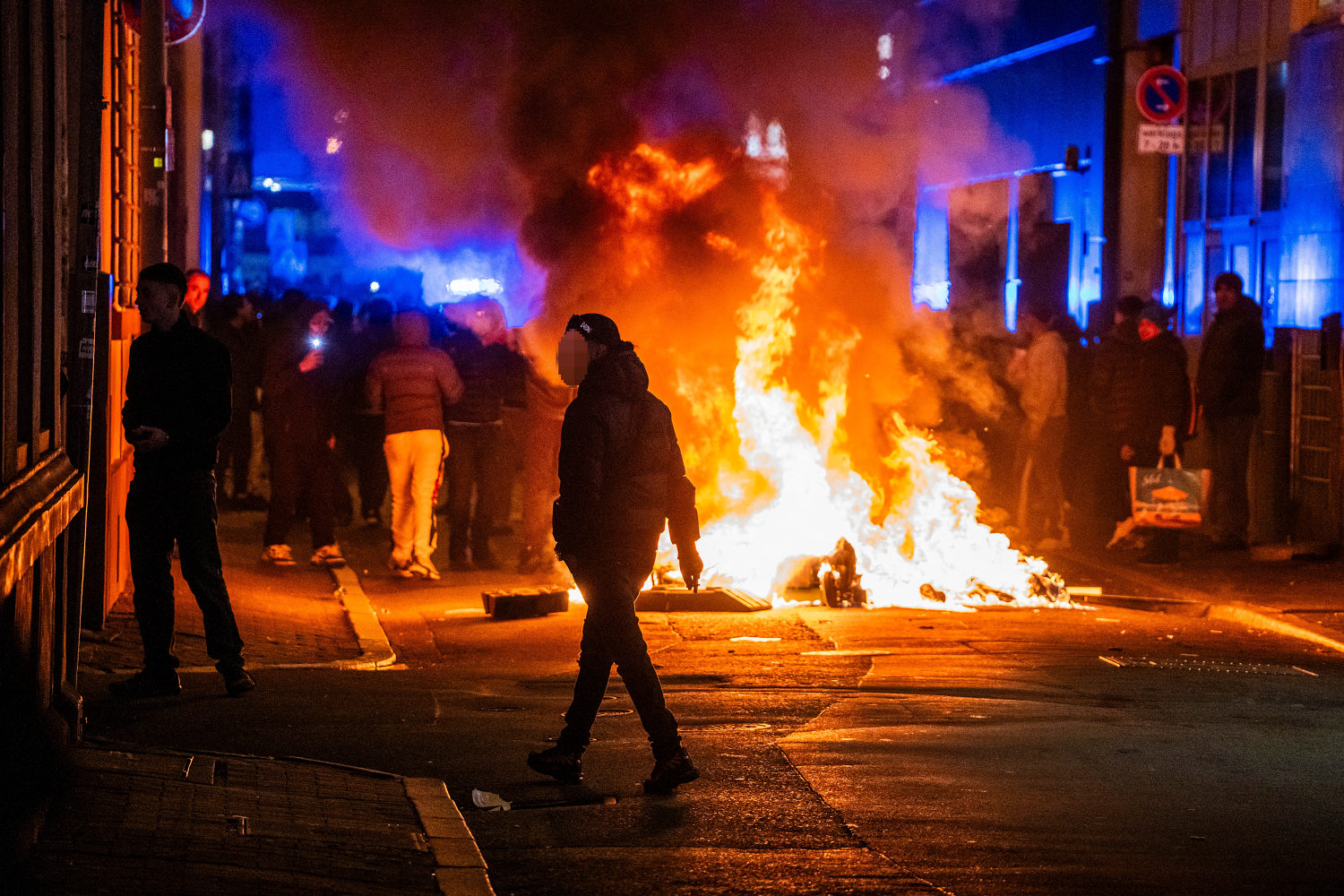
Civil disorder during youth-led demonstrations in Germany rarely stems from a single policy grievance. When retail looting coincides with protests over living costs and military service proposals, the event represents the collision of three distinct structural failures—real-wage erosion among entry-level workers, generational shifts in risk tolerance toward state conscription, and asymmetric crowd dynamics that allow opportunistic actors to hijack political assemblies. Standard news coverage treats looting and political protest as a unified phenomenon, obscuring the causal mechanisms that turn peaceful marches into commercial property destruction.
The Structural Drivers of Youth Grievance
Analyzing civil unrest requires separating the macro-level pressures that mobilize crowds from the micro-level triggers that spark violence. In the German context, two primary policy domains—macroeconomic affordability and national defense restructuring—create an overlapping burden on citizens born between 1997 and 2012. You might also find this connected coverage interesting: Why a Papal Visit to Uruguay’s Most Violent Neighborhood Will Backfire Unless the Church Abandons This One Illusion.
The Youth Cost-of-Living Squeeze
Inflationary shocks in Europe hit younger demographics disproportionately due to expenditure elasticity. Older households frequently hold fixed-rate mortgages or legacy rent-controlled leases, insulating them from immediate housing market spikes. Gen Z cohorts, by contrast, operate at the margin of the rental market.
- Urban Housing Bottlenecks: Major German metropolitan centers—such as Berlin, Hamburg, Frankfurt, and Munich—suffer from chronic supply deficits in single-occupancy apartments and shared flats. New lease rates outpace entry-level wage growth, forcing young workers and students to allocate an unsustainable share of net income to fixed shelter costs.
- Regressive Consumption Exposure: Entry-level earners spend a higher percentage of their disposable income on non-discretionary goods, specifically food and public transit. When baseline consumer prices rise, their savings rate drops to zero, eliminating any financial buffer against unexpected expenses.
- Educational Debt and Delayed Capital Formation: While university tuition in Germany remains largely state-subsidized, rising living expenses force students into low-wage service sector jobs or state-backed student loans. This delays capital accumulation and reinforces a perception of downward social mobility relative to previous generations.
This economic baseline creates high latent frustration. When individuals perceive that compliance with standard economic rules—studying, working, budgeting—fails to secure basic stability, the opportunity cost of participating in disruptive street protests drops significantly. As highlighted in detailed reports by The Guardian, the results are worth noting.
The Conscription Friction Point
The reintroduction of mandatory military service or compulsory national service questionnaires introduces a direct state claim on the time and bodily autonomy of the exact cohort experiencing economic stagnation. Following the suspension of conscription in 2011, Germany structured its armed forces around an all-volunteer model. Subsequent geopolitical shifts in Eastern Europe forced defense planners to confront severe personnel shortages within the Bundeswehr.
From a policy perspective, rebuilding reserve capacity requires a systematic intake mechanism. From the perspective of a 19-year-old facing housing insecurity and stagnant real wages, mandatory service proposals represent an asymmetric generational tax. Older generations benefited from the post-Cold War peace dividend, avoiding conscription while accumulating real estate and pension entitlements. Asking the youngest adult cohort to pause career entry or education for low-paid state service triggers immediate resistance.
The intersection of these two issues—economic precarity and conscription—acts as a force multiplier for mobilization. Economic grievances provide the emotional fuel, while a specific legislative proposal regarding military service provides a concrete target and a timeline for action.
The Mechanics of Crowd Escalation and Retail Looting
A critical analytical error in reporting on civil unrest is conflating the ideological protesters with the individuals who breach storefronts. Crowd psychology and criminological research demonstrate that political demonstrations and commercial looting operate on different incentive structures, even when they occupy the same physical space.
The Three-Tier Crowd Composition
In large-scale urban demonstrations that devolve into property crime, participants generally fall into three distinct behavioral categories:
- Ideological Organizers and Core Marchers: These individuals arrive with specific political demands, banners, and pre-planned routes. Their primary objective is visibility and policy pressure. Property destruction is counterproductive to their goals because it shifts media framing from their grievances to law-and-order narratives.
- Accelerated Opportunists: These actors monitor planned demonstrations specifically to exploit the distraction of law enforcement. They rarely engage with the political messaging of the protest. Their objective is financial gain through rapid theft of high-liquidity retail goods—electronics, designer apparel, and cosmetics.
- Situational Escalators: Initially peaceful participants who cross the threshold into illegal behavior due to temporary anonymity, peer contagion, and the perceived suspension of normal policing rules.
The Policing Dilemma and Threshold Effects
Law enforcement agencies managing hybrid protests face a tactical trade-off between containment and de-escalation. High-visibility riot gear and aggressive kettle tactics can provoke situational escalators, turning a tense standoff into active street fighting. Conversely, maintaining a light footprint to respect freedom of assembly leaves commercial corridors vulnerable to accelerated opportunists.
Looting follows a classic threshold model of collective behavior, formalized by sociologist Mark Granovetter. Most individuals will not break a storefront window alone due to the near-certainty of arrest. However, every individual has a specific threshold—the number of other people who must already be looting before that individual joins in.
Once an organized group of opportunists breaches the first perimeter of a retail store, the perceived risk of apprehension plummets for surrounding bystanders. Police units focused on managing the main protest column cannot simultaneously secure dozens of dispersed retail storefronts. This temporary vacuum of deterrence allows a small core of bad actors to trigger a cascade of opportunistic theft across a commercial district.
Economic and Political Consequences of Hybrid Unrest
The fallout from riots involving retail looting extends beyond immediate glass replacement and inventory loss. These events alter municipal budgets, retail real estate viability, and the legislative trajectory of the policies that sparked the protests.
Commercial Risk Pricing and Urban Hollowing
Retailers operating in high-foot-traffic urban zones absorb the immediate shock of property damage, but the medium-term costs are distributed across the local economy through insurance underwriting and capital allocation.
- Insurance Deductible Spikes: Commercial property insurers re-rate risk profiles for neighborhoods experiencing civil disorder. Higher premiums and raised deductibles squeeze operating margins for independent merchants who lack the balance sheets of multinational chains.
- Security Overhead: Persistent protest risks force retailers to invest in physical hardening—reinforced shutters, shatterproof glazing, and private security personnel. This capital expenditure diverts funds away from store expansion or wage increases.
- Foot Traffic Erosion: Repeated episodes of street violence depress evening and weekend consumer traffic, hurting adjacent hospitality businesses that rely on predictable pedestrian flow.
The Political Backlash Loop
For the activists protesting living costs and conscription, the occurrence of looting represents a severe strategic failure. In parliamentary democracies, policy shifts require building coalitions among moderate voters and swing legislators. Visual evidence of smashed storefronts and stolen merchandise allows political opponents to reframe the entire youth movement as criminal disorder rather than a legitimate economic critique.
This dynamic hardens legislative positions. Rather than conceding ground on housing subsidies, minimum wage adjustments, or exemptions from military service, governing coalitions face intense public pressure to project state authority. The immediate political response shifts toward funding police overtime, expanding surveillance powers, and fast-tracking prosecutions for breach of the peace. The underlying economic grievances remain unaddressed, while the state's coercive capacity increases.
Distinguishing Known Mechanisms from Analytical Hypotheses
Rigorous assessment of these events requires separating verified structural dynamics from speculative claims regarding coordination and intent.
Verified Mechanisms:
- Demographic data consistently confirms that younger European cohorts face higher rent-to-income ratios than previous generations at the same age.
- Defense ministry manpower deficits in Germany are a documented institutional reality driving debates over mandatory registration and service models.
- Criminological data across European and North American urban riots confirms that commercial looting is predominantly driven by rapid-resale opportunism rather than political ideology.
Hypotheses Requiring Local Verification:
- External Coordination: While social media algorithms accelerate the gathering of crowds, attributing retail looting to centralized ideological command structures often overstates the organizational capacity of youth protest groups. Looting clusters are frequently decentralized networks using encrypted messaging apps to share real-time police locations.
- Demographic Monoliths: Labeling riots purely as "Gen Z protests" obscures the socioeconomic splits within the cohort. University students protesting conscription often belong to different social networks than the marginalized urban youth most likely to engage in direct confrontation with police or opportunistic theft.
Strategic Interventions for Urban Resilience and Policy Stability
Preventing the recurrence of hybrid unrest requires simultaneous adjustments across policing tactics, municipal commercial protection, and national legislative framing. Treating the symptoms through purely punitive measures fails to resolve the underlying mobilization triggers.
- Decouple Commercial Protection from Crowd Control: Municipal police departments must deploy separate, highly mobile rapid-response units dedicated exclusively to commercial corridors adjacent to registered protest routes. Keeping riot control units focused on the main march while dedicated units patrol retail perimeters eliminates the deterrence vacuum that enables threshold-based looting cascades.
- Restructure Service Incentives Over Compulsion: If defense planners require expanded personnel pools, relying on compulsory intake risks sustained domestic friction. Shifting toward high-value economic incentives—such as direct housing stipends, tax exemptions on post-service income, or accredited technical training—aligns state defense needs with the primary economic pain points of young adults.
- Implement Targeted Urban Housing Supply Reforms: Addressing the root economic driver requires accelerating permitting for high-density residential construction and repurposing underutilized commercial real estate in university cities. Without structural relief on entry-level shelter costs, any contentious national policy will continue to act as a lightning rod for broader economic frustration.
The convergence of youth economic strain and state security demands creates a volatile baseline across major European cities. Until policymakers address the structural affordability gap facing young adults, contentious legislation will repeatedly trigger street mobilization—and opportunistic actors will continue to exploit the resulting chaos.


