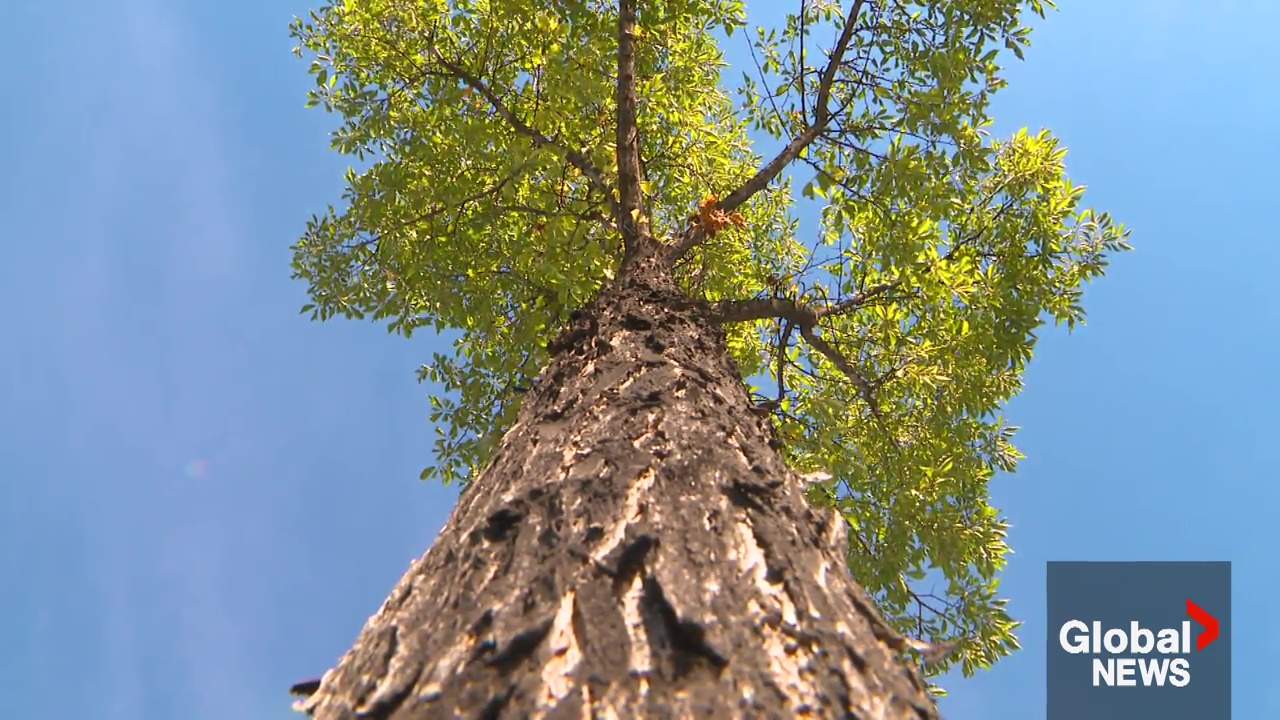
Urban canopy stability operates under a fragile equilibrium defined by host density, vector proliferation rates, and municipal containment friction. When a novel vector establishes a foothold within a regulated ecosystem, the standard operational playbook for biosecurity collapses. The recent emergence of a specific beetle species linked to the accelerated spread of Dutch elm disease within the urban forest of Edmonton exposes severe vulnerabilities in standard surveillance heuristics. Traditional management models assume static vector behaviors and predictable fungal transmission vectors. The presence of this newly implicated beetle rewrites the exposure math, transforming what was once a manageable attrition rate into an acute systemic threat.
Understanding this crisis requires moving past generic municipal warnings and dissecting the mechanical intersections between insect physiology, fungal pathogen propagation, and municipal forestry logistics. This analysis maps the transmission pathways, evaluates the structural failures in current containment architecture, and outlines the operational bottlenecks limiting municipal intervention.
The Mechanistic Triad of Vector Driven Pathogen Dispersal
Dutch elm disease operates through a biological partnership between an aggressive fungal agent, Ophiostoma novo-ulmi, and its insect carriers. The introduction of a new beetle species changes the velocity and vector capacity of this system. Pathogen transmission is not a passive event; it is governed by a strict sequential process requiring biological synchronization between the insect lifecycle and the host tree's physiological state.
The first variable in this sequence is vector attraction and colonization efficiency. New beetle populations often exhibit altered aggregation behaviors compared to endemic species like the native elm bark beetle or the smaller European elm bark beetle. If the novel species demonstrates a higher affinity for stressed urban canopy specimens or possesses an accelerated reproductive cycle, the volume of fungal inoculum introduced into the environment scales exponentially.
The second variable involves spore acquisition and retention. Beetles acquire fungal spores while developing within the galleries of infected wood. When emergent adults bore into healthy host tissue to feed or reproduce, they inoculate the vascular system of the tree. A vector that maintains higher spore loads per individual or targets high-value structural tissues rather than peripheral branches alters the damage function entirely. Instead of localized dieback, rapid systemic wilt occurs within a single growing season.
The third variable is climatic adaptability. Edmonton presents a unique environmental stress test for insect populations. A beetle capable of surviving regional winter extremes while maintaining a multi-generational output during compressed summer months bypasses the natural thermal bottlenecks that typically regulate vector populations. This physiological resilience explains the sudden epidemiological spikes observed in municipal arboriculture reports.
[Infected Elm Tissue]
       │
       ▼ (Larval Gallery Colonization)
[Emergent Beetle Vector]
       │
       ▼ (Spore Acquisition)
[Healthy Canopy Inoculation]
       │
       ▼ (Vascular System Collapse)
[Systemic Wilt & Municipal Liability]
Structural Failures in Municipal Containment Architecture
Municipalities manage Dutch elm disease through a defensive triad consisting of public education, prompt removal of infected wood, and targeted insecticide or fungicide injections. This architecture assumes that the velocity of disease spread remains slower than the operational capacity of municipal work crews. The arrival of an aggressive secondary vector shatters this assumption by overwhelming administrative and logistical bandwidth.
Detection latency represents the primary failure point in current containment frameworks. Urban foresters rely heavily on visual symptom identification, such as flagging, leaf yellowing, and canopy dieback. By the time visual symptoms manifest in the upper crown, the fungal pathogen has already colonized the vascular ring, and the previous season's beetle generation has likely completed its lifecycle and migrated to adjacent trees. This detection lag creates an expanding perimeter of infection that outpaces survey schedules.
Disposal logistics create a secondary bottleneck. Provincial and municipal regulations mandate strict handling protocols for elm wood to prevent vector escape during transit and storage. Wood must be buried, chipped, or burned immediately. When infection rates surge due to a hyper-efficient vector, municipal yards face storage exhaustion. Processing backlogs turn designated holding sites into active breeding nurseries, inadvertently fueling the very epidemic the protocol aims to suppress.
Public compliance failures compound these administrative pressures. Private property owners frequently store unauthorized elm firewood on residential lots, driven by ignorance of municipal bylaws or the aesthetic value of the wood. A single uninspected cord of firewood retained in a suburban yard serves as an epicenter for vector emergence, neutralizing the millions of dollars invested in public canopy protection. The decentralized nature of urban forestry means that the overall system security is determined by its weakest link—the least compliant private property owner.
The Economic Cost Function of Canopy Attrition
Urban tree canopies are not merely aesthetic amenities; they function as critical infrastructure providing stormwater mitigation, urban heat island attenuation, and property value stabilization. The introduction of an aggressive vector initiates a steep cost function that shifts municipal budgets from proactive maintenance to reactive emergency removal.
Total Economic Loss = (Removal Cost + Replacement Cost) × (Vector Spread Velocity) - Proactive Mitigation Efficiency
Evaluating the financial impact requires separating costs into distinct operational phases.
- Surveillance Expenditure: The capital required for aerial and ground-based diagnostic surveys scales linearly with canopy square mileage, but non-linearly with vector density due to the need for molecular testing and increased trap density.
- Mitigation Outlays: Direct expenditures on systemic fungicide micro-injections for high-value specimens. While effective, micro-injections represent a high marginal cost per tree, making ecosystem-wide application economically unfeasible.
- Removal and Remediation Costs: Heavy machinery and specialized labor required to fell, transport, and destroy large-diameter urban elms safely. Dead elms become brittle structural hazards, increasing liability risks for public infrastructure and private dwellings.
- Loss of Ecosystem Services: The degradation of property values, increased urban cooling energy demands, and diminished stormwater retention capacity resulting from sudden canopy loss.
When an unmanaged vector accelerates the mortality rate beyond the municipal replacement threshold, the urban forest transitions from a self-sustaining asset into a depreciating liability. The cost of planting and establishing a replacement sapling to maturity takes decades, creating a multi-decade deficit in urban ecological services.
Operational Redirection for Biosecurity Resilience
Mitigating the threat posed by this new beetle species requires discarding obsolete containment models and adopting high-frequency, data-driven interventions. The traditional reliance on reactive removal must be replaced by predictive spatial modeling and aggressive disruption of the vector lifecycle.
Urban forestry departments must transition from static zoning to dynamic risk-surface mapping. By integrating meteorological data, historical infestation clusters, and high-resolution LiDAR canopy profiling, analysts can identify micro-regions where environmental stress elevates host susceptibility. Deploying pheromone-baited interception traps in these high-risk corridors allows forestry teams to capture emergent vectors before they locate viable breeding hosts, effectively neutralizing the vector before transmission occurs.
Legislative frameworks require immediate tightening. Penalties for unauthorized transport and storage of elm wood must scale with the replacement cost of a mature urban tree rather than serving as nominal administrative fines. Furthermore, municipal authorities must establish decentralized processing nodes to eliminate the transport bottlenecks that currently allow vectors to escape from infected zones during transit to centralized disposal facilities.
Deploy biological control integration alongside chemical management. While systemic insecticides offer localized protection for heritage trees, population-level suppression demands the investigation of native parasitoids and entomopathogenic fungi capable of targeting the specific larval stages of the new beetle species without destabilizing non-target insect communities.
Establish strict quarantine perimeters around transit hubs and construction zones where uninspected timber frequently enters municipal boundaries. The movement of commercial goods and landscaping materials remains the primary vector for long-range anthropogenic jump-dispersal of invasive forestry pests. Intercepting these pathways is the single most effective barrier against regional saturation.
Deploy automated acoustic sensors and hyperspectral drone imaging to identify early-stage vascular stress in urban elms before foliar symptoms appear. By compressing the detection-to-removal window from months to days, urban foresters can sever the transmission loop and restore equilibrium to the municipal canopy.