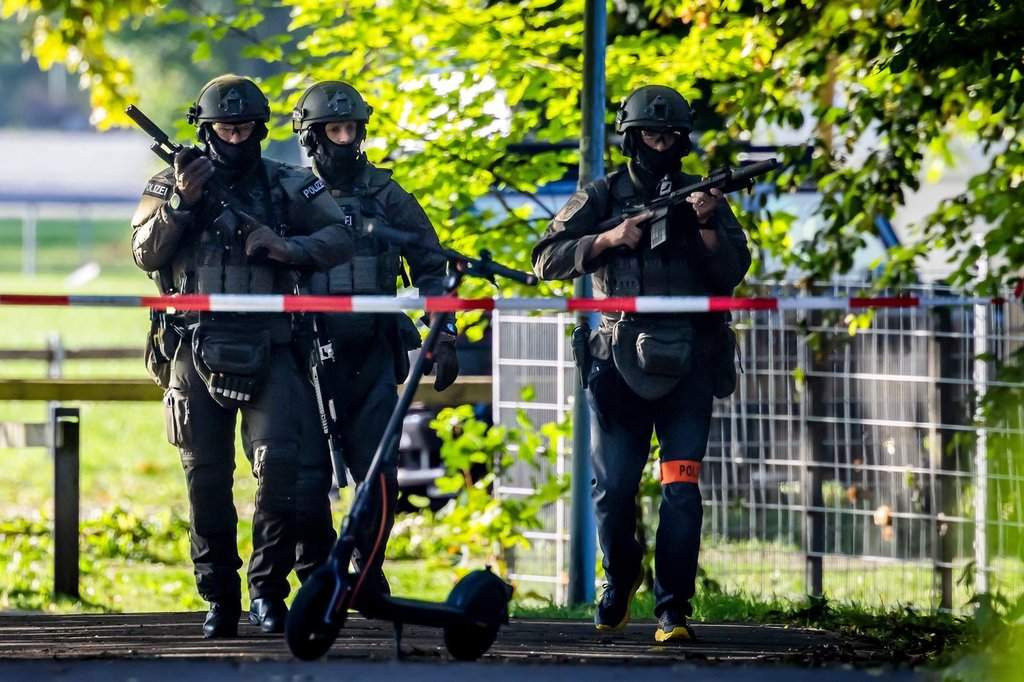
When multiple homicides occur across disparate metropolitan jurisdictions without immediate apprehension of suspects, the operational failure extends far beyond localized tactical errors. It exposes systemic vulnerabilities in how law enforcement agencies process forensic intelligence, share inter-agency data, and prioritize investigative resources during the critical initial window following high-casualty events. Conventional reporting on active mass violence investigations frequently relies on vague assertions regarding community silence or complex criminal networks. A rigorous diagnostic approach requires dissecting the actual mechanics of modern investigative friction.
The Three Operational Failure Points in Multi-Jurisdictional Manhunts
Investigative momentum decays rapidly following a high-casualty shooting. The velocity of a manhunt relies on a precise sequence of evidence capture, processing, and dissemination. When suspects remain at large, the breakdown typically tracks across three distinct vectors.
First, forensic data processing bottlenecks create critical delays. Ballistics matching via the Integrated Ballistics Identification System, cellular tower dump analysis, and private surveillance video extraction require hours of manual transcription and cross-referencing. In jurisdictions facing high baseline crime volumes, analytical backlogs mean that digital evidence often sits in queue for days while suspects maintain mobility.
Second, jurisdictional friction impedes cross-boundary tracking. Urban centers rarely operate as isolated security zones. Perpetrators routinely cross municipal, county, or state lines within minutes of an incident. Disparate records management systems, competing command structures, and misaligned evidentiary protocols between local police departments and federal task forces routinely generate communication silos.
Third, witness cooperation models are structurally misaligned with community risk profiles. Standard anonymous tip lines fail when the perceived cost of retaliation significantly outweighs the civic incentive of cooperation. Without protected, high-speed conduit mechanisms for evidentiary transfer, communities fragmented by historic distrust withhold the precise geolocation data required to locate transitory suspects.
The Mechanics of Investigative Decay
The probability of apprehending a violent crime suspect diminishes exponentially over time. This decay curve is governed by the degradation of physical evidence and the physical dispersal of the perpetrators. Within the first twenty-four hours, physical trace evidence can be recovered, vehicle telemetry is easily queried through automated license plate reader networks, and witness recollections remain uncompromised by secondary narratives.
As time elapses past the seventy-two-hour threshold, vehicles are abandoned, burner devices are discarded, and suspects integrate into secondary or tertiary networks designed to absorb fugitives. Investigative strategies that rely on reactive tip-processing rather than proactive financial and digital network mapping invariably stall.
Resource Allocation Asymmetries
Media-saturated mass shooting events trigger an immediate surge of investigative personnel, yet resource allocation is rarely optimized for long-tail manhunts. Command staff frequently succumb to the pressure of visible saturation policing rather than targeted, intelligence-led asset deployment. High-visibility patrols reassure the public but consume manpower that would yield higher statistical returns if dedicated to digital forensics, cell-site analysis, and financial transaction monitoring.
Sustaining a rigorous manhunt requires shifting from generalized saturation to dedicated analytical strike teams. These units must isolate communication nodes, track transactional history, and map historical association patterns of known associates who might facilitate harboring a fugitive.
Strategic Operational Realignment
Accelerating the apprehension timeline for suspects in complex urban shootings requires a permanent structural pivot away from decentralized municipal response models. Metropolitan policing agencies must institutionalize real-time intelligence centers capable of ingesting multi-source data streams without bureaucratic latency. Standardizing cross-jurisdictional data-sharing protocols ensures that automated license plate readers, ballistics databases, and ballistic tracking systems communicate via unified interfaces.
Deploying decentralized tactical units without a centralized, intelligence-driven coordination framework guarantees persistent investigative friction. Reforming the architecture of urban manhunts demands treating fugitive tracking not as an extension of standard patrol operations, but as a specialized, high-velocity logistics challenge.