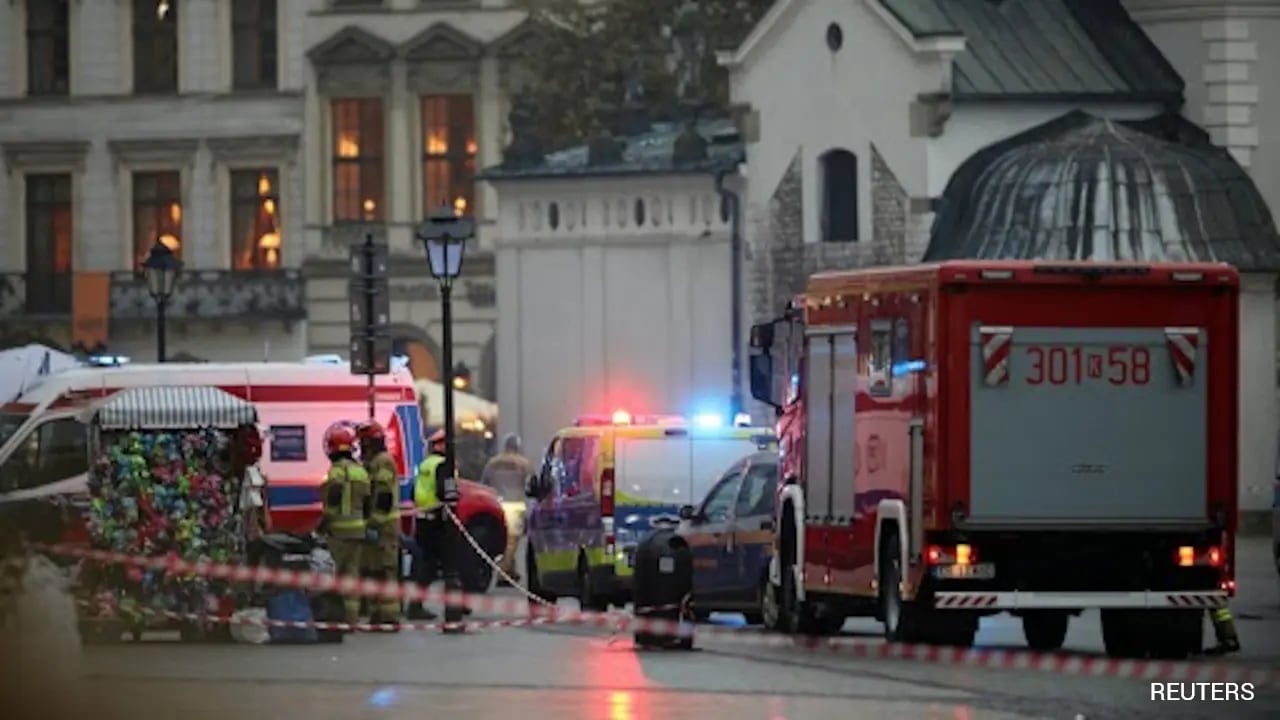
Five dead. Ten wounded. A gunman engaged by municipal police in the heart of Krakow, one of Central Europe’s most historic and heavily visited cities.
When breaking news headlines like "5 Killed, 10 Injured In Shooting In Poland's Krakow" flash across wire services, the initial coverage almost always follows a predictable, frantic script. Reporters scramble to confirm casualty counts, map out police cordons, and quote stunned bystanders. Yet, in the rush to publish the bare facts of a mass casualty event, standard breaking news coverage frequently misses the deeper structural realities that make an incident like a Krakow shooting so jarring—and so complex to analyze.
Poland maintains some of the strictest firearm regulations in the European Union, alongside one of the lowest rates of gun ownership per capita in the developed world. Because mass shootings are statistical anomalies in Central Europe compared to the United States, a high-casualty event in a Polish city immediately raises urgent questions about law enforcement response times, illicit weapon trafficking routes, emergency medical triage, and the psychological shockwaves that follow when an unspoken social contract of public safety is shattered.
To understand what a shooting of this scale means for Krakow, Poland, and broader European security, we have to look past the police tape and examine the mechanics of how these events unfold, how Polish authorities are trained to neutralize active threats, and why strict gun laws do not make any nation entirely immune to determined violence.
The Mechanics of the Initial Response in Krakow
In any urban active shooter scenario, the first four minutes dictate the survival rate of the wounded. Krakow, a city defined by its dense medieval core, narrow cobblestone streets, and sprawling historic squares, presents unique tactical challenges for first responders. Unlike modern North American cities built on wide grid systems that allow armored vehicles rapid, unobstructed access, Krakow’s urban geography funnels pedestrians into tight corridors while simultaneously restricting heavy vehicle movement.
When shots ring out in a high-density area, acoustic reverberation off stone facades immediately disorients both civilians and arriving officers. Witnesses routinely report hearing gunfire from multiple directions, leading to conflicting emergency calls that can temporarily split police dispatch resources.
Polish law enforcement operates under a centralized national structure—the Policja—supplemented by municipal guards (Straż Miejska) who handle local ordinance enforcement and initial patrol duties. In recent years, following high-profile terror attacks in Western Europe between 2015 and 2017, the Polish Ministry of the Interior overhauled its active shooter protocols. The old doctrine of establishing a perimeter and waiting for specialized counter-terrorism units—such as the elite BOA (Central Counter-Terrorist Subdivision of the Police)—was scrapped.
Current doctrine mandates immediate intervention. The first armed patrol officers on the scene are instructed to locate, engage, and neutralize the shooter without waiting for tactical reinforcements. When reports indicate that a gunman was shot at by police during an incident in Krakow, it reflects this doctrinal shift: regular patrol units are now expected to act as immediate shock troops to stop the killing, even if they are outgunned or lacking heavy ballistic protection.
Triage Under Fire and the Golden Hour
A casualty count of five dead and ten injured places immense, instantaneous strain on local emergency medical infrastructure. In mass casualty incidents involving high-velocity rounds or close-range handgun fire, victims suffer from catastrophic hemorrhage, tension pneumothorax, and complex orthopedic trauma.
Krakow is home to major academic medical centers, including the University Hospital in Krakow-Prokocim, which possesses advanced trauma capabilities. However, getting ten critically injured patients from a chaotic, unsecured crime scene to an operating table requires seamless coordination between tactical medics and civilian ambulance crews (Państwowe Ratownictwo Medyczne).
Paramedics cannot enter an active "hot zone" until police declare the area cleared of secondary threats. During those critical minutes, survival depends entirely on hemorrhage control—tourniquets, wound packing, and chest seals applied by the first officers on the scene or trained bystanders. The gap between five fatalities and fifteen fatalities is almost always bridged in those first ten minutes by basic, brutal stop-the-bleed interventions before an ambulance ever pulls away from the curb.
The Polish Paradox Strict Laws Versus Illicit Channels
To grasp why a shooting in Krakow reverberates so deeply across Europe, you have to look at the numbers. According to data from the Small Arms Survey, Poland has roughly 2.5 civilian firearms per 100 residents. Compare that to neighboring Germany (around 19.6 per 100), the Czech Republic (around 12.5 per 100), or the United States (over 120 per 100).
Obtaining a legal firearm permit in Poland is an exhaustive, bureaucratic marathon. Applicants must pass rigorous psychological and psychiatric evaluations, undergo thorough criminal background checks, demonstrate a documented "just cause" (such as active participation in sport shooting clubs, hunting associations, or verified personal protection threats), and pass both theoretical and practical weapons handling exams. Even after a license is granted, owners face strict storage mandates, requiring certified gun safes bolted to structural elements of their homes, subject to unannounced police inspections.
So how does a shooter acquire the means to kill five people and wound ten others in a country where guns are virtually absent from daily life?
The Black Market and Cross-Border Leakage
Strict domestic laws regulate legal citizens; they do not seal borders. Poland sits at a geopolitical crossroads within the Schengen Area, where internal border checks are largely nonexistent. Investigators examining illicit firearms in Central Europe consistently point to three primary pipelines that bypass national licensing systems:
- Balkan Legacy Stockpiles: Decades after the Yugoslav Wars of the 1990s, hundreds of thousands of military-grade automatic rifles, handguns, and grenades remain unaccounted for in the Western Balkans. Smuggling networks routinely move these weapons north through Hungary, Slovakia, and the Czech Republic into Poland and Western Europe.
- Reactivated Acoustic and Blank-Firing Weapons: For years, loopholes in European regulations allowed the sale of easily convertible blank-firing pistols and deactivated collector firearms, particularly in countries like Slovakia prior to legislative crackdowns. Criminal workshops drill out blocked barrels and replace firing pins, turning legal props into lethal, untraceable handguns.
- Conflict Zone Spillover: Ongoing regional instability in Eastern Europe has flooded neighboring territories with small arms. While Ukrainian and Polish border authorities maintain strict screening protocols to prevent weapons from crossing westward, law enforcement agencies across the EU remain on high alert for opportunistic smuggling by organized crime syndicates.
When an incident occurs in Krakow, forensic ballistics teams immediately trace the weapon's serial numbers, metallurgy, and cartridge markings. Determining whether the gun was legally held by a licensed sport shooter who suffered a sudden mental health crisis, stolen from a collector, or smuggled across the southern border fundamentally alters the political and legislative aftermath.
Anatomy of Wire Service Coverage and What Gets Lost
Breaking news reports are designed for speed, not depth. When an international outlet runs a headline stating "5 Killed, 10 Injured In Shooting In Poland's Krakow. Gunman Shot At By Police," the phrasing itself reveals the limitations of early reporting.
Notice the ambiguity in "Gunman Shot At By Police." In the fog of an ongoing crisis, press officers from the Lesser Poland Voivodeship Police (Komenda Wojewódzka Policji w Krakowie) release only verified fragments to prevent panic and avoid compromising active investigative leads. "Shot at" can mean an exchange of gunfire where the suspect fled and was later cornered, a scenario where police fire suppressed the shooter long enough for hostages to escape, or an engagement where the suspect was wounded and taken into custody without immediate confirmation of their medical status.
The Danger of Premature Narrative Framing
In the immediate aftermath of any European shooting, media commentators and social media algorithms rush to force the event into one of two pre-packaged narratives: international terrorism or domestic political extremism.
This reflex often obscures the much more common, far less ideological reality of mass violence. Criminological research across Europe—from the 2023 Prague university shooting to the 2020 Hanau attack and various workplace or domestic rampages—shows that perpetrators frequently share a consistent behavioral profile regardless of whether they claim an ideology. They are overwhelmingly isolated men experiencing acute personal grievances, severe untreated psychiatric deterioration, or suicidal ideation, who latch onto violence as a final act of notoriety or revenge.
By immediately framing a Krakow shooting through a geopolitical lens without forensic evidence, early coverage distorts public understanding. If the perpetrator was a disgruntled former employee, a rejected domestic partner, or a local resident suffering a psychotic break, treating the incident as a foreign terror plot leads to misallocated security resources and unnecessary public hysteria.
The Psychological Shockwave in a Low-Crime Society
Crime statistics tell one story; lived cultural expectations tell another. Poland consistently ranks among the safest countries in Europe regarding violent street crime. Residents of Krakow walk through Planty Park or across the Rynek Główny at two in the morning without the hyper-vigilance required in many Western capitals.
Because public gun violence is virtually absent from the Polish collective consciousness, a mass shooting inflicts a disproportionate psychological trauma on the community. There is no muscle memory for it.
Consider a hypothetical scenario involving an office worker or a university student in Krakow hearing sharp cracks echoing down a street near the Vistula River. In a society accustomed to gun violence, people immediately recognize the acoustic signature of gunfire and drop to the ground or seek cover behind engine blocks and concrete walls. In Krakow, witnesses almost universally report thinking the sounds are firecrackers, construction equipment, or a vehicle backfiring. Those three to five seconds of cognitive dissonance—where the brain refuses to accept that lethal gunfire is occurring in a peaceful neighborhood—cost precious time to flee.
Furthermore, Krakow is Poland’s premier tourism hub, welcoming millions of international visitors annually. An attack in the city directly threatens the economic lifeblood of the Lesser Poland region. Hospitality networks, municipal authorities, and national tourism boards face an immediate, delicate balancing act: demonstrating visible, reassuring security increases (such as armed patrols at transit hubs and major squares) without turning a vibrant cultural capital into an armed camp that frightens away the very visitors it relies upon.
Systemic Vulnerabilities Exposed by High-Casualty Events
Whenever a shooting breaches a tightly regulated environment, post-incident audits inevitably uncover systemic friction points that were invisible during peacetime operations. Based on past European after-action reports following major shootings, investigators scrutinize four specific operational areas:
1. Inter-Agency Radio and Data Interoperability
When an incident escalates rapidly, municipal police, national tactical units, border guards, fire brigades, and ambulance dispatchers must communicate instantaneously. In many European jurisdictions, legacy radio encryption protocols and separate command centers create brief, dangerous delays when passing real-time suspect descriptions or safe corridor locations from police commanders to incoming paramedics.
2. Mental Health Flagging and Licensing Databases
If the perpetrator held a legal firearm license, the investigation turns mercilessly toward the medical screening process. In Poland, once a citizen passes the initial psychological evaluation for a gun permit, periodic re-evaluations are required every five years for certain categories (such as personal protection permits), though not uniformly across all sport or collector licenses. A person can be completely stable at age thirty and experience a catastrophic mental health collapse at age thirty-three without any automatic mechanism alerting police registries that their firearm license should be suspended.
3. Digital Warning Signs and Threat Assessment
Modern perpetrators almost never snap without warning. They leak intent. They post cryptic manifestos on encrypted messaging apps, search for tactical gear online, or make disturbing remarks to family members and coworkers. Yet, local law enforcement agencies frequently lack dedicated behavioral threat assessment teams capable of connecting scattered digital breadcrumbs with physical residency records before an attack is launched. Privacy laws under the European Union’s GDPR framework, while vital for civil liberties, also create strict legal thresholds that police must clear before monitoring an individual's online activity without a prior criminal predicate.
4. Public Alert Infrastructure
Poland utilizes the Alert RCB system—a nationwide SMS broadcast mechanism operated by the Government Centre for Security that sends emergency warnings directly to every mobile phone in an affected area. Originally designed for severe weather, flooding, and chemical spills, deploying Alert RCB during an active shooter crisis requires split-second authorization. Sending a clear, actionable message ("Active shooter near [Location]. Shelter in place, lock doors, avoid area") can prevent hundreds of commuters from walking directly into a police perimeter or active line of fire.
The Policy Aftermath and the Illusion of Absolute Security
In the weeks following a tragedy that leaves five dead and ten wounded, politicians inevitably promise sweeping legislative fixes. In countries with permissive gun laws, the debate centers on restricting access. In a country like Poland, where access is already heavily restricted, the political debate often fractures in unexpected directions.
One faction demands even tighter controls: banning semi-automatic rifles for sport shooters, mandating annual psychiatric screenings, or centralizing ammunition storage at shooting ranges rather than allowing home safes. Conversely, another vocal faction—including Poland’s growing territorial defense advocates and shooting sports associations—argues the exact opposite: that strict laws only disarm law-abiding citizens, leaving ordinary people defenseless during the four to six minutes it takes armed police to arrive.
Both arguments run headlong into the uncomfortable truth of modern security analysis. No legislative framework, regardless of how restrictive or permissive, can reduce the risk of targeted mass violence to zero.
If a determined individual acquires an illegal weapon through a Balkan smuggling route, or passes every psychological screening before suffering an acute, undetectable crisis, laws on paper will not stop the trigger from being pulled. Security in an open, democratic society relies on layered defense: aggressive intelligence work to disrupt black-market arms pipelines, accessible mental health intervention before grievances curdle into violence, rapid-intervention police doctrine, and widespread civilian trauma training so bystanders know how to stop bleeding while sirens are still blocks away.
When the forensic tents are finally packed up in Krakow and the candles along the pavement burn down, the true measure of the city's resilience will not be found in a breaking news headline, but in whether its institutions quietly fix the gaps that allowed five lives to be taken in the first place.