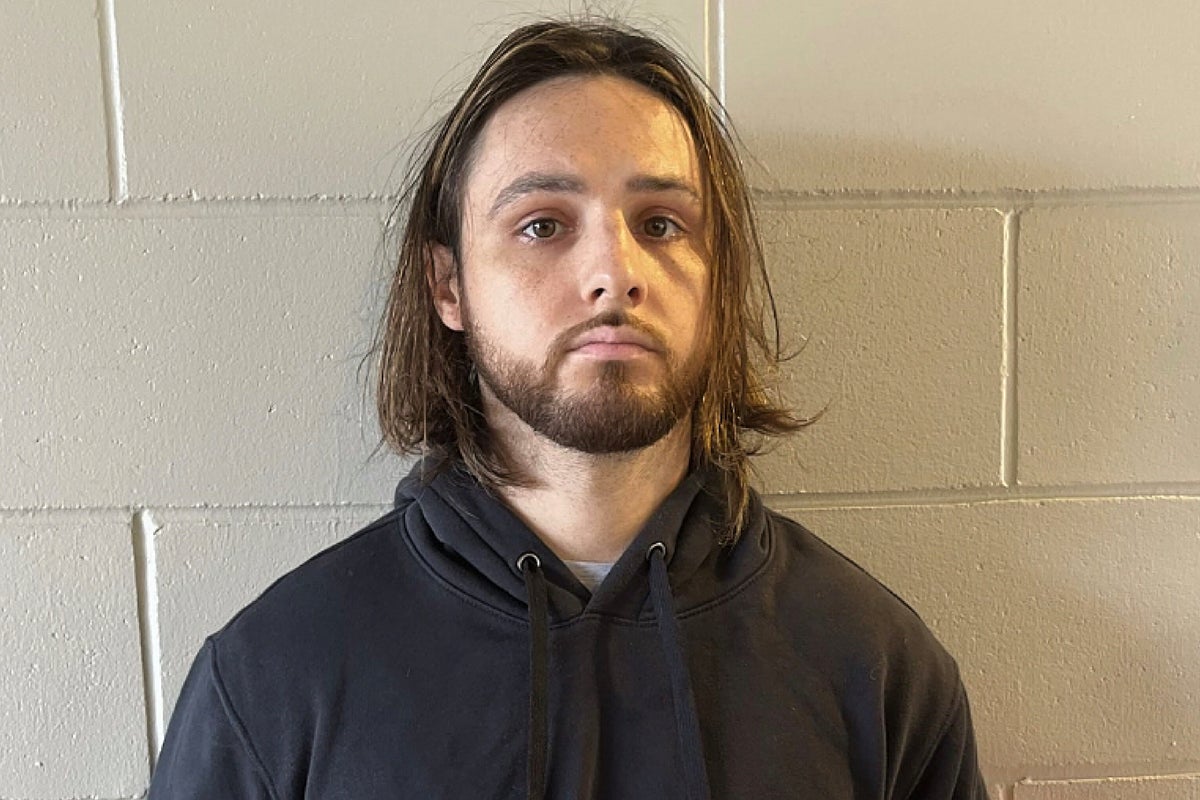
A 10–2 jury deadlock split in favor of acquittal does not signify a structural failure of evidence, but rather a profound misalignment between circumstantial complexity and the rigid thresholds of federal criminal law. The declaration of a mistrial by U.S. District Judge Anne Hwang in the prosecution of Jonathan Rinderknecht—the 29-year-old accused of igniting the catastrophic 2025 Palisades Fire—exposes a critical systemic challenge: the extreme difficulty of proving a continuous chain of physical causation when a disaster occurs in distinct, separated stages.
The prosecution’s structural failure to secure a conviction on charges of arson, malicious destruction by fire, and setting timber afire stemmed from a breakdown in linking a localized event to a macro-level catastrophe. To deconstruct this legal fracture, the case must be analyzed through two distinct systems: the mechanism of thermodynamic continuity and the architecture of reasonable doubt.
The Friction of Holdover Causation
The central vulnerability in the government's case was not the defendant's proximity to the origin point, but the physical timeline of the fire itself. Investigators classified the Palisades Fire as a "holdover" event—a secondary conflagration resulting from a primary ignition that was suppressed but not extinguished.
The timeline of the physical event reveals a six-day operational and environmental gap:
- December 31, 2024–January 1, 2025 (Ignition Phase): The primary brushfire, designated the Lachman Fire, sparked near the Hidden Buddha clearing in the Pacific Palisades. Firefighters suppressed the open flames, but embers remained trapped within the deep, subterranean root systems of the dense hillside vegetation.
- January 2–January 6, 2026 (Subterranean Smoldering): The fire burned outward and downward through root networks, shielded from surface detection and standard aerial suppression methods.
- January 7, 2026 (The Conflagration Breach): High-velocity Santa Ana winds breached the area, providing an influx of oxygen and driving embers back to the surface. This rekindled the smoldering biomass into a 23,000-acre wildfire that ultimately caused 12 fatalities and destroyed over 6,000 structures.
This holdover mechanism introduced an unresolvable causal bottleneck for the jury. By attempting to hold Rinderknecht criminally liable for the macro-scale destruction of the January 7 breakout, the prosecution forced the jury to accept an uninterrupted chain of custody over a chemical reaction that occurred entirely out of sight for 144 hours. Juror testimony highlights this flaw, revealing that even if the defendant initiated the January 1 brushfire, the subsequent six-day delay and perceived limitations in structural containment efforts broke the direct line of accountability required for a unanimous guilty verdict.
The Narrative Conflict: Malicious Intent vs. The Good Samaritan
When direct physical proof of ignition is missing—as investigators could only verify that the fire began via an "open flame" rather than matching a specific tool like the barbecue lighter found in Rinderknecht’s vehicle—prosecutors must rely on behavioral frameworks to establish intent. In this instance, the prosecution and defense presented diametrically opposed behavioral profiles to explain identical actions.
The Societal Revenge Framework
The prosecution leveraged an arson behavioral profile suggesting a motive of societal retribution. They introduced digital records, including ChatGPT transcripts used as a personal journal, to document a pattern of escalating emotional instability, resentment over wealth disparity, and acute personal rejection on New Year's Eve. Under this framework, the defendant’s presence at the remote trail clearing immediately after dropping off his final Uber passenger was a calculated act of malice against an affluent enclave. His subsequent actions—such as filming the suppression efforts and recording a video detailing a mental breakdown on January 6—were interpreted as the behavior of an arsonist returning to the scene to monitor their work.
The Good Samaritan Deflection
The defense recontextualized the exact same data points into an alternative, legally viable narrative. They presented Rinderknecht’s continuous 911 calls reporting the fire as evidence of civic responsibility rather than a calculated attempt to manufacture an alibi. His presence at the clearing was attributed to simple nostalgia for an old neighborhood, and his video recordings were framed as the natural response of an eyewitness observing an active emergency. By introducing a plausible alternative cause—holiday pyrotechnics, backed by firefighter testimony confirming the sound of fireworks in the area—the defense successfully introduced enough friction to prevent a consensus.
The Strategic Limits of Digital Forensics
The outcome of this trial underscores a fundamental rule of evidence: digital telemetry can establish presence and state of mind, but it cannot bridge a gap in physical causation. Geolocation records placed Rinderknecht within 30 feet of the ignition point, and his search history provided clear evidence of psychological distress. Yet, in a federal courtroom, a digital footprint cannot substitute for a physical link between a suspect and the origin of a fire.
When a jury is presented with a 10–2 split for acquittal after 13 hours of deliberation, it indicates that the defense successfully shifted the focus from the defendant's character to the technical gaps in the investigation. To secure a conviction in the promised retrial, the prosecution cannot simply re-emphasize the defendant’s alarming digital diary entries. Instead, they must deliver a far tighter, data-driven thermodynamic proof that connects the initial January 1 open flame directly to the subterranean holdover embers, effectively eliminating all alternative ignition sources during that critical six-day window.


