The survival of a human being trapped beneath structural rubble for 144 hours defies standard actuarial models of disaster mortality. In urban search and rescue operations, the period following an earthquake is governed by a strict decay curve of survivability, typically dropping precipitously after the first 72 hours—a window widely designated by emergency physicians and logistics experts as the critical phase for trauma and dehydration. When an extraction occurs six days post-collapse, it is not a random deviation from medical science but the result of a highly specific convergence of structural engineering variables, microclimatic conditions, and distinct metabolic advantages.
Analyzing these anomalies requires stripping away emotional narratives to evaluate the precise mechanics of structural voids, pediatric physiological resilience, and the operational inefficiencies that dictate modern rescue timelines.
The Structural Mechanics of Void Formation
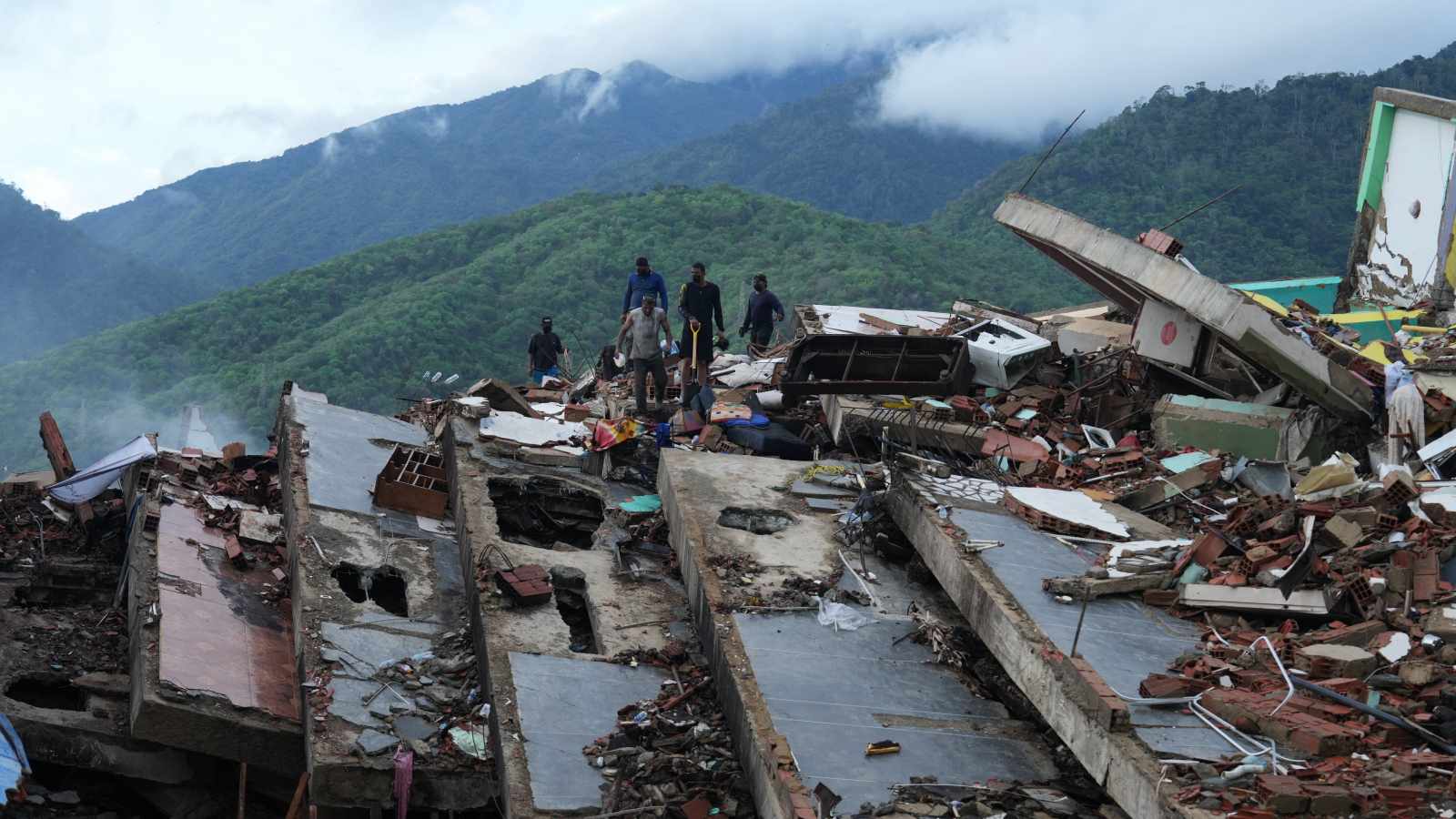
Survivability is entirely dependent on the structural geometry of the collapse. When an earthquake triggers the failure of multi-story concrete or masonry buildings, the resulting debris field is classified by its failure pattern.
Pancake vs Lean-To Collapse Profiles
A pancake collapse occurs when vertical support elements fail completely, causing upper floors to settle directly onto lower floors. This profile offers the lowest probability of survival because it minimizes the volume of empty space. Conversely, a lean-to or cantilever collapse occurs when a structural wall or support column fails on one side only, allowing the floor slab to drop at an angle while remaining supported on the opposite side.
This creates a triangular void space. The structural integrity of these voids determines whether an occupant survives the initial impact kinetic energy and subsequent settling forces.
The Load-Bearing Capacity of Non-Structural Elements
In many instances, the failure of primary reinforced concrete beams is arrested by secondary, non-structural objects. Heavy furniture, reinforced steel appliances, and even dense structural partitions act as accidental load-bearing pillars. In a pediatric survival scenario, the physical volume required to preserve life is significantly lower than that required for an adult. A toddler requires less than 0.5 cubic meters of clearance to avoid crushing injuries and maintain minimal air exchange, meaning that small structural shifts that would prove fatal to an adult can inadvertently preserve a smaller organism.
Pediatric Metabolic and Thermal Profiles Under Entrapment
The physiological response of a toddler to prolonged entrapment differs fundamentally from adult pathology. While adult survival models emphasize immediate hypovolemic shock or crush syndrome, pediatric models must account for a different set of metabolic trade-offs.
The Dehydration Tipping Point
The primary threat to life after the 48-hour mark is acute dehydration, leading to renal failure. Adults lose fluid rapidly through respiration and perspiration, driven by stress-induced cortisol and adrenaline spikes. Toddlers possess a higher total body water percentage relative to body mass than adults (approximately 70 percent to 75 percent compared to an adult's 60 percent).
However, they also feature a higher surface-area-to-mass ratio, which typically accelerates fluid loss under standard atmospheric conditions. Prolonged survival indicates that this structural vulnerability was mitigated by the immediate microclimate of the rubble void.
Microclimatic Humidity and Thermal Insulation
Subterranean or deeply buried rubble voids frequently develop localized microclimates. Sealed away from direct solar radiation and wind exposure, the ambient temperature within a concrete void stabilizes. If moisture is present—either from ruptured residential water lines, localized rainfall drainage, or condensation along concrete surfaces—the relative humidity inside the void can approach 100 percent.
This extreme humidity reduces the vapor pressure gradient between the child’s respiratory tract and the environment. The physiological result is a massive reduction in insensible fluid loss via respiration. By breathing saturated air, the rate of dehydration is decelerated by a factor of three, extending the theoretical survival window far past the standard thermodynamic limits.
The Hypothermic Paradox
Lower ambient temperatures inside rubble can cause hypothermia, which is typically lethal. In rare survival anomalies, mild, non-lethal hypothermia induces a state akin to metabolic depression. Core body temperature drops slightly, which in turn reduces the basal metabolic rate, oxygen consumption, and cellular glucose utilization. This metabolic deceleration preserves glycogen stores and delays the onset of terminal organ failure caused by starvation and lack of hydration.
Operational Logistical Bottlenecks in Urban Search and Rescue
The delay between the seismic event and the ultimate extraction highlight severe operational friction points common to international disaster responses. A rescue occurring on day six reflects the time required to overcome compounding logistical failures.
The Mobilization Delay Function
The deployment of heavy urban search and rescue (USAR) teams follows a predictable logistical timeline:
- Local emergency services assess damage and declare a state of emergency (0 to 12 hours).
- National governments request international assistance via frameworks like the International Search and Rescue Advisory Group (12 to 24 hours).
- Specialized teams mobilize, transport heavy technical equipment via air cargo, and establish base camps at the disaster zone (24 to 72 hours).
Consequently, highly specialized technical search gear—such as acoustic listening devices, fiber-optic search cameras, and biological canine assets—frequently does not arrive at peripheral structural collapses until day four or five. The timeline of the rescue is therefore a function of asset arrival rather than the immediate detection of life.
Technical Detection Thresholds
Acoustic sensors used by USAR teams filter out ambient urban noise to detect rhythmic structural tapping or vocalizations. In a pediatric scenario, the trapped individual lacks the physical strength to generate high-decibel acoustic signals through concrete blocks. Furthermore, fear or cognitive shock often induces mutism in young children.
Discovery in these instances relies on secondary indicators:
- Canine Olfactory Scent Plumes: Air currents rising through micro-fissures in the concrete carry volatile organic compounds emitted by living skin cells and sweat.
- Thermal Imaging Limitations: Concrete acts as a powerful thermal insulator. Forward-looking infrared (FLIR) cameras cannot penetrate thick concrete slabs; they only detect heat signatures that have conducted to the surface or escaped through open air gaps.
- Endoscopic Verification: The physical insertion of articulating lens cameras through drilled 2-inch bores remains the most definitive verification method once a potential void is isolated.
The Pathopathology of Long-Duration Extraction
The physical extraction of a survivor after 144 hours introduces immediate, severe medical risks that require precise clinical management before the patient is completely removed from the debris.
Crush Syndrome and Reperfusion Injury
When a limb or muscle group is compressed by heavy debris for an extended duration, localized ischemia occurs. The lack of blood flow causes muscle cells to lyse, releasing massive quantities of myoglobin, potassium, and lactic acid into the localized tissue.
If the debris is removed suddenly without prior medical intervention, circulation is restored to the damaged area, flushing these toxic cellular byproducts into the central circulatory system. This systemic flooding causes acute renal failure due to myoglobin casting in the kidneys, alongside lethal cardiac arrhythmias triggered by hyperkalemia.
Field Stabilization Protocols
Modern extraction doctrine dictates that intravenous access must be established prior to freeing the trapped limbs whenever physically accessible. Medical personnel initiate aggressive fluid resuscitation using isotonic sodium chloride or sodium bicarbonate. This serves a dual purpose:
- It dilutes the concentration of circulating myoglobin in the bloodstream.
- It alkalinizes the urine, preventing the precipitation of myoglobin in the renal tubules.
Without this precise chemical stabilization during the mechanical lifting phase, a survivor pulled alive from the rubble can suffer cardiac arrest within minutes of extraction.
Strategic Deployment Metrics for Future Seismic Events
To optimize the survival rate in future urban disasters, regional emergency management frameworks cannot rely on statistical anomalies or survival outliers. Resource allocation must match the empirical realities of the collapse decay curve.
Investing heavily in local, decentralized USAR capabilities within seismically active zones removes the critical 48-to-72-hour mobilization bottleneck associated with international aid. Equipping municipal fire departments with basic seismic listening devices and structural boring equipment yields a higher statistical return on survival than relying on ultra-advanced, lagging international deployments. Emergency protocols must prioritize the rapid mapping of structural voids over broad-scale debris removal, shifting the focus from mass clearance to targeted, deep-void technical penetration within the non-negotiable 72-hour window.