Mass-media amplifications of xenophobic rhetoric serve as structural mechanisms designed to alter voter behavior, shift legal frameworks, and consolidate specific demographic coalitions. In April 2026, the sharing of a conservative talk show transcript via Truth Social by the executive branch brought these mechanisms into sharp focus. The post explicitly targeted high-skilled immigrant demographics, specifically referencing individuals from India and China, using derogatory geographic descriptors and questioning the fundamental civic alignment of these populations. Rather than viewing this development through a purely moralistic lens, an objective analysis requires assessing the incident via defined operational frameworks: the mechanics of political distraction, the destabilization of highly integrated economic segments, and the disruption of bilateral diplomatic structures.
To fully understand the systemic impact of these rhetorical strategies, analysts must evaluate the three distinct pillars driving this political signaling, the quantifiable economic backlash among high-yield demographics, and the subsequent diplomatic friction generated within strategic global partnerships.
The Three Pillars of Targeted Rhetorical Signaling
Political communication does not occur in a vacuum; it operates on predictable structural frameworks designed to achieve specific legislative or electoral outcomes. The amplification of the April 2026 media transcript relies on three core tactical pillars.
The Distraction Mechanism
When domestic macroeconomic indicators present structural challenges for an administration—such as sustained inflationary pressures or elevated cost-of-living metrics—political actors frequently pivot toward identity-based signaling. By focusing public discourse on birthright citizenship and demographic anxieties, the executive branch constructs an alternative narrative architecture. This shifts public and media scrutiny away from structural economic shortfalls and repositions the administration as a defender of national sovereignty.
The Legal Leverage Framework
The targeting of birthright citizenship is not merely an ideological statement; it serves as a tactical lever to influence ongoing judicial deliberations. With arguments regarding restrictions on the 14th Amendment reaching the U.S. Supreme Court, public amplifications function as outside pressure mechanisms. By framing birthright citizenship as an exploited loophole used by specific foreign nationalities, the rhetoric aims to shape public opinion, rally grassroots judicial activism, and signal expectations to the judiciary.
The Perpetual Foreigner Paradigm
The underlying logic of the amplified text relies on a recurring sociological framework: the categorization of highly successful, naturalized populations as fundamentally unassimilable. By using terms like "gangsters with laptops" or asserting that these demographics possess "no loyalty" to the United States, the rhetoric constructs a false dichotomy between ethnic background and national allegiance. This strategy actively undermines the civic standing of long-term residents and naturalized citizens, neutralizing their professional achievements by framing them as permanent security or cultural liabilities.
The Economic and Demographic Cost Function
The narrative presented in the media transcript asserts that immigrants from India and China exploit birthright citizenship to facilitate chain migration from under-developed regions. However, this assertion completely reverses the actual socioeconomic data and immigration patterns governing these groups. The demographic data highlights a stark mismatch between the populist narrative and empirical reality.
+--------------------------------------------------------------------------+
|          Socioeconomic Profile of the Indian-American Demographic         |
+--------------------------------------------------------------------------+
|  Metric                                  | Value                         |
+--------------------------------------------------------------------------+
|  Median Household Income                 | ~$150,000 (Highest in U.S.)   |
|  Dissatisfaction with Executive Branch   | 71% (Carnegie Survey, 2026)   |
|  Perceived Party Intolerance (2024)      | 17%                           |
|  Perceived Party Intolerance (2026)      | 27%                           |
+--------------------------------------------------------------------------+
The Indian-American demographic represents the highest-earning ethnic group in the United States, with a median household income hovering near $150,000. This population is heavily concentrated in high-skill sectors, including technology, medicine, engineering, and corporate management. The narrative of systemic economic dependency or legal exploitation is structurally invalid when applied to a group that generates disproportionately high tax revenues and drives corporate innovation.
The primary systemic consequence of targeted rhetoric is not an alteration of immigration volume, but rather a rapid shifts in political alignment and a heightened risk profile for talent retention.
The first structural limitation of using derogatory rhetoric against high-yield demographics is the rapid alienation of an increasingly vital voting bloc. According to data compiled by the Carnegie Endowment for International Peace in 2026, 71% of Indian-American respondents expressed explicit dissatisfaction with the executive administration's performance. Furthermore, when analyzing why these voters reject specific political platforms, the proportion citing perceived party intolerance toward minorities escalated from 17% to 27% over a 24-month period. This measurable shift indicates that targeted rhetorical signaling carries a direct electoral cost, eroding support in key swing districts where high-skill immigrant populations hold significant demographic weight.
This shifts political risk into the private sector. The technology and engineering ecosystems in the United States rely heavily on the H-1B visa pipeline and subsequent permanent residency tracks, which are overwhelmingly populated by Indian and Chinese nationals. When the executive branch normalizes derogatory rhetoric, it creates a hostile social environment, increasing workplace friction and accelerating the "brain drain" phenomenon. High-skilled professionals possess global mobility; when domestic political signaling threatens their long-term legal security—such as the stability of birthright citizenship for their descendants—the risk premium of remaining in the United States rises. This creates an institutional bottleneck for American enterprises seeking to secure top-tier global technical talent.
Bi-Lateral Diplomatic Friction and Institutional Backlash
Beyond domestic electoral politics and economic inputs, targeted political communication introduces severe friction into international relations. The institutional response to the April 2026 incident illustrates the systemic breakdown that occurs when domestic populist signaling collides with strategic foreign policy objectives.
The immediate consequence of the executive branch's social media amplification was a coordinated legislative and diplomatic counter-offensive, which proceeded through three distinct stages:
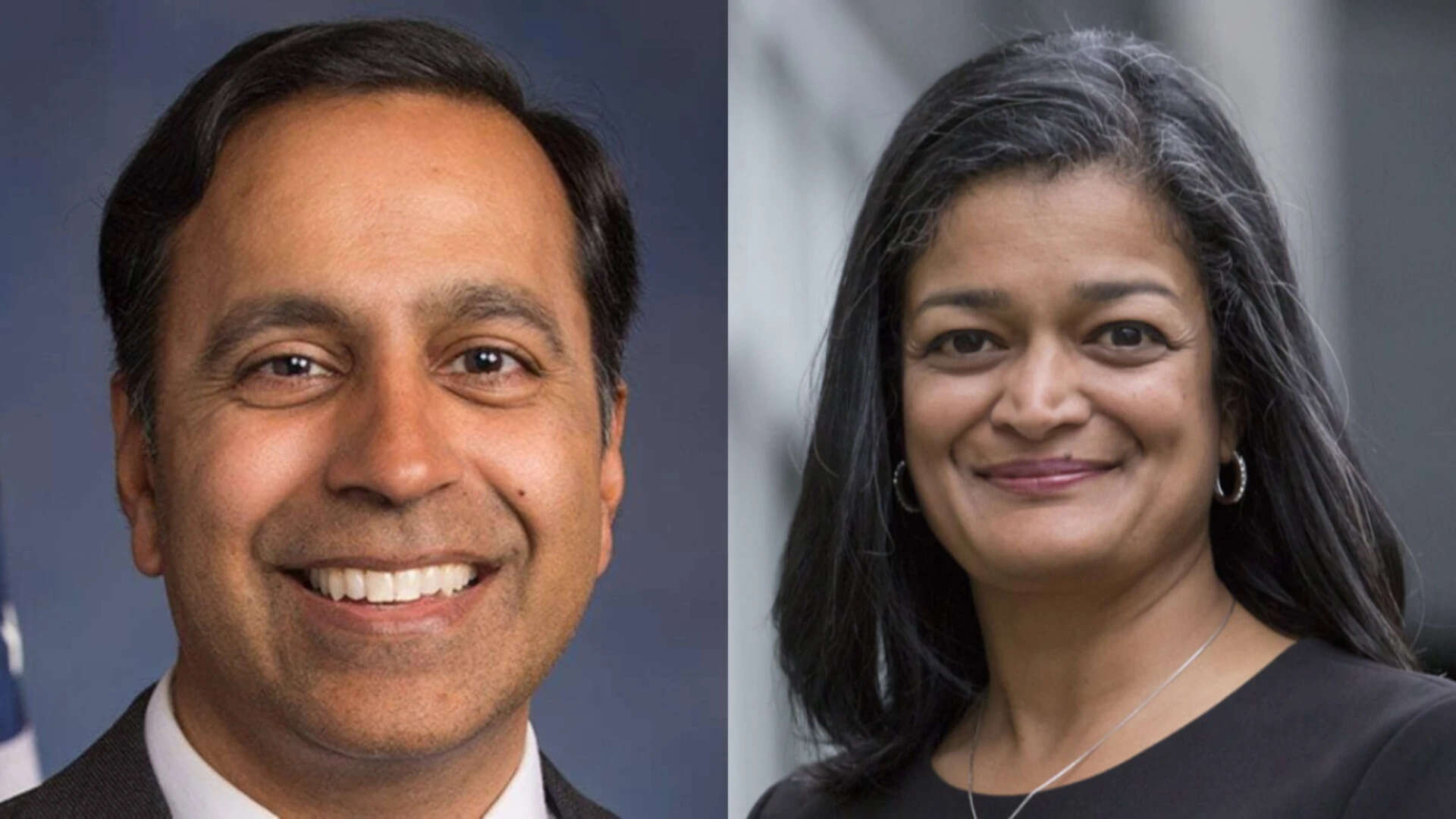
- Legislative Repudiation: In May 2026, U.S. Representatives Raja Krishnamoorthi, Ted Lieu, and Pramila Jayapal introduced a formal House resolution explicitly condemning the executive's rhetoric. Backed by the Congressional Asian Pacific American Caucus (CAPAC) and prominent advocacy groups such as Stop AAPI Hate, the resolution served to formally decouple the legislative branch from the executive’s messaging, signaling to domestic constituents and international allies that the derogatory remarks did not represent a unified state position.
- Diplomatic De-escalation: The U.S. Embassy in New Delhi was forced into immediate damage-control protocols. Embassy spokespeople publically referenced historical, positive remarks made by the administration regarding India's leadership in an attempt to neutralize the diplomatic fallout. This pattern demonstrates a structural inefficiency: the executive branch generates spontaneous rhetorical crises, forcing diplomatic assets to expend capital repairing critical bilateral relationships rather than advancing strategic objectives.
- Foreign Ministry Recalibration: While the Indian government initially maintained a calculated silence, the Ministry of External Affairs subsequently issued a formal statement characterizing the remarks as "uninformed, inappropriate, and in poor taste." The statement emphasized that such descriptions do not reflect the reality of the India-U.S. partnership, which is built on mutual economic and security interests.
This friction directly undermines broader geopolitical frameworks. The United States relies heavily on strategic partnerships with India to counter-balance regional influence in the Indo-Pacific corridor. When domestic political actors categorize strategic partners using derogatory geographic terms, it complicates bilateral security pacts, tech-sharing agreements, and defense co-production initiatives. Foreign leadership cohorts face domestic pressure; they cannot appear overly aligned with a Western superpower whose executive branch openly amplifies xenophobic descriptions of their populace.
Strategic Recommendations for Enterprise and Institutional Leadership
To mitigate the structural instability introduced by volatile political signaling, corporate executives, institutional investors, and policy strategists must deploy proactive containment frameworks.
Enterprise leadership must structurally decouple corporate culture from volatile domestic political rhetoric. Human resource architectures should implement clear, internal legal protections and public reassurances regarding visa sponsorship stability and workplace security for affected demographics. By actively counter-balancing external xenophobic narratives, corporations can stabilize talent retention rates and insulate their workforce from the documented rise in anti-Asian sentiment.
Simultaneously, institutional investors evaluating regional technology hubs must adjust their geographic risk modeling. If federal legal frameworks governing birthright citizenship or high-skilled immigration tracks face sustained rhetorical and judicial challenges, capital allocation should gradually diversify toward secondary international tech ecosystems. This strategic shift ensures long-term operational resilience against unpredictable national policy pivots.


