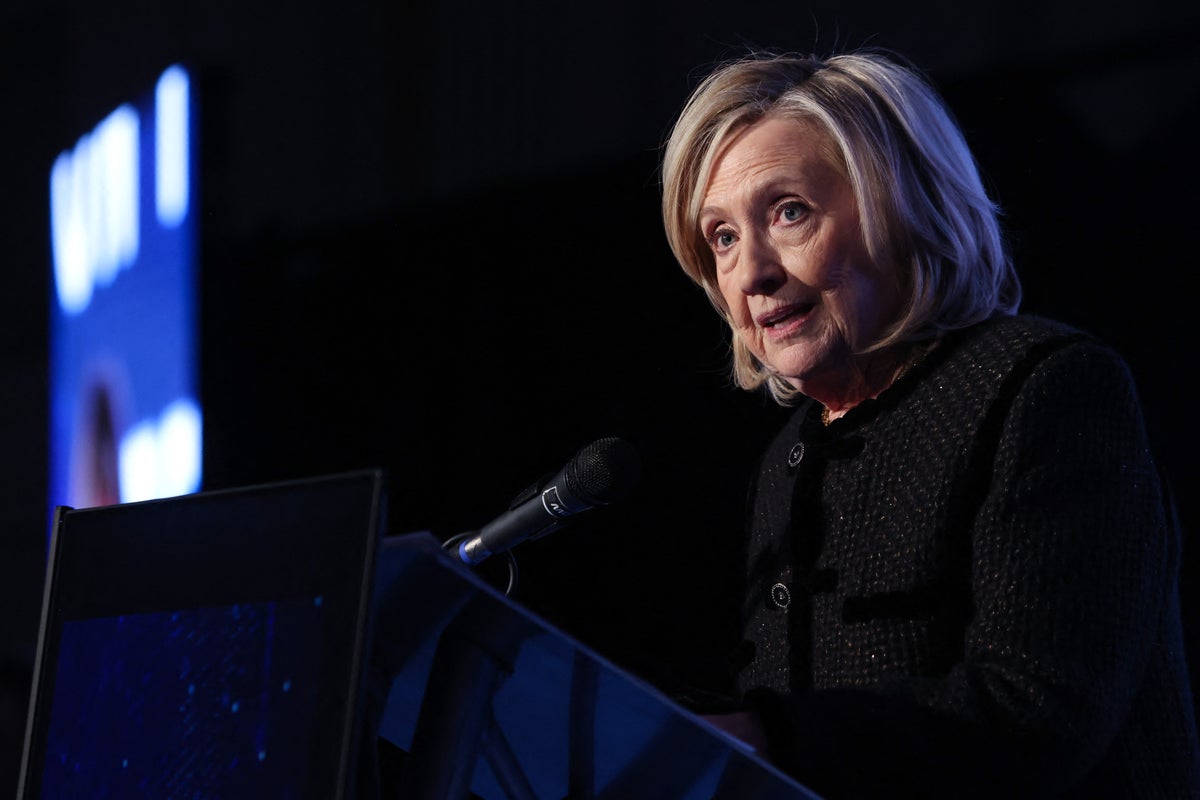
Political prognostications rarely arrive with the quiet dignity of a closed door. They usually slam down like an iron gate, accompanied by the bright, erratic flashes of cable news cameras and the low hum of anxiety echoing through party headquarters. When veteran figures flag an opponent's strategy as potent, the warning serves a dual purpose. It acts as an urgent wake-up call for allies, and an unintentional blueprint for how political narratives take root in the public consciousness.
Consider the mechanics of modern political friction. Long before a voter steps into a booth, a massive, invisible machinery grinds away at public perception. Every speech, every press release, and every late-night strategy memo is designed to tilt the playing field just an inch or two in one direction. When a high-profile target of a sustained campaign acknowledges the efficacy of her opponents' maneuvers, she is mapping out the exact pressure points where a campaign's armor wears thin.
To understand why certain messaging sticks while other arguments slide off like rain on glass, one must look at how voters process information under stress. Imagine an independent voter sitting at a kitchen table after a long shift, balancing a stack of bills while a television anchor drones on about congressional hearings, email servers, or economic stewardship. That voter does not have the time to parse three-hundred-page policy papers or cross-reference opposition research. They rely on emotional shorthand. They rely on gut reactions built from repeated impressions.
This is where the opposition's strategy finds its footing. When an attack line is repeated often enough, with enough rhetorical muscle behind it, it stops being a partisan talking point and hardens into a character trait in the minds of the electorate.
Historically, the art of political opposition relies less on introducing complex counter-arguments and more on reinforcing pre-existing doubts. If a candidate is perceived as overly ambitious, the messaging leans into ambition. If a party is painted as out of touch, every policy proposal is filtered through the lens of coastal elitism or bureaucratic detachment. The brilliance of a truly effective political attack is that it uses the target's own defensive posture against them. When a campaign spends precious days and weeks explaining away a controversy, they are not talking about jobs, healthcare, or the future. They are fighting on terrain chosen entirely by the adversary.
The psychological weight of these campaigns extends far beyond a single election cycle. They establish a baseline of distrust that future candidates from the same party must inherit and fight to overcome. Political parties are cyclical entities, constantly shedding old skins while carrying the structural scars of past battles. When a leader warns that a specific line of attack is devastatingly effective, they are identifying a structural vulnerability that transcends an individual personality. They are pointing to a crack in the foundation that exposure to weather will only widen.
Yet, recognizing the power of an opponent's strategy is fundamentally different from surrendering to it. In political combat, momentum shifts the moment a campaign stops reacting to the narrative and begins dictating the terms of engagement. The danger lies in prolonged defensiveness. Every minute spent clarifying a past statement is a minute lost building a future vision.
The mechanics of influence reveal a harsh truth about public life. Perception often outruns reality, and the loudest voice in the room usually sets the rhythm to which everyone else is forced to dance. The challenge for any political movement facing a high-impact offensive strategy is to break the rhythm entirely, refusing to step to a beat written by the opposition. Until that break happens, the warning remains valid, echoing across the landscape as a reminder of how easily the narrative can slip away from those who think they are steering it.