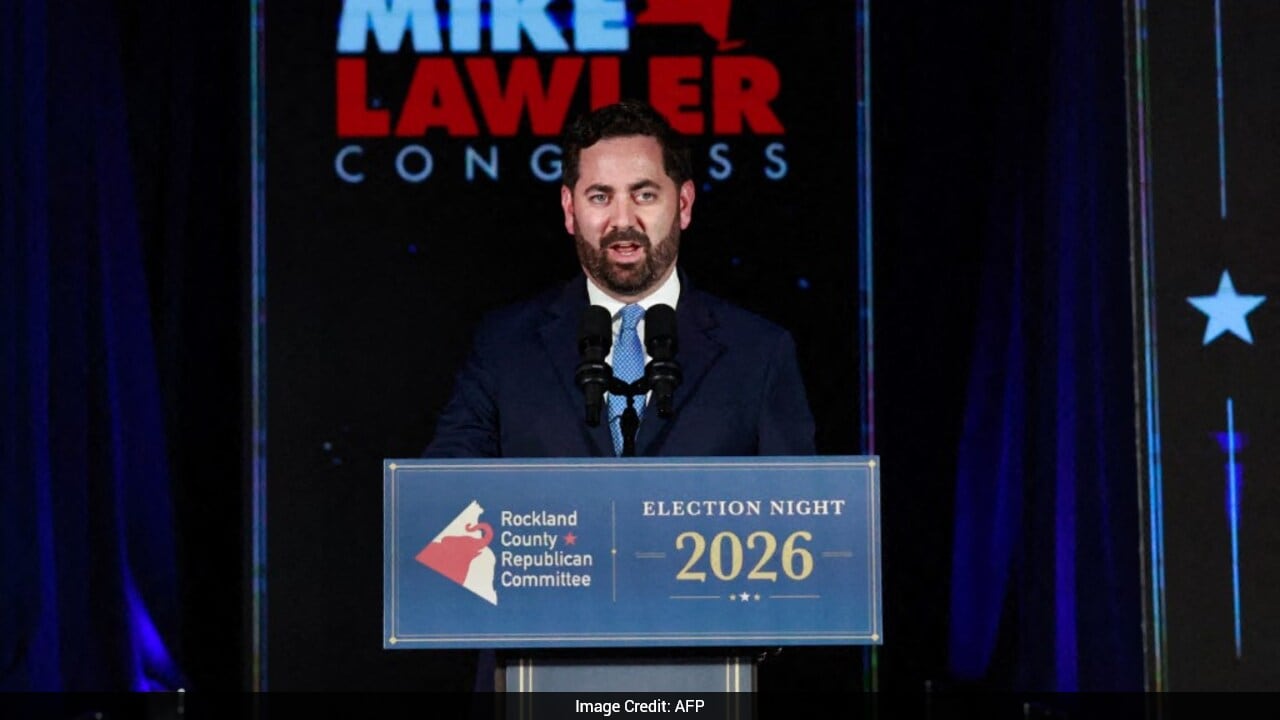
When a defeated political leader declares that "Jesus Christ would've lost" an election, the statement functions as an institutional defense mechanism rather than an objective post-mortem. This rhetorical device—attributing electoral defeat to an insurmountable, supernatural headwind—serves a specific operational purpose within party apparatus: it insulates campaign leadership, platform architects, and candidate selection committees from accountability. By framing a loss as structurally inevitable, incumbents and party officials bypass the painful diagnostic work required to correct messaging failures, resource misallocation, and demographic attrition.
To understand the mechanics of post-election fatalism, analysts must separate structural macroeconomic variables from controllable campaign execution. In American midterm cycles, historical baselines confirm that the president’s party typically loses congressional seats. Political scientists attribute this to thermostatic public opinion, differential turnout, and reversion to the mean following presidential wave elections. However, invoking absolute inevitability—the "Jesus Christ" standard—collapses the distinction between an uphill battle and an impossible one. When party leaders treat a 5-point structural disadvantage as a 50-point insurmountable barrier, they abandon strategic adaptation.
The Architecture of Electoral Defeat Attribution
Post-election narratives within political organizations generally fracture into three distinct attribution models. Each model dictates how the party allocates capital, recruits talent, and adjusts policy ahead of the subsequent cycle.
The Macro-Structural Model (Externalized Blame)
This framework argues that nationalized variables—such as inflation rates, presidential approval ratings, or Supreme Court rulings—override local candidate quality. Under this model, individual campaign tactics yield negligible marginal returns. When a leader claims no candidate could have won, they are operating strictly within this model. The primary danger here is fatalistic inertia; if local execution does not matter, leadership sees no reason to overhaul broken field operations or flawed digital targeting systems.The Candidate Quality Model (Personalized Blame)
Opposing factions within the defeated party typically counter with the candidate quality hypothesis. This model posits that primary electorates selected nominees optimized for ideological purity rather than general election viability. In swing districts, candidates who cannot pivot toward the median voter impose a severe tax on their own party. They force national committees to spend defensive capital in theoretically safe seats, starving offensive opportunities elsewhere.The Institutional Execution Model (Operational Blame)
This model evaluates the machinery of the campaign: voter registration drives, mail-in ballot harvesting infrastructure, data analytics, and media buy efficiency. Unlike macro-structural forces, operational variables are entirely within the party’s control. A failure to match an opponent’s ground game or early-voting turnout operation produces deficits that charismatic messaging cannot overcome on Election Day.
The Incentive Structure Behind Hyperbolic Excuses
Why do seasoned political operatives resort to hyperbolic absolutes immediately following a loss? The answer lies in the principal-agent problem inherent in modern campaign finance and party governance.
Party leaders, consultants, and committee chairs act as agents for donors and voters (the principals). When an election cycle yields poor returns on hundreds of millions of dollars in invested capital, donors demand audits and leadership changes. If an agent admits that the loss resulted from strategic errors—such as misreading independent voter sentiment or failing to counter opposition narratives early—the agent faces immediate termination.
Conversely, if the agent successfully convinces donors that the electoral environment was an unavoidable Category 5 hurricane, survival becomes possible. The narrative shifts from "we failed to execute" to "we mitigated a total wipeout." This tactic preserves consulting retainers, protects committee chairmanships, and delays ideological reckoning. The cost, however, is borne by the party’s long-term competitiveness, as unaddressed structural flaws compound over multiple cycles.
Diagnostic Failure: Confusing Wave Mechanics with Local Vulnerability
A rigorous post-mortem requires isolating baseline partisan lean from actual electoral performance. Analysts measure this through the Partisan Voter Index (PVI) and ticket-splitting metrics.
In a true wave election, losses occur uniformly across districts with similar demographic profiles. When a party underperforms its PVI across the board, macro-structural forces are the primary driver. However, when a party wins state-level executive offices while simultaneously losing federal legislative races in the exact same geographic footprint, the "inevitability" thesis collapses.
Consider the mechanics of ticket-splitting in modern suburban districts:
- Baseline Partisan Turnout: Core partisan voters turn out at predictable rates regardless of candidate messaging.
- The Persuasion Pool: Swing voters—often college-educated suburbanites—evaluate candidates on temperament, governance competence, and specific policy threats.
- The Defection Margin: When a candidate adopts positions outside the Overton window of a purple district, swing voters do not stay home; they actively vote for the opposition while still supporting down-ballot candidates from the first party.
If a Republican governor wins a state by ten points while a Republican Senate or House candidate loses the same electorate, claiming that "Jesus Christ would've lost" the legislative race is demonstrably false. The electorate proved willing to vote for the party brand, proving that the specific candidate, message, or campaign apparatus failed the market test.
The Opportunity Cost of Uncorrected Messaging
Relying on fatalistic excuses prevents parties from confronting the diminishing returns of grievance-based campaigning. Political communication operates under the law of diminishing marginal utility. A message that successfully mobilizes low-propensity base voters during a primary election often alienates high-propensity swing voters during a general election.
When leadership refuses to acknowledge this friction, the party falls into an echo chamber trap:
- Feedback Loop Distortion: Media ecosystems reward ideological rigidity with fundraising spikes and cable news appearances, creating a false sense of momentum.
- Metric Misinterpretation: Campaigns confuse small-dollar fundraising volume and social media engagement with actual vote share in contested precincts.
- Resource Misallocation: Capital flows toward high-profile, unwinnable races that generate national media attention, while winnable, low-glamour races suffer from liquidity shortages.
By the time Election Day arrives, the structural deficit is locked in. Post-election hyperbole serves to mask the fact that the campaign optimized for metrics that do not correlate with winning 50 percent plus one of the vote.
Operationalizing a True Post-Mortem
To break the cycle of excuse-making, political organizations must replace rhetorical defense mechanisms with empirical auditing. This requires stripping away ideological assumptions and treating campaigns as logistical and behavioral engineering problems.
Step 1: Isolate Precinct-Level Variance
Compare current cycle turnout and vote share against the previous two midterm cycles at the precinct level, controlling for demographic shifts and redistricting boundaries. Identify precisely where drop-off occurred. Did the party lose because base voters stayed home, or because independent voters flipped? The strategic remedy for turnout failure (field operations) is entirely different from the remedy for persuasion failure (policy moderation and messaging).
Step 2: Audit Early and Absentee Vote Deficits
Modern elections are no longer single-day events; they are multi-week logistics operations. Measure the exact deficit accumulated during early voting periods. If a candidate enters Election Day trailing by 15 points in banked ballots, they require an unrealistic turnout surge on a single Tuesday to break even. A rigorous analysis evaluates whether the party’s resistance to specific voting methods created a self-inflicted mathematical disadvantage.
Step 3: Evaluate Media Buy Efficiency and Timing
Analyze the cost-per-thousand impressions (CPM) and timing of television and digital ad placements. Campaigns frequently hoard cash until October, buying inventory when rates are highest and voter opinions have already hardened. An objective audit measures whether the opposition defined the candidate in May and June while the campaign remained dark, rendering late-stage spending ineffective.
Step 4: Stress-Test Candidate Vetting Protocols
Assess the primary selection process. If party committees remain neutral during primaries, they forfeit quality control. Establish quantitative viability thresholds—such as name recognition, fundraising capacity, and unfavorable ratings among independents—before deploying institutional support.
Limitations of Data-Driven Recalibration
Even the most precise operational overhaul faces hard constraints. Political parties are not top-down corporations; they are decentralized coalitions of donors, activists, media personalities, and voters with competing incentives.
Primary voters frequently prioritize ideological fidelity over general election electability, rendering party leadership powerless to stop flawed nominees without triggering an internal revolt. Furthermore, exogenous shocks—such as sudden economic downturns, foreign policy crises, or landmark judicial decisions—can rapidly alter the political environment in ways that outpace campaign adaptation. Data analytics can optimize targeting and resource allocation, but it cannot manufacture enthusiasm for an unpopular platform or erase a candidate's fundamental unsuitability for office.
The Strategic Mandate
Party leadership must immediately dismantle the narrative of electoral inevitability and tie future committee funding and consulting contracts directly to precinct-level performance metrics rather than national media visibility. Any political apparatus that excuses defeat through hyperbole guarantees its own obsolescence; survival requires treating every loss as an operational failure until proven otherwise by the data.