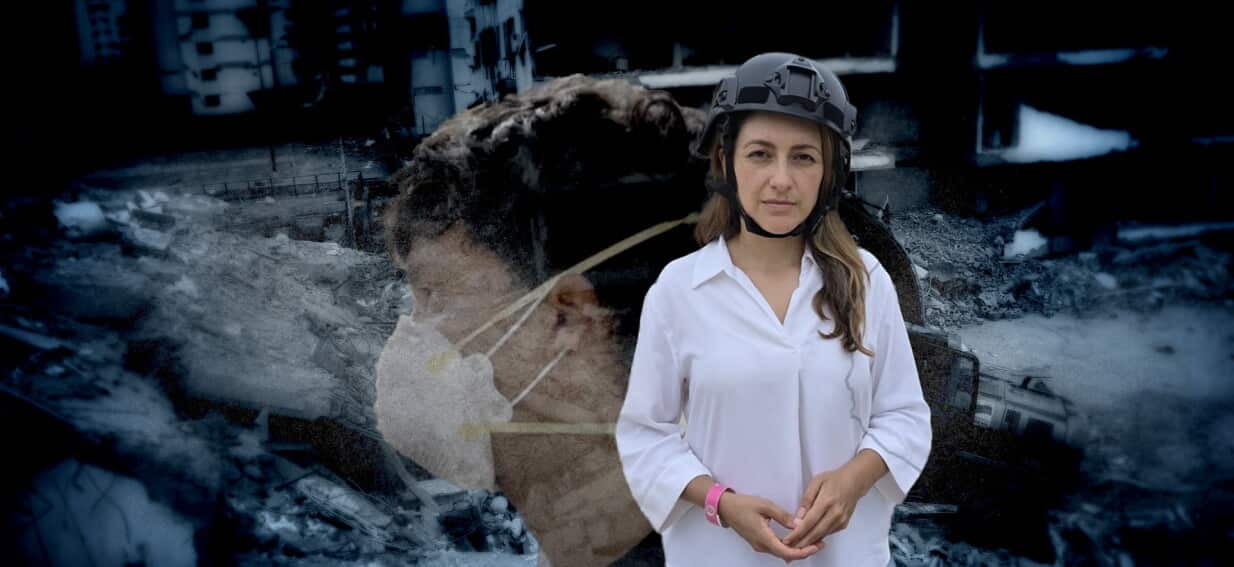
The formal concession of left-wing challenger Roberto Sánchez to conservative Keiko Fujimori marks the end of the 2026 electoral count, but it does not resolve the structural volatility built into the Peruvian state. Fujimori secured the presidency by a razor-thin margin of fewer than 50,000 votes, capturing 50.13% of the valid ballots against Sánchez’s 49.87%. While mainstream reporting frames this as a conventional partisan victory signaling a broader regional shift toward the right, an operational analysis reveals a deeper, structural failure: Peru’s political system is architecturally designed to produce highly fragmented, weak executives facing asymmetric legislative opposition.
Fujimori becomes Peru’s tenth president in ten years. This extreme executive churn is not an accident of personality, but the direct consequence of a collapsed party system, a newly introduced bicameral legislature, and a constitutional mechanism that lowers the barrier for executive removal. Navigating this environment requires understanding the mechanical bottlenecks, institutional imbalances, and fiscal vulnerabilities that will define the incoming administration.
The Mechanics of Polarized Runoffs and Minority Mandates
The fundamental defect in Peru's electoral architecture lies in the interaction between a highly fragmented first-round field and a mandatory second-round runoff. In the April 2026 first round, 35 presidential candidates appeared on the ballot. Fujimori advanced to the runoff with just 17.19% of the first-round vote, while Sánchez secured his spot with 12.04%.
When less than 30% of the electorate combined selects the top two candidates in the primary round, the eventual winner enters office with an acute deficit of core public support. The remaining 70% of voters are forced into a negative choice in the second round, voting against the candidate they fear most rather than for a policy platform they support. This dynamic creates an immediate legitimacy bottleneck.
The geographical distribution of the vote further hardens this polarization. The electoral data exposes two distinct economic and political realities:
- The Urban and Diasporic Core: Fujimori’s victory was delivered late in the counting process through votes from Lima and the expatriate electorate. This constituency prioritizes capital preservation, fiscal conservatism, and macro-economic stability, viewing Sánchez's left-wing platform as a pathway to expropriation and institutional decay.
- The Agrarian and Peripheral Periphery: Sánchez dominated the rural and southern Andean regions, such as Puno. This constituency experiences minimal trickledown from Lima’s macroeconomic growth, suffers the direct environmental and social costs of extractive industries, and views the Fujimori name as synonymous with the authoritarian overreach of the 1990s.
Sánchez’s initial strategy—demanding the annulment of international ballots and specific urban voting tallies—was a calculated attempt to exploit this geographic divergence. Although he ultimately conceded to the National Elections Jury (JNE) verdict to avoid complete institutional isolation, his party, Together for Peru (Juntos por el Perú), maintains a strategy of conditional legitimacy. By explicitly stating that institutional acceptance does not equal the renunciation of claims regarding electoral anomalies, the opposition has preserved its right to mobilize street protests and deploy lawfare.
The Structural Imbalance of the New Bicameral Legislature
The 2026 election marked the return of a bicameral legislature to Peru, splitting the Congress into a 60-seat Senate and a 130-seat Chamber of Deputies. While designed to provide a stabilizing, deliberative check on legislation, the mathematical composition of both houses guarantees immediate legislative gridlock.
Fujimori’s party, Popular Force (Fuerza Popular), holds the largest single bloc but sits far short of an absolute majority. In the Senate, Popular Force commands 22 out of 60 seats, requiring 31 for a majority. In the Chamber of Deputies, it holds 41 out of 130 seats, requiring 66 for a majority.
To pass legislation, manage budgets, or avoid impeachment, the executive must form a highly transactional coalition with disparate right-wing and centrist factions, including Rafael López Aliaga’s Popular Renovation (15 seats in the Chamber) and Jorge Nieto’s Purple Bloc derivative (18 seats in the Chamber). The cost of maintaining this coalition will be high, requiring the distribution of ministerial portfolios and localized public spending, which inherently dilutes the executive's policy agenda.
Conversely, Sánchez is leveraging his 32-seat Chamber bloc to assemble an obstructionist left-wing coalition alongside Ahora Nación and Obra Cívica. This bloc has defined its primary legislative objective not around economic policy, but around constitutional warfare: seeking the release of imprisoned former President Pedro Castillo and exercising aggressive oversight via the constitutional "moral incapacity" clause.
The Cost Function of Constitutional Vulnerability
The persistent risk to capital and governance in Peru is the ease with which Congress can vacate a presidency. Under Article 113 of the 1993 Peruvian Constitution—ironically drafted during the regime of Alberto Fujimori—the legislature can declare the presidency vacant due to "permanent moral incapacity."
This clause lacks a precise legal definition, effectively turning impeachment into a political math problem rather than a judicial process. In the single-chamber system, it required 87 votes out of 130 to remove a president. In the new bicameral structure, the threshold for removal will depend on the enabling laws governing joint sessions or Senate trials, but the core vulnerability remains: an unpopular president facing an aligned opposition can be removed in a matter of days.
This structural vulnerability creates a specific cycle of executive decay:
Unpopular Executive → Legislative Obstruction → Threat of Impeachment/Vacancy → Executive Concessions (Cabinet Churn) → Policy Stagnation → Decreased Economic Growth → Deeper Public Dissatisfaction → Unpopular Executive
Because Fujimori enters office with an unfavorable rating that mirrors her narrow victory margin, the probability of her attempting to break this cycle via executive overreach is structurally high. Investors and analysts must weigh her stated commitment to free-market stability against the historical precedent of the Fujimori doctrine, which historically favored the concentration of power in the executive branch to bypass a hostile legislature.
Macroeconomic Resilience vs. Microeconomic Degradation
Peru presents a striking macroeconomic paradox: the country features a highly independent central bank (BCR) and a disciplined Ministry of Economy and Finance (MEF) that insulate monetary policy and sovereign debt management from executive chaos. This institutional design ensures that even during periods of extreme political turnover, inflation remains relatively low, and the country maintains fiscal buffers.
However, this macroeconomic insulation has reached its operational limit. The ongoing political instability inflicts severe microeconomic costs that manifest in three specific areas:
- The Sovereign Risk Premium: While Peru’s debt-to-GDP ratio remains favorable compared to regional peers, the constant threat of executive vacancy and regulatory volatility prevents sovereign risk premiums from compressing. This keeps the cost of capital higher for Peruvian corporate issuers.
- The Private Investment Bottleneck: Major infrastructure and mining projects require long-term regulatory visibility. The three-to-five-year payback periods required for major copper and gold extractions are incompatible with an executive branch that changes personnel annually. Consequently, greenfield mining investment has stagnated, replacing long-term capital expenditure with short-term extraction optimization.
- The Informal Labor Market Expansion: Institutional instability weakens state capacity to enforce regulation and property rights. This has accelerated the growth of the informal economy, which now employs over 70% of the domestic workforce. An informalized workforce shrinks the tax base, starving the state of the non-commodity revenues required to address the rural infrastructure deficits that drive left-wing populism.
Strategic Outlook and Institutional Playbook
The incoming Fujimori administration faces an immediate choice between two destabilizing paths: ongoing concessions to a fragmented legislature or the consolidation of a highly securitized, autocratic executive.
The opposition coalition led by Sánchez has already signaled that its compliance with the institutional framework is transactional. They will use their congressional seat share to block structural tax reforms and target vulnerable cabinet ministers via interpellations. If the administration attempts to suppress the inevitable rural protests via military or police force, the opposition will immediately trigger vacancy proceedings on human rights or moral incapacity grounds.
For external stakeholders, international investors, and domestic operators, navigating the next 24 months requires discounting executive policy announcements and focusing strictly on legislative vote counts. The critical metric to monitor is the coalition-building cost between Popular Force and the centrist blocs. If these alliances fracture early over cabinet appointments or budgetary allocations, the timeline for structural gridlock will compress, triggering yet another phase of executive instability.