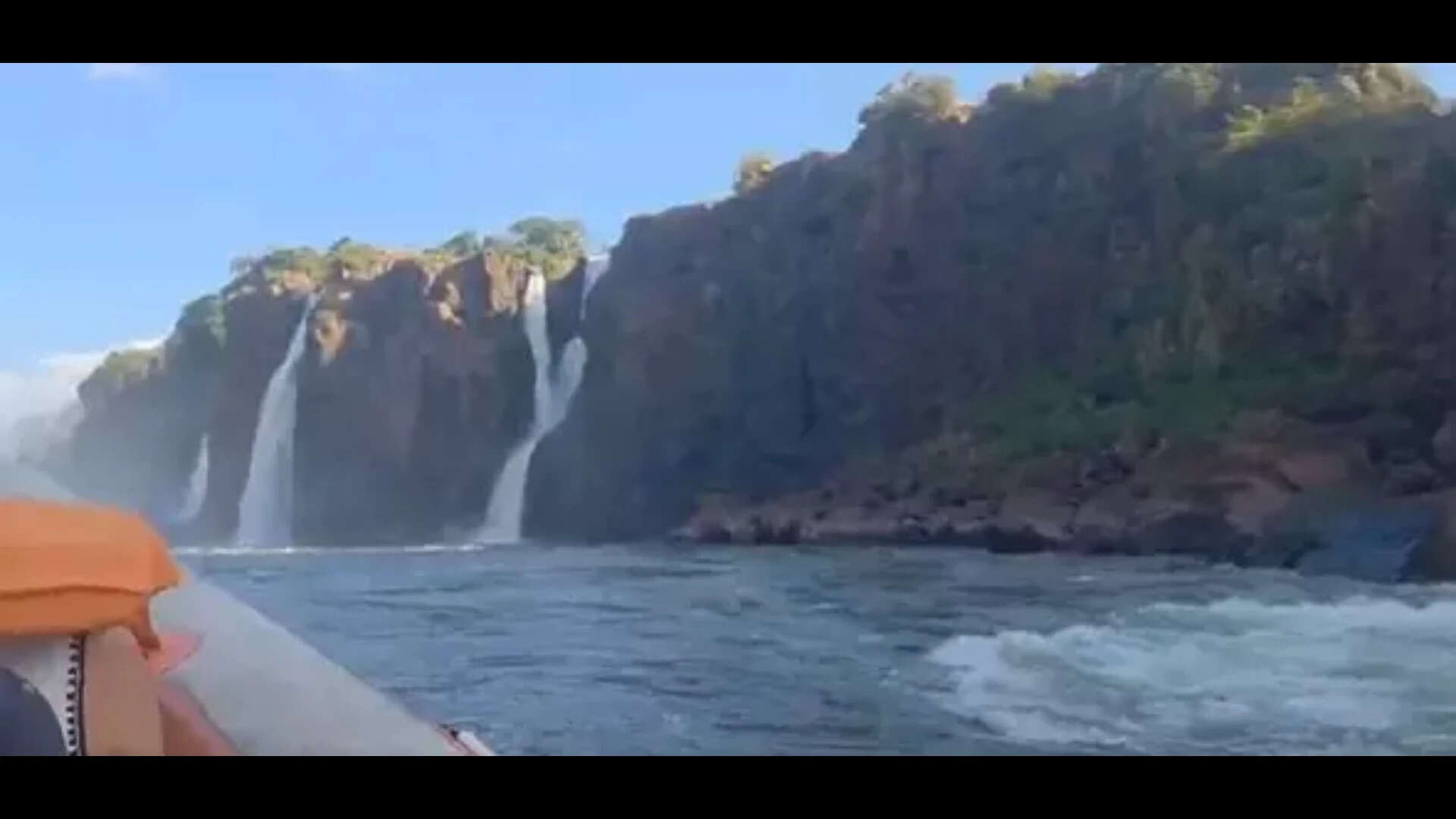
The global reputation of a nation-state functions as a shared intangible asset, where the actions of individual citizens abroad create significant externalities for the collective. When a group of tourists—frequently termed 'Delhi bros' in recent viral discourse regarding an incident at Iguaçu Falls—engages in disruptive, hyper-nationalistic chanting in a serene natural UNESCO World Heritage site, they are not merely "having fun." They are liquidating the soft power of their home country to satisfy an immediate, dopamine-driven need for tribal validation. This behavior represents a fundamental breakdown in the "Social Contract of the Traveler," where the individual’s pursuit of high-decibel visibility creates a net loss for the national brand and the immediate environment.
The Mechanism of Hyper-Nationalistic Performative Outbursts
The incident at Iguaçu Falls, reported by Professor Lipika Kamra, serves as a case study in the intersection of digital-age narcissism and territorial signaling. To understand why a specific demographic chooses to chant nationalistic slogans in a Brazilian-Argentine border natural wonder, one must analyze the Three Drivers of Displacement Ruckus:
- Status Signaling via Volume: In high-density urban environments, dominance is often signaled through noise. When these behavioral patterns are exported to international "quiet zones" or natural preserves, the travelers are attempting to assert presence in a space where they feel culturally or linguistically invisible.
- The Echo-Chamber Feedback Loop: The presence of a smartphone camera transforms a private moment into a public performance. The "chanting" is rarely for the benefit of the physical audience present; it is produced for the digital audience at home. This creates a disconnect where the performer is physically in Brazil but psychologically in a curated digital nationalist space.
- Compensatory Patriotism: Research in social psychology suggests that individuals who feel insecure about their standing in a global hierarchy often resort to loud, aggressive displays of national identity to mask a perceived lack of individual cultural capital.
The Cost Function of Behavioral Externalities
A "ruckus" is not a neutral event. It imposes direct costs on multiple stakeholders. Analyzing these costs through a consultant's lens reveals the true scale of the damage.
Environmental and Sensory Depletion
Natural wonders like Iguaçu Falls are "Experience Goods" whose value is derived from their tranquility and the sound of the environment. High-decibel chanting constitutes a form of Sensory Pollution. This degrades the product (the waterfall visit) for every other "consumer" present. When the ambient noise floor is raised by 40-50 decibels by a group of tourists, the utility of the site drops for hundreds of others, representing a massive misappropriation of shared value.
National Brand Dilution
In the competitive market for global tourism and business, "Brand India" or any national identity relies on perceptions of sophistication, civic sense, and respect for local norms. A single viral video of obnoxious behavior acts as a Negative Multiplier. It reinforces existing stereotypes and creates a "Prejudice Tax" that future travelers from the same region must pay in the form of colder service, increased scrutiny, or social exclusion.
The Hospitality Friction Coefficient
As these incidents increase, local hospitality providers adjust their "friction." This can manifest as stricter entry requirements for specific demographics, "no-group" policies, or increased security presence. The "Delhi bro" phenomenon, characterized by entitlement and a disregard for local etiquette, increases the operational cost of hosting these tourists, eventually leading to a market correction where high-end establishments may subtly or overtly de-prioritize these segments.
Mapping the Logic of the "Delhi Bro" Archetype
The term "Delhi bro" is less about geography and more about a specific socioeconomic performance. It identifies a demographic that has recently acquired the capital to travel internationally but has not yet acquired the Cultural Intelligence (CQ) to navigate it. This group typically displays:
- Entitlement Congruence: The belief that because they have paid for a ticket, they own the space.
- Context Blindness: An inability to distinguish between a cricket stadium, a wedding hall, and a protected natural ecosystem.
- Groupthink Polarization: The tendency for individual inhibitions to vanish within a pack, leading to escalations in behavior that no single individual would attempt alone.
Structural Failures in Tourism Education
The proliferation of these incidents points to a systemic failure in the "Onboarding" process of the modern traveler. Most travel agencies and airline communications focus on the logistics of the trip—visas, flights, hotels—while ignoring the Sociocultural Operating System.
There is an absence of "Pre-Departure Orientation" that defines the expected behavioral standards of international sites. Unlike the rigid social codes of the 20th century, the democratization of travel has outpaced the evolution of global civic literacy. This creates a vacuum filled by performative social media trends, where "being the loudest" is equated with "having the best time."
The Strategic Redesign of the Tourist Experience
To mitigate the erosion of national reputation and protect global heritage sites, the industry must shift from a passive model to an active management model.
- Decibel-Zoning Enforcement: Heritage sites must move beyond "Please be quiet" signs toward active monitoring and ejection policies. If a group’s noise output exceeds a specific threshold, their access should be revoked. This creates a tangible consequence for the "Ruckus" behavior.
- The Reputation Scorecard: Much like the financial sector uses credit scores, the travel industry could benefit from a "Global Citizenship Index." Repeat offenders in disruptive behavior should face higher insurance premiums or restrictions on future bookings through major platforms.
- Cultural Capital Incentives: National tourism boards should pivot their marketing away from "Look at us everywhere" to "How to be a guest of the world." By gamifying and rewarding respectful behavior and deep cultural engagement, the incentive structure shifts from volume-based dominance to quality-based integration.
The embarrassment felt by observers like Professor Kamra is a rational reaction to the destruction of social harmony. When a minority of travelers uses a global stage to perform a localized, aggressive version of identity, they are committing a form of "Tragedy of the Commons." They are consuming the goodwill built by generations of their compatriots for a fleeting moment of self-assertion.
The long-term strategy for any nation facing this "Brand Leakage" is not to defend the individuals, but to aggressively distance the national brand from them through public condemnation and educational reform. Soft power is built in decades but can be liquidated by a few dozen "bros" with a smartphone in an afternoon. The solution lies in the professionalization of the traveler—treating international movement not as an absolute right to behave as one wishes, but as a privileged participation in a global community that requires a baseline of behavioral competence.
The immediate move for stakeholders—travel influencers, government bodies, and high-net-worth travelers—is to establish a "New Etiquette Standard." This involves the deliberate shaming of disruptive nationalistic displays in inappropriate contexts and the elevation of the "Silent Traveler" as the pinnacle of cultural success. If the "Delhi bro" seeks status, the most effective deterrent is to make their ruckus the ultimate marker of low-status provincialism.