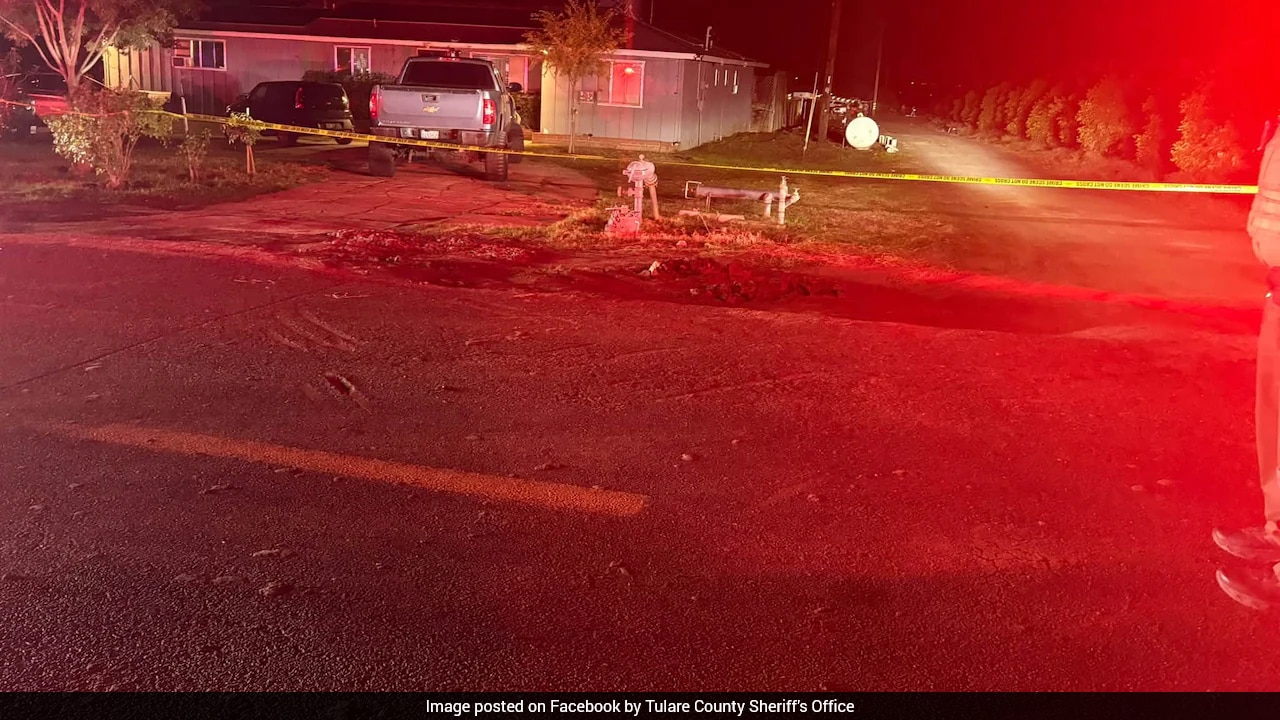
Standard local crime reporting reduces a nine-person shooting in California to a simple tally of victims and a single unverified police label. That framing obscures the structural mechanics of group-involved firearm violence, the operational bottlenecks in emergency trauma response, and the evidentiary hurdles required to substantiate a "gang-related" classification under California law. When nine individuals are struck by gunfire in a single event with one victim listed in critical condition, the incident represents a complex intersection of spatial vulnerability, ballistic dispersion, and statutory definitions rather than an isolated anomaly.
To understand the reality behind a headline reporting nine shooting victims and a preliminary gang nexus, analysts must separate confirmed physical outcomes from investigative hypotheses. In the immediate aftermath of a multi-victim shooting, law enforcement agencies operate under severe information asymmetry. Initial briefings prioritize public safety warnings and preliminary resource allocation over statutory precision.
The Evidentiary Gap in Preliminary Classifications
The phrase "gang-related" in early police communications is an operational hypothesis, not a legal conclusion. Under California Penal Code Section 186.22—the Street Terrorism Enforcement and Prevention (STEP) Act—proving that a crime is gang-related requires satisfying specific statutory elements that rarely exist in verified form during the first 24 hours of an investigation.
Law enforcement investigators rely on three distinct tiers of indicators when issuing an initial classification:
- Geographic Indicators: The shooting occurred within the contested territory or documented turf of a known criminal street gang. Spatial correlation frequently triggers a preliminary gang label before a single suspect is identified.
- Behavioral and Visual Markers: Witnesses or responding officers observed hand signs, specific color configurations, verbal challenges, or targeted victim selection consistent with established group rivalries.
- Intelligence Database Cross-Referencing: One or more victims, rather than the perpetrators, appear in shared law enforcement intelligence systems such as CalGang.
The limitation of early reporting lies in treating these investigative leads as established facts. A shooting occurring inside a known gang boundary may stem from an interpersonal dispute, a robbery gone wrong, or a spontaneous altercation unrelated to group enterprise. Under recent California legislative reforms—specifically Assembly Bill 333—the burden of proof for gang enhancements tightened significantly. Prosecutors must now demonstrate that the predicate offenses provide a common benefit to the gang that is more than reputational. A news report that repeats the "gang-related" tag without explaining the evidentiary threshold misleads the public regarding both the motive and the eventual prosecutorial trajectory.
Ballistic Dispersion and the Nine-Victim Casualty Profile
A casualty count of nine individuals with a single critical injury reveals specific mechanical realities about the shooting event. High victim counts paired with low immediate fatality rates point toward specific weapon configurations, shooter behavior, and crowd dynamics rather than precision targeting.
Crowd Density and Spatial Containment
Mass shootings involving nine victims almost exclusively occur in high-density environments where egress is restricted. Block parties, commercial corridors, transit stops, and residential courtyards compress targets into a narrow cone of fire. When shots are fired into a dense gathering, the probability of secondary strikes increases exponentially. Bullets that miss a primary target, over-penetrate soft tissue, or ricochet off concrete and asphalt surfaces strike bystanders within the immediate radius.
Rate of Fire Versus Accuracy
Sustaining nine gunshot wounds in a brief window indicates the use of semi-automatic firearms equipped with high-capacity magazines or illegal auto-sear modifications (often referred to as switches) that convert semi-automatic handguns into fully automatic weapons. While automatic fire dramatically increases the volume of projectiles discharged per second, it simultaneously degrades shooter accuracy due to uncontrolled muzzle rise.
This mechanical trade-off explains the casualty ratio: nine struck, one critical. High-volume, low-accuracy fire sprays projectiles across a wide horizontal plane. This dispersion produces multiple non-lethal extremity wounds—grazes, through-and-through limb shots, and lower-body impacts—while limiting the number of central-mass or cranial hits that cause immediate mortality or critical trauma.
The Trauma System Cost Function
When nine shooting victims require simultaneous medical intervention, the local emergency medical services (EMS) and trauma network undergo an immediate stress test. Survival rates in mass casualty shootings depend less on the initial ballistic trauma and more on the speed of hemorrhage control and surgical intervention—a concept trauma surgeons define as the "golden hour," though severe arterial bleeding narrows that window to under ten minutes.
Triage Bottlenecks and Transport Dynamics
In a nine-victim scenario, standard ambulance dispatch protocols face immediate saturation. Two structural patterns typically emerge during the pre-hospital phase:
- Self-Transport Surge: Uninjured bystanders frequently load wounded individuals into private vehicles and drive them directly to the nearest emergency department. While this bypasses ambulance wait times, it disrupts regional trauma distribution. Victims arrive unannounced at non-trauma community hospitals lacking surgical teams, forcing secondary transfers that delay definitive care.
- Resource Triage Prioritization: Paramedics arriving on scene must execute rapid START (Simple Triage and Rapid Treatment) protocols. The single critical patient—likely suffering from penetrating torso trauma, vascular compromise, or airway obstruction—absorbs the primary advanced life support (ALS) unit and immediate transport slot. The remaining eight victims, categorized as delayed or minor, face extended on-scene stabilization times.
Hospital Surgical Capacity
A Level I or Level II trauma center receiving nine gunshot victims simultaneously experiences an acute bottleneck in operating room availability and blood bank reserves. Even if only one patient is classified as critical upon arrival, two or three others among the remaining eight may harbor occult internal injuries—such as bowel perforations or slow retroperitoneal bleeds—that deteriorate rapidly during initial imaging. The hospital must activate its mass casualty incident (MCI) plan, pulling off-duty surgical staff, halting elective procedures, and mobilizing massive transfusion protocols to prevent secondary mortality among the non-critical cohort.
The Retaliation Cycle and Game Theory Mechanics
In group-involved urban violence, a shooting is rarely a self-contained event; it functions as a move within an ongoing, iterated game of deterrence and reputation. Standard media coverage treats the incident as a standalone news item, ignoring the predictable retaliatory mechanics that follow within the subsequent 72 hours.
Asymmetric Information and Reputation Maintenance
Street gangs operate in an environment without third-party contract enforcement or legal dispute resolution. Within this framework, reputation for credible violence serves as the primary asset protecting territory and illicit revenue streams. When a group suffers a public attack resulting in nine casualties, failing to respond signals weakness to rival factions, inviting further territorial encroachment.
Retaliatory strikes operate under severe time pressure and incomplete intelligence. Because perpetrators flee the scene immediately, the aggrieved group often lacks confirmed identification of the specific shooters. Consequently, retaliatory violence relies on geographic proxies. Any young male visible within the rival group's territory becomes a viable target for a reciprocal shooting. This dynamic explains why gang-related shootings frequently trigger clusters of seemingly random assaults across neighboring blocks over a single weekend.
The Law Enforcement Suppression Dilemma
Police departments respond to a nine-victim shooting by flooding the affected zone with saturation patrols, gang task force units, and mobile surveillance towers. While high-visibility policing temporarily suppresses open-air retaliatory strikes within the immediate perimeter, it introduces a displacement effect. Rival groups shift their movements to adjacent jurisdictions or delay retaliation until patrol density reverts to baseline levels—typically 14 to 21 days post-incident.
Furthermore, saturation policing creates friction with the local community, reducing witness cooperation. Clearance rates for non-fatal gang shootings in California frequently hover below 30 percent because witnesses fear both immediate gang reprisal and entanglement with aggressive law enforcement sweeps. Without cooperating witnesses, detectives must rely on digital forensics—license plate readers, cell-site location information, and social media monitoring—which extends the investigative timeline by months.
Strategic Intervention Frameworks for Municipal Leadership
Reversing the trajectory following a multi-victim shooting requires municipal leaders, law enforcement executives, and public health directors to move beyond reactive press conferences and deploy coordinated, data-driven interventions. Because no single agency controls all variables driving firearm violence, effective containment relies on synchronizing three distinct operational levers.
1. Immediate Hospital-Based Violence Intervention (HVIP) Deployment
The moment the nine victims enter the trauma bay represents a critical behavioral inflection point. Hospital-based violence intervention specialists—credible messengers trained in trauma-informed de-escalation—must be embedded directly within the emergency department before the victims are discharged.
- Objective: Intercept the retaliation loop at the bedside by engaging both the eight non-critical victims and the arriving family members of the critical patient.
- Mechanism: Provide immediate relocation assistance, protective housing vouchers, and victim compensation navigation to remove the incentive for self-help retaliation.
- Limitation: HVIPs fail if hospital security protocols bar intervention specialists from restricted trauma zones during active police investigations. Clear memorandums of understanding must grant cleared specialists immediate access alongside medical staff.
2. Focused Deterrence and Custom Notifications
Rather than executing broad, untargeted street sweeps that alienate neutral residents, law enforcement command staff should deploy focused deterrence strategies modeled on the Group Violence Intervention (GVI) framework.
- Execution: Intelligence analysts map the specific social network connections between the victim group and suspected rival factions within 48 hours.
- Action: Detectives and community leaders conduct direct "custom notifications"—in-person visits to the homes of high-risk individuals identified within those specific networks. The message delivers a binary choice: accept immediate social service off-ramps, or face prioritized, multi-agency federal and state prosecution for any subsequent firearm possession or retaliatory act.
- Limitation: Focused deterrence loses credibility if prosecutors fail to follow through on swift enforcement against the small fraction of individuals who ignore the warning and initiate a retaliatory shooting.
3. Ballistic Intelligence Triangulation
Investigators must treat the shell casings recovered from the nine-victim scene as network data rather than isolated physical evidence. Automated ballistic imaging through the National Integrated Ballistic Information Network (NIBIN) must be prioritized on an emergency 24-hour turnaround rather than standard multi-week laboratory queues.
Linking the ejected brass from this shooting to prior unresolved incidents allows analysts to identify specific, active firearms circulating within the local network. Targeting the recovery of those specific "crime guns" yields higher violence reduction returns than general firearms seizures, directly removing the mechanical capacity for a repeat mass-casualty event.
Tactical Playbook for Newsrooms and Policy Analysts
Evaluating future multi-victim shooting reports requires discarding passive consumption of preliminary police statements. Analysts, journalists, and policy planners should apply a strict verification filter before drawing conclusions or allocating resources:
- Audit the Nexus: Demand clarity on whether the "gang-related" designation stems from confirmed suspect identification or merely geographic proximity to a documented gang zone.
- Track the Sub-Critical Cohort: Monitor the medical progression of the eight non-critical victims over the first 72 hours, as delayed internal complications frequently alter final casualty statistics.
- Map the 14-Day Retaliation Window: Overlay subsequent shooting incidents within a five-mile radius against the initial event coordinates to detect retaliatory clustering and evaluate the true efficacy of municipal containment strategies.